




Azeroth is home to many peoples. When you create a character for your D&D: World of Warcraft® campaign, they will have lived and worked in a realm defined by countless conflicts and the politics of different factions and organizations.
In this article, we provide a primer on each of the professions your character can specialize in, as well as the factions they can join or gain renown with in Azeroth.
Explore Azeroth Professions and Factions
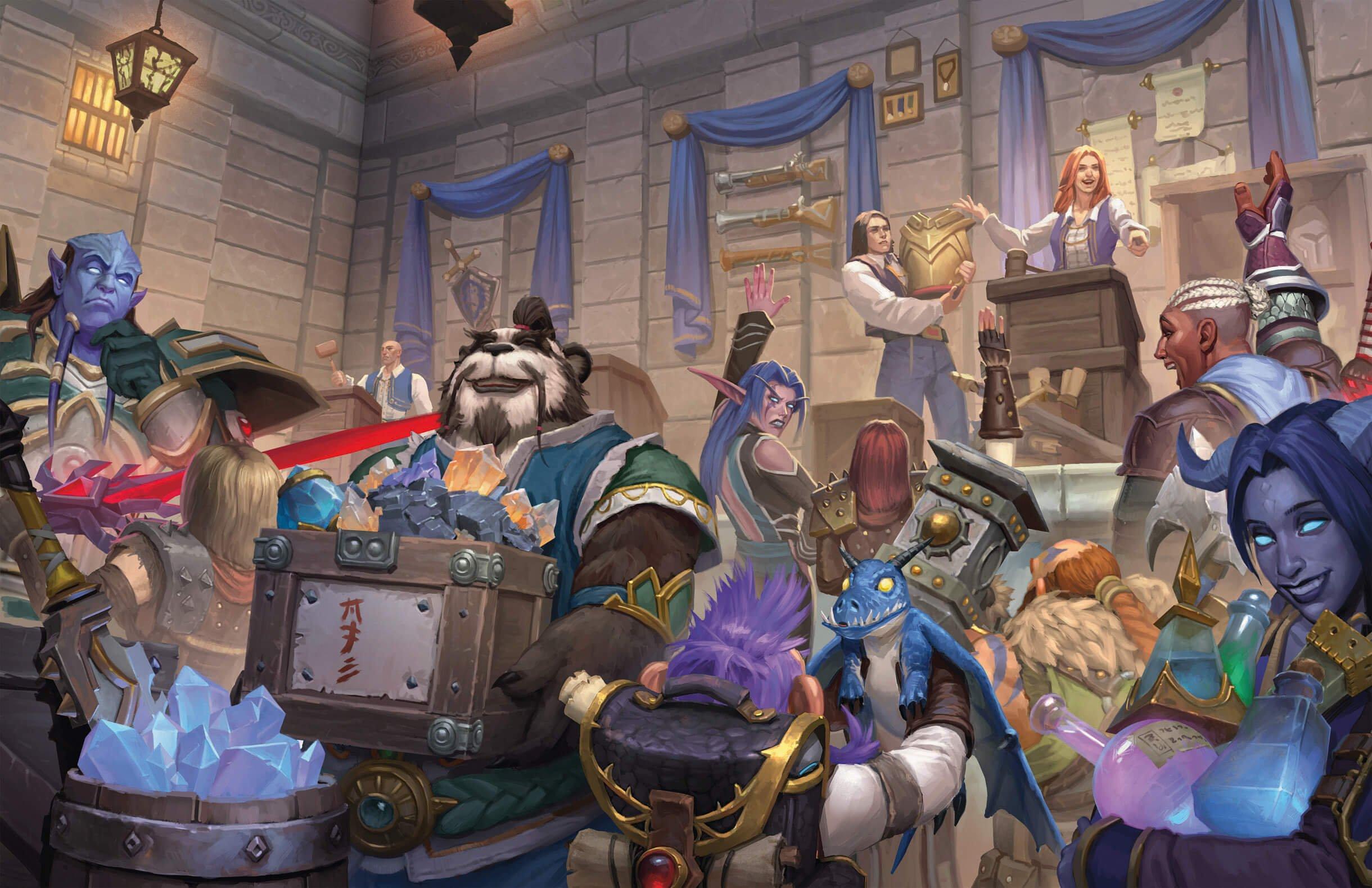
Professions
With professions in Azeroth, characters can use their skill and tool proficiencies to practice professions, allowing them to gather resources and craft them into equipment and magic items. As characters advance in the game, honing their profession allows them to gather useful resources or even craft more powerful magical items.
Your character could work across both Gathering and Production professions, gathering materials for them to produce items with. Or you could use complementary professions to create cooperative group dynamics within your party. A mining or skinning character might gather supplies for a blacksmithing or leatherworking character to construct items with, for example.
Gathering Professions
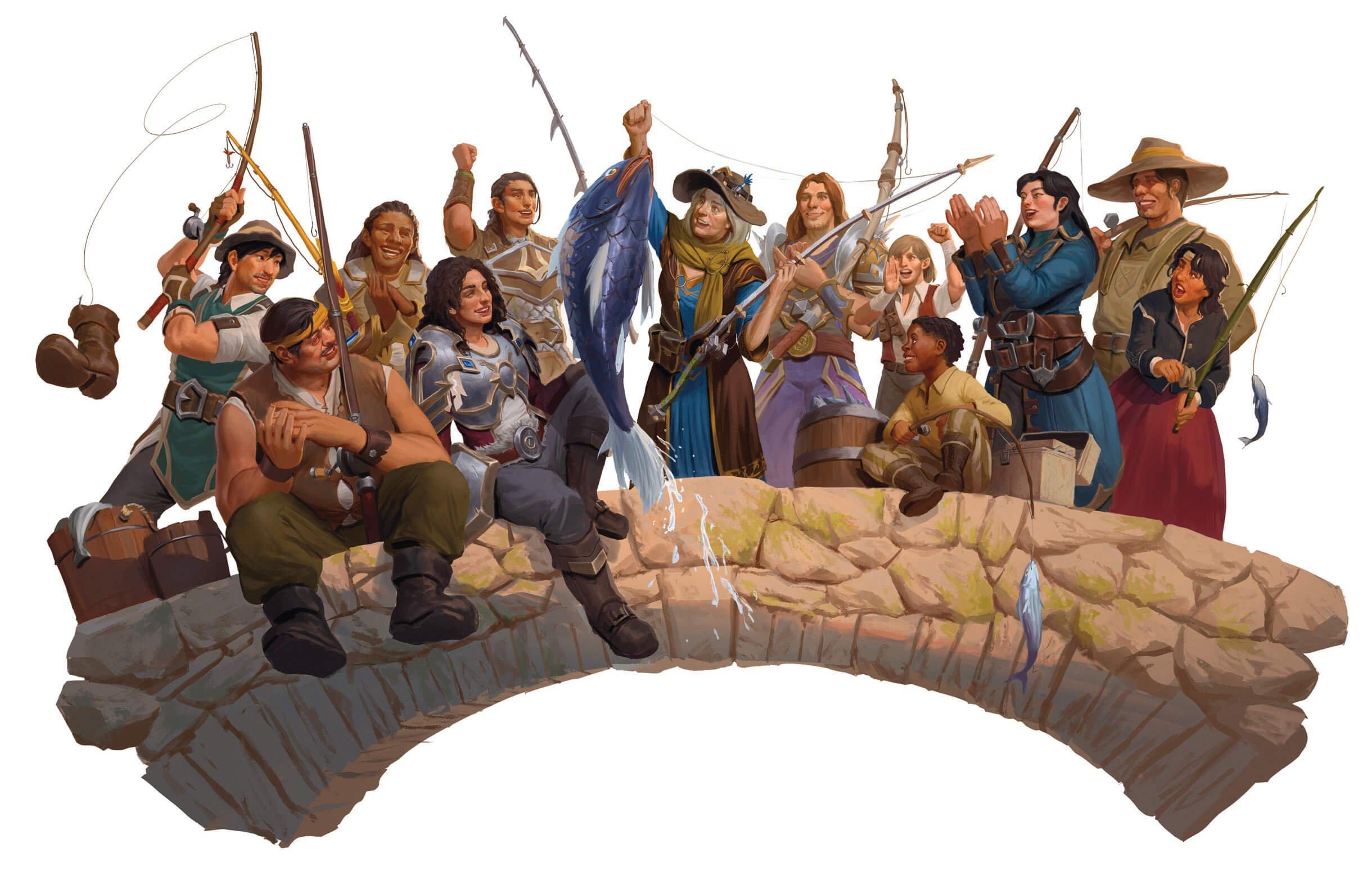
With gathering professions, your character can collect the resources available to them within a given area, using the foraging rules available in the Dungeon Master’s Guide. Each region of Azeroth has recommended character levels, ranging from levels 1-4 all the way up to endgame (above level 20), and the more difficult a region, the higher quality items can be found.
Gathering Professions
| Profession | Description |
|---|---|
| Archaeology | Requires proficiency in the History skill. You can sift through the sites of ancient ruins you explore throughout the world, and assemble relics and magic items. The rarity of items you can assemble increases with your Proficiency Bonus. |
| Fishing | Requires no proficiency. Primarily used to forage for food, fishing can also yield valuable items on the end of your line if you roll a natural 20 on your Wisdom (Survival) check while fishing. |
| Herbalism | Requires proficiency with an Herbalism Kit. Gather herbs, mushrooms, and flowers that can be used for crafting items such as potions. |
| Mining | Requires proficiency with Mason’s Tools. Gathers minerals, ore, gems, and stones, and can smelt metal into bars with access to a refinery or forge. Pairs well with production professions that utilize mined materials. |
| Skinning | Requires proficiency with Leatherworker’s Tools. Can skin the hides from Beasts or animal-like Monstrosities and roll using Leatherworker’s Tools to determine if you create leather or hide. Can complement the leatherworker profession in the production professions. |
Backgrounds to Pair with Gathering Professions
| Background | Why It Pairs |
|---|---|
| Artisan | Grants tool proficiency with a set of Artisan’s Tools of your choice, so you could select Leatherworker’s Tools for skinning or Mason’s Tools for mining. |
| Guide | This background gives you proficiency in Survival checks, which is the skill used while fishing. |
| Hermit | Gives tool proficiency with the Herbalism Kit, which is a prerequisite for the Herbalism profession. |
| Noble or Sage | Both backgrounds give you proficiency in History, which is a prerequisite for the archaeology profession, and both also feel like thematic precursors to a career traveling to explore ruins. |
Production Professions
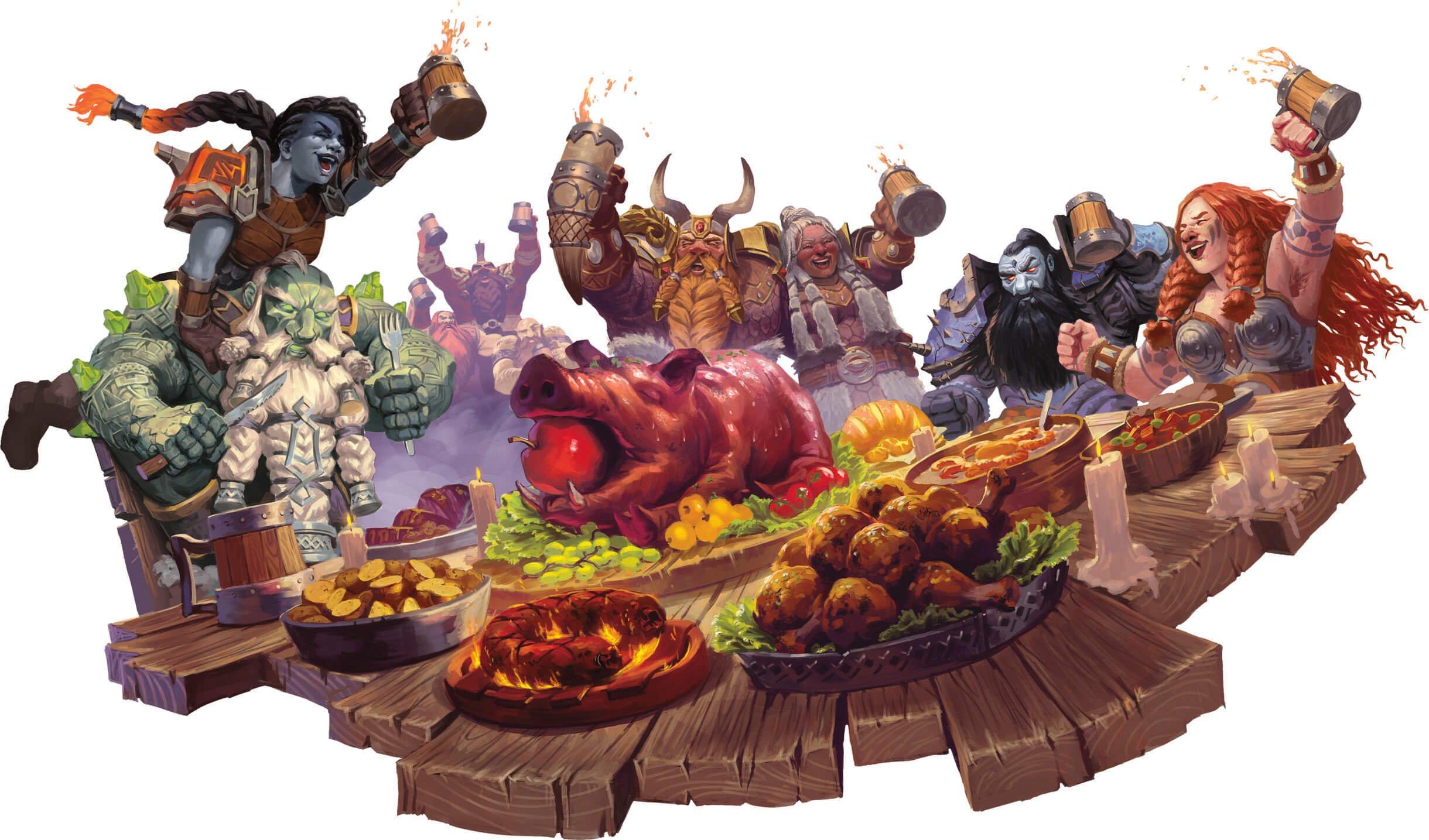
Production professions use the crafting equipment rules from the Player’s Handbook, and the crafting magical items rules from the Dungeon Master’s Guide, but with a few tweaks. Instead of using Arcana proficiency or prepared spells, production professionals can use specific recipes and magically infused ingredients to create their magic items. Recipes range from Common magic items for low-level adventurers to Legendary items for high-level adventurers.
Production Professions
| Profession | Description |
|---|---|
| Alchemy | Requires proficiency with Alchemist’s Supplies or an Herbalism Kit. Craft potions, dusts, alchemical equipment, perfumes, and more. As your Proficiency Bonus increases, you’ll be able to craft potions of higher rarity. |
| Blacksmithing | Requires proficiency with Smith’s Tools or Mason’s Tools. Uses these tools and mined materials to create items out of metal or stone, and with leather and hide in some cases. As your Proficiency Bonus increases, you can craft more and more powerful magic weapons and armor. |
| Cooking | Requires proficiency with Brewer’s Supplies or Cook’s Utensils. Uses these tools along with ingredients to create mundane or magical edible items. A sufficiently skilled cook can even replicate the effects of the Heroes' Feast spell with an hour of prep time and 1,000 GP of resources. |
| Enchanting | Requires proficiency with Carpenter’s Tools, Potter’s Tools, or Woodcarver’s Tools. Use these tools combined with reagents to create magical items. Can also use these tools to disenchant certain magical items to collect residue to use in future enchantments. |
| Engineering | Requires proficiency with Tinker’s Tools. Combine magic, science, and gathered resources to create gadgets, many of which are infused with magic. |
| Inscription | Requires proficiency with Calligrapher’s Supplies, Cartographer’s Tools, or Painter’s Supplies. Using these tools, you can craft herb-infused pigments and inks that can create spellcasting foci, card decks, and even powerful, ability-boosting tomes and manuals as your skills progress. The Inscription profession also has a special General feat, Inscription Adept, that you can take as you progress in levels, which allows you to duplicate certain spell effects with your writing. |
| Jewelcrafting | Requires proficiency with Jeweler’s Tools or Glassblower’s Tools. Use these tools plus metals and gems to create jewelry and similar items. |
| Leatherworking | Requires proficiency with Leatherworker’s Tools or Cobbler’s Tools. Use these tools alongside items like leathers or hides to create mundane and magical armors and similar tools. |
| Tailoring | Requires proficiency with Weaver’s Tools. Use Weaver’s Tools along with cloth reagents to craft mundane goods and magical items like bags, cloaks, and robes. |
Backgrounds to Pair with Production Professions
| Background | Why It Pairs |
|---|---|
| Artisan | Since the Artisan background comes with the Origin feat of Crafter, selecting one of the tool proficiency requirements for any of the production professions would satisfy the prerequisites needed to undertake them. It also gives a decent story background for why your character has the building blocks of their professional skills. |
| Hermit | Alchemy has a prerequisite tool proficiency in either Alchemist’s Supplies or an Herbalism Kit, so the Hermit background works well for someone crafting potions out of the natural ingredients they grew up around. |
| Scribe or Sage | Proficiency in Calligrapher’s Supplies, as well as a flavor background with studying and copying over important information ties in nicely to the Inscription profession. |
Factions
Azeroth is defined by its factions—nations, organizations, cartels, and pacts that claim members from around the world. As characters interact with these factions, they can build a reputation among the organizations and earn tangible and intangible rewards.
The conflict between Alliance and Horde defines the modern history of Azeroth. After four wars, starting with the opening of the Dark Portal and continuing hot and cold over the course of almost thirty-five years, the conflict has simmered down to a tenuous truce.
The Alliance
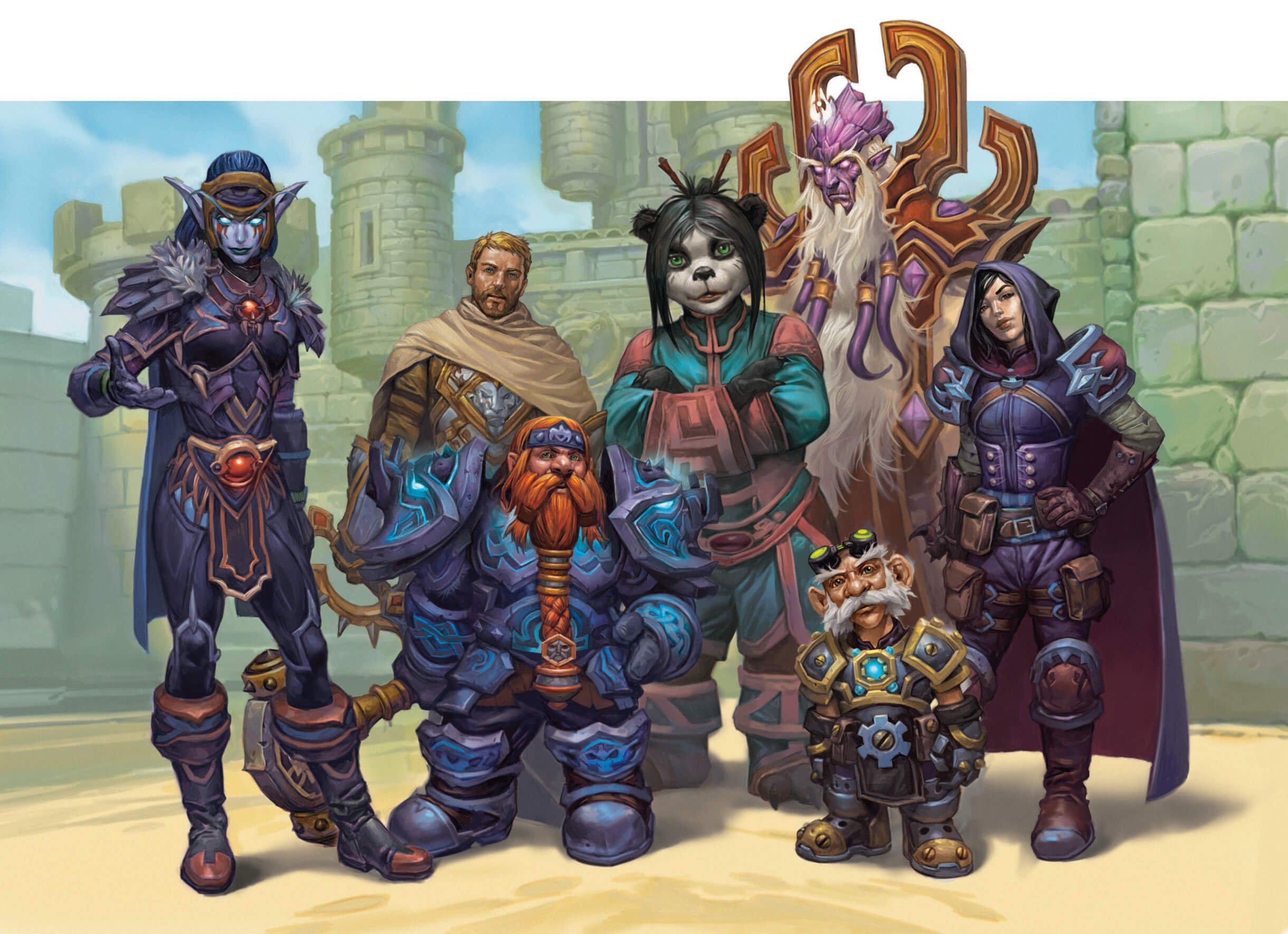
The peoples of the Alliance are bound together by proud traditions of nobility, honor, faith, justice, and sacrifice. The disparate cultures that make up this faction contribute technical, arcane, and spiritual wisdom toward the goal of a peaceful and just world.
The Alliance is a military coalition whose leadership is dependent on the unified will of its member peoples. By default, the high king (or other leader) of Stormwind has served as commander of the Alliance. In practice, the human king leads as part of a council made up of all the Alliance leaders.
Subfactions
Darnassus
The Darnassus faction represents the night elves of Azeroth, wherever they actually reside. The faction also encompasses the void elves, based in Telogrus Rift.
Exodar
The Exodar faction represents the draenei who came to Azeroth aboard the eponymously named vessel.
Gilneas
The Gilneas faction represents the nation of Gilneas and its people, including its worgen. Night elf druids taught Gilnean worgen a rite called the Ritual of Balance, which helps them control their transformation.
Gnomeregan
The Gnomeregan faction encompasses gnomes and mechagnomes. Before the reclamation of Gnomeregan, the faction was known as Gnomeregan Exiles.
Ironforge
The Ironforge faction encompasses dwarves who acknowledge the leadership of the Council of Three Hammers, the government formed by the union of the Bronzebeard, Dark Iron, and Wildhammer clans.
Obsidian Warders
Charged with defending the allies of the black dragonflight and protecting its strongholds, this dracthyr weyrn journeyed to Stormwind City to warn the Alliance of impending danger and subsequently joined forces.
Stormwind
The Stormwind faction encompasses the remnants of most of the human kingdoms of Azeroth, including Kul Tiras, Dalaran, and Stromgarde. Stormwind remains the strongest human nation on Azeroth.
Tushui
Pandaren who follow the path of Tushui, which emphasizes meditation and careful discernment, naturally attracted them to the cause of the Alliance.
The Horde
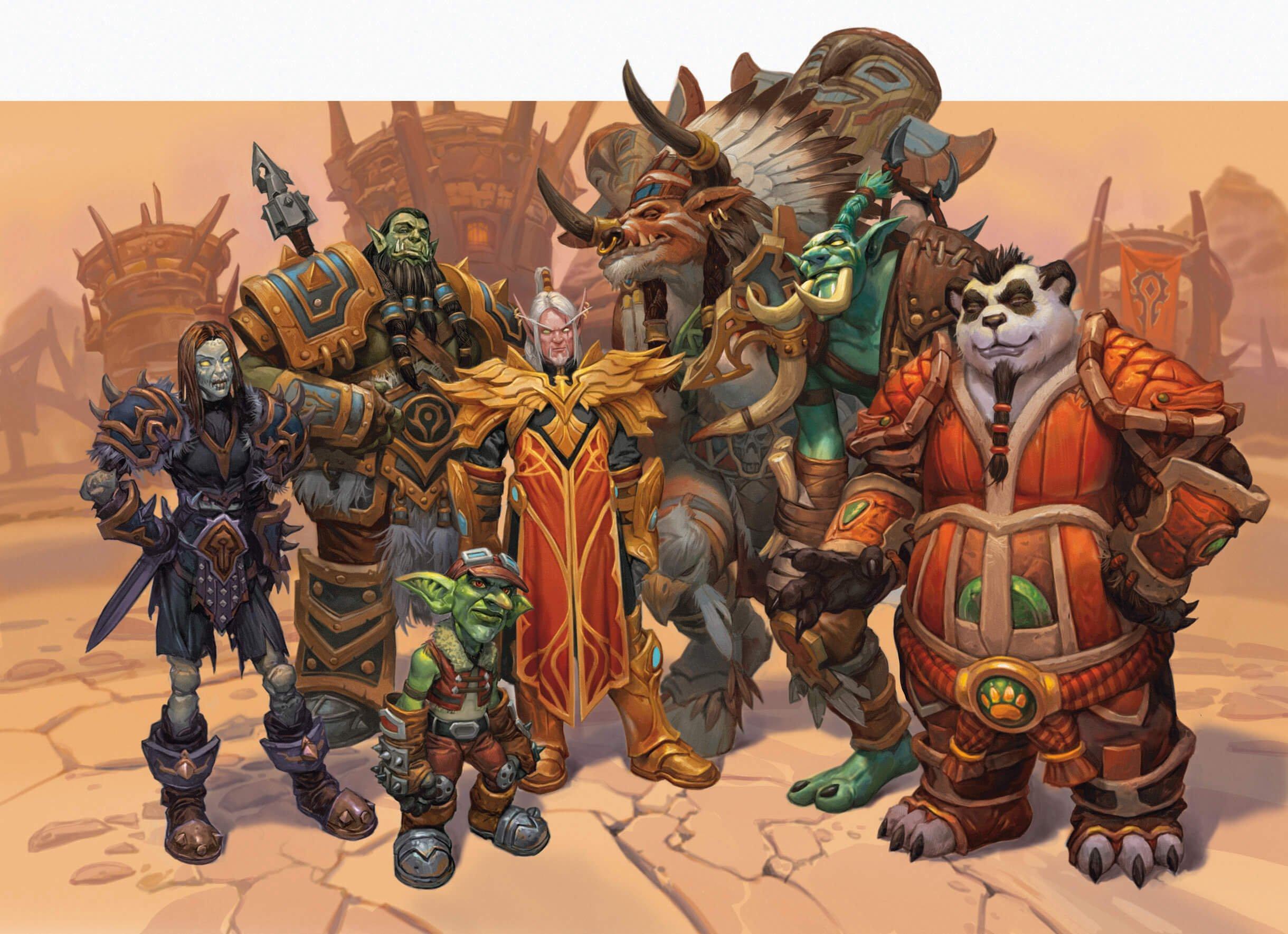
The proud nations of the Horde are loosely joined in an alliance of convenience against a hostile world that would see them destroyed. Focused and ferocious, the Horde values strength and honor but struggles to keep aggression in check. The Horde’s ideals are unity, freedom, and hope.
From the time of its founding until the end of the Fourth War, the Horde was led by a single figure who bore the title of warchief. Now a Horde Council made up of the leaders of the Horde’s subfactions governs the faction.
Subfactions
Bilgewater Cartel
The Bilgewater Cartel, one of the four major goblin cartels, represents those goblins who have aligned themselves with the Horde. The cartel’s business has been described as “the classical goblin arts: building things and blowing them up.”
Dark Talons
The Dark Talons, a dracthyr weyrn trained to be an elite force of destruction feared by enemies of the black dragonflight and allied with the Horde.
Darkspear Tribe
The Darkspear tribe was the first group of trolls to join forces with the Horde. The Zandalari Empire, on joining the Horde, aligned with the Darkspears to form a united troll faction.
Huojin
Pandaren who follow the philosophical path of Huojin, which teaches direct action, were drawn to the practical nature of the Horde.
Orgrimmar
Orgrimmar is the capital city of the orcs in Azeroth and is practically synonymous with the Horde. Most orcs across Azeroth consider themselves citizens of Orgrimmar.
Silvermoon City
As the capital of the kingdom of Quel’Thalas, Silvermoon City represents the entirety of the blood elf kingdom. The nightborne elves of Suramar are also considered part of this faction.
Thunder Bluff
The Thunder Bluff faction represents those united tauren tribes who have aligned themselves with the Horde.
Undercity
The Undercity faction encompasses the Forsaken aligned with the Horde, who broke free from the control of the Lich King. The Desolate Council was formed to govern the Forsaken after its original leader, Sylvanas Windrunner, stepped into the leadership of the Horde as warchief.
Other Factions
Factions
Argent Dawn
The knightly Order of the Argent Dawn is dedicated to protecting Azeroth from the Burning Legion, the Scourge, and other forces that seek to destroy the world. Neutral in the continual conflict between the Alliance and the Horde, the Argent Dawn calls both factions allies in its higher purpose of resisting these forces of evil. The order’s headquarters is Light’s Hope Chapel, in the Eastern Plaguelands.
Cenarion Circle
Named for the demigod Cenarius, the Cenarion Circle is a worldwide order keeping watch over Azeroth’s druids and protecting the natural balance. Since the end of the Third War, the circle has accepted druids from both the Alliance and the Horde.
Earthen Ring
The Earthen Ring is a gathering of Azeroth’s most powerful shaman, working together to preserve the balance among the elements. The members of the Earthen Ring oppose destructive forces such as the Twilight’s Hammer cult and the Burning Legion. Insisting on a neutral stance in mortal conflicts, the Earthen Ring welcomes members from both the Alliance and the Horde.
Explorers’ League & Reliquary
Affiliated with the Alliance and the Horde respectively, the Explorers’ League and the Reliquary are scholarly organizations dedicated to the practice of archaeology and the study of history. For most of recent history, the organizations were bitter rivals, but with the reemergence of the Dragon Isles and the discovery of Khaz Algar, the two have set aside their old rivalry and formed joint expeditions.
Kirin Tor
The Kirin Tor began as a secretive mages’ guild within the Empire of Arathor. With the fall of Arathor, Dalaran became a nation in its own right, and the Council of Six who led the Kirin Tor became the rulers of this city-state. Razed during the Third War, Dalaran was eventually transformed into a flying island. Above the Isle of Dorn in Khaz Algar, it met its doom, but the survivors of the Kirin Tor remain in Dornogal, coordinating the magical defense of Azeroth.
Steamwheedle Cartel
The Steamwheedle Cartel is one of the largest and richest goblin cartels, having maintained a careful neutrality in the conflict between the Alliance and the Horde since the Second War. The cartel’s hands are in virtually every line of work, with a specialty in premium-grade alchemy. Besides potions, the cartel also deals in fuels, poisons, and industrial chemicals—what some goblins describe as “liquid assets.”
Valdrakken Accord
The Valdrakken Accord is the unified might of all dragonkind, seeking to protect not only the Dragon Isles but all of Azeroth according to the ancient charge given to the five Dragon Aspects. The accord has also expanded its mission to include dragons beyond the five flights.
Adventure Across the World
With D&D: World of Warcraft®, your character’s professional and faction alignments are just a part of the greater adventures to be had. You could face down the fiendish forces of the Burning Legion, run afoul of corrupted dragons, and be caught up in the machinations of the Old Gods.
Where will your life in Azeroth lead you?

Comments