



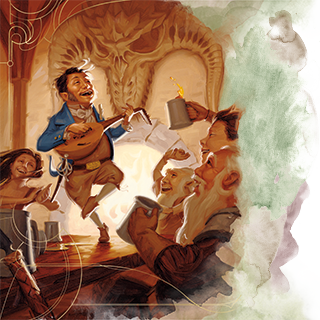
A paleontologist is a scholar of ancient life, studying the remains of creatures long extinct to understand the world as it once was, and how it became what it is today. Through fossils, bones, tracks, and preserved imprints, they reconstruct forgotten ecosystems and uncover truths buried beneath layers of stone and time. Whether working in museums, universities, royal collections, or remote dig sites, they believe that protecting the past is essential to safeguarding the future.
- Ability Scores: Constitution, Intelligence, Wisdom
- Feat: Tough
- Skill Proficiencies: Investigation and your choice of Animal Handling, Nature, or Survival
- Tool Proficiencies: Mason's Tools
- Equipment: Choose A or B: (A) a shovel, a miner's pick, two light hammers, Mason's Tools, a fist-sized fossil (bone fragment, claw, skull, ammonite, or trilobite), an Explorer's Pack, a Healer's Kit, a set of traveler's clothes, and 15 GP; or (B) 50 GP
While others must often navigate lengthy requests, costly permits, or academic scrutiny to gain access to curated collections, fossil archives, or preserved remains, you have free and reasonable access to the majority of a museum’s public and research holdings. However, certain exhibits or repositories—particularly those that are rare, magically significant, culturally protected, or restricted for security reasons—may still require special permission to examine.
You are familiar with the personnel, procedures, and scholarly customs common to museums, excavation teams, and academic collections. You can usually identify the appropriate staff to consult, request materials properly, and navigate institutional bureaucracy with relative ease.
Additionally, scholars, curators, archivists, and researchers who recognize your expertise often extend professional courtesy. At other museums, universities, or historical institutions, you are likely to receive preferential treatment, reasonable access to records or collections, and modest assistance when pursuing academic or scientific inquiry, provided your requests do not endanger the institution or its holdings.
Contacts
Through your studies, you may have connections to museums, universities, royal archives, excavation teams, or independent scholars. These contacts can provide information about ancient sites, lost species, or ongoing expeditions, and may seek your expertise when unusual discoveries are made or historical mysteries resurface.
Previous Versions
| Name | Date Modified | Views | Adds | Version | Actions |
|---|---|---|---|---|---|
|
1/30/2026 1:17:43 PM
|
8
|
0
|
--
|
Coming Soon
|
|
|
1/30/2026 9:35:42 PM
|
10
|
0
|
1
|
Coming Soon
|
|
|
1/30/2026 10:05:09 PM
|
10
|
0
|
--
|
Coming Soon
|
|
|
1/30/2026 10:17:40 PM
|
10
|
0
|
1
|
Coming Soon
|
|
|
1/31/2026 5:46:58 AM
|
11
|
0
|
--
|
Coming Soon
|
|
|
2/15/2026 4:04:45 AM
|
11
|
0
|
1.5
|
Coming Soon
|
|
|
2/15/2026 4:08:59 AM
|
12
|
0
|
1.6
|
Coming Soon
|
|
|
2/15/2026 4:10:41 AM
|
11
|
0
|
1.7
|
Coming Soon
|
|
|
2/15/2026 4:12:08 AM
|
11
|
0
|
1.8
|
Coming Soon
|
|
|
4/18/2026 9:42:31 PM
|
19
|
1
|
1.8.1
|
Coming Soon
|
|
|
4/18/2026 9:54:33 PM
|
18
|
0
|
2.0
|
Coming Soon
|
|
|
4/18/2026 9:58:49 PM
|
18
|
0
|
2.1
|
Coming Soon
|
Comments