



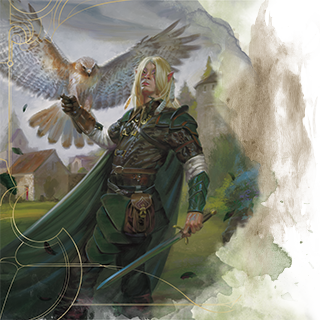
A hierarch is the sorcerer version of a lich. Hierarch's bind their soul to their blood, and in turn their bloodline, in order to reach immortality. Legacy is what lives on.
"When we think of immortality, many of us think of achieving it through our legacy. Continuing the family line, becoming parents and raising a new generation so that a part of us may live on in them. Hierarchs take that to its extreme conclusion. If their bloodline remains strong, if it passes down from one generation to the next uninterrupted, what lives on is not just their legacy, but themselves.
A Sorcerer who wishes to become a Hierarch has perhaps one of the harshest journeys to achieve lichdom in front of them. A hopeful Hierarch will have to go through a particularly complicated and painful ritual with one goal in mind: to bind their souls to their blood. Hierarchs turn the blood running through their veins into their own phylactery.
The specifics of this ritual differ by blood type and sorcerous magic. It’s not uncommon for a Hierarch-to-be to go through it several times, expecting to die during their failed attempts and requesting the help of a cleric to be brought to life so that the sorcerer can try again. The process is arduous, but the fruits of the labor are worth it. Once completed, the Hierarch’s blood and soul become one, and then, the true work begins.
The Hierarch will then ensure that their blood is passed on to their descendants. Their children, and their children in turn, will all be living phylacteries to the Hierarch. As long as they live, the Hierarch won’t die.
Those descendants enjoy the sorcerous powers of the Hierarch, becoming incredibly powerful spellcasters in their own right, and the Hierarch in turn gains power over them. A Hierarch gives their bloodline a poisoned gift. Anyone with the Hierarch’s cursed blood running through their veins is not only the Hierarch’s phylactery, but also their puppet. The descendants might be incredibly powerful, but they must all answer to the Hierarch’s will, whether they want to or not. This allows the Hierarch to have the power of their entire sorcerous family protecting them.The more descendants there are, the more phylacteries of the Hierarch exist, and the more people there are to defend and enact the Hierarch’s will.
But with each generation, the Hierarch’s blood becomes thin. The more generations are removed from the Hierarch, the less control the Hierarch has over them, and the less blood they share. After enough generations, the Hierarch loses the strength to retain their physical form, turning into the Hierarch’s version of a Demilich, called a Figure Head. Once the last of the Hierarch’s descendants that still have the Hierarch’s blood coursing through their veins dies, so does the Hierarch. But Hierarchs have fought too hard for immortality to let this stop them. When they feel their powers waning with the passing generations, they start to work on a different, even darker ritual. They select one of their descendants, a particularly powerful one, one with access to great amounts of sorcerous magic. Hierarchs call this descendant their Heir, and pamper them and train them to ensure that their magical abilities grow as strong as possible, almost rivaling theirs. Once the Heir is sufficiently strong, the ritual may commence. The Hierarch sheds their mortal body and possesses the body of the heir, using the phylactery-like blood that runs through the heir’s veins as an anchor for their soul. Once the process is complete, the Hierarch’s journey begins again as they have gained a new body. They strengthen their bloodline again, ensuring that it passes down the generations, preserving their immortality and gaining the support of a powerful magical lineage that can do nothing but obey their every word. When going against a Hierarch, you go against them and their entire bloodline.”
Damage Resistances Cold, Necrotic, Poison
Condition Immunities Charmed, Exhaustion, Frightened, Paralyzed, Poisoned
Blood Phylactery. A destroyed Hierarch gains a new body as long as there are any members of its bloodline still alive still acting as its phylacteries. If the Hierarch has 10 or more phylacteries, it takes 1d10 days to reform; If the Hierarch has 5 or more phylacteries, it takes 1d10 weeks to reform; If the Hierarch has fewer than 5 phylacteries, it takes 1d10 months to reform. The new body appears within 5 feet of the phylactery closest to the Hierarch in the family tree. If the Hierarch is destroyed by a phylactery, that phylactery has a chance to become the Hierarch.
Undead. You are now an undead and do not require air, food, drink, or sleep.
Turn Resistance. The Hierarch has advantage on saving throws against any effect that turns undead.
Comments