



ORIGINS
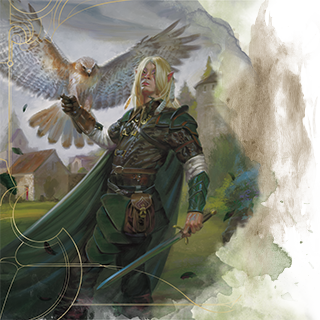
There was once a druid, a peaceful fellow that passes his days in a swamp with a few others. One day, the druid's alter was raided by orcs and he found himself, along with 3 others, chased in the swamp. Three nights later, his companions were dead; bleeding from their neck and their fingers turned black. He realized that nature is full of death and that even the smallest insects could kill the strongest creatures. Thinking only of revenge, he used his druidic abilities to harness the power of the fleas and infested the orc raider's camp. They all perished and the druid headed back to the swamp, taking an oath of vengeance.
CAUSES
The disease is spread through infected fleas, which bite a creature and the disease enters the blood, spreading across the entire body.
SYMPTOMS
Any creature affected by the disease experience fever, nausea, and photophobia. Lymph nods on the neck and the bubonic area get swollen and start bleeding. Fatal in untreated.Any creature affected by the disease has disadvantage on perception checks while in the sunlight. If an infected creature is immune to disease, they do not suffer the disease effects however they can still transport the flees and mites to others, possibly infecting them.
When you cast the infestation spell, your target must roll aginst your spell save DC or become infected with parasites. On a failed save, the parasites will stay on the target for 1d4 rounds dealing 1d4+wis mod Necrotic Damage. If the creature does not use their action to brush off the parasites within the number of rounds rolled, the creature will become cursed sprouting large bleeding blisters.
DIAGNOSIS
Identifying the disease takes a medicine (Wisdom) check, DC 15. The roll is made at disadvantage, unless familiar with the diseases origin.
CURE
Level 1-3: As far as cures, if the creature is healed by any magical means, the blisters will fade and their hit point total will be restored after a long rest. If the creature is not healed, then it must succeed on a DC 16 Con Saving throw or take on a point of exhaustion and remain ill until it's next long rest. This process continues until the creature has succeeded on the save or until the creature Dies of Exhaustion.
Level 4-6: The disease is not cured by any magical healing, except by a Paladin's lay on hands ability, the greater restoration spell, or the remove curse/disease spells. If not healed, it must succeed on a DC 18 Con Saving throw or take 2 points of exhaustion. The save can be made again at dawn and on a failed, the creature continues to take 2 points of exhaustion until it dies. On save, exhaustion level doesn't worsen, but also doesn't improve.
Level 7-11: The disease has has adapted to resist magical cures; if a creature attempts to cure this feature by magical means (excluding a paladin's lay on hands) they must roll a spell attack against the caster spell save DC in order to remove the effects.
Level 15 +: The disease/curse has has adapted to Become Immune to magical cures. If a creature attempts to cure this feature by magical means, (excluding a paladin's lay on hands) they must roll a Spell attack against the caster's spell DC. If failed, the disease is not removed and the creature also becomes infected. Exhaustion continues to escalate, still requiring a Constituiton Save Throw or obtain 2 exhaustion points. Further, ever time a bleeding creature fails the save throw, they permanently loose 5hp.
A very rare herb known as Sparkleaf can cure the symptoms of the disease if brewed and consumed as a tea. To acquire the Sparkleaf, one must locate a Shambling Mound that lives in a swamp, and remove the pruple flower with lightning-like patterns. To brew the tea, a creature proficient in Medicine or Herbalism Kit must succeed on 3 or more out of 5 DC 20 checks.
Previous Versions
| Name | Date Modified | Views | Adds | Version | Actions |
|---|---|---|---|---|---|
|
4/17/2024 8:19:16 PM
|
13
|
0
|
--
|
Coming Soon
|
Comments