



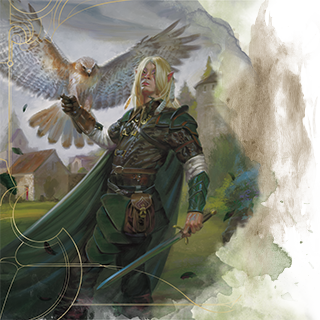
Ouroboros Soul Curse (Cursed Feat)
Prerequisite: Character level 1+, DM approval
This feat cannot be voluntarily removed
Your soul bears the mark of an ancient, self-consuming draconic force. This curse is not a source of power—it is a pressure system. It grants limited abilities at a cost, escalating toward loss of self if left unchecked.
The curse tracks Corruption Points (CP). As CP increases, the curse advances through stages, each imposing mechanical penalties and behavioral constraints.
This curse is hostile to its bearer.
Corruption Points (CP)
You begin with 0 CP.
You gain 1 CP when any of the following occur (maximum once per turn unless stated otherwise):
• You cast an Ouroboros spell
• You reduce a creature to 0 HP using an Ouroboros spell
• You fail a Wisdom saving throw against one of your own curse effects
• You knowingly act in a way that feeds the curse’s instincts (violence, domination, indulgence), as defined by the feat—not by roleplay justification
You lose 1 CP after completing a long rest during which you do not cast an Ouroboros spell and do not gain CP from any source.
CP cannot be reduced below 0.
Curse Stages
Your current stage is determined by your CP total.
| CP | Stage |
|---|---|
| 0–2 | Stage I |
| 3–5 | Stage II |
| 6–8 | Stage III |
| 9–11 | Stage IV |
| 12+ | Stage V |
Stages do not skip.
Stage I — Dormant Pressure
The curse is present but quiet.
• You gain access to Fang of the Coil (cantrip)
• You have disadvantage on your first Wisdom saving throw made after casting an Ouroboros spell each day
This stage has no social or narrative effects.
Stage II — Intrusive Instinct
The curse begins to interfere.
• You gain access to Draconic Echo (1st-level spell)
• After casting an Ouroboros spell, you must succeed on a DC 10 Wisdom saving throw or gain 1 CP (in addition to any CP gained from casting)
This represents creeping loss of restraint, not overt transformation.
Stage III — Revelation Threshold
The curse can no longer remain fully hidden.
• You gain access to Primal Breath (3rd-level spell)
• When you reach Stage III for the first time, the Ouroboros Revelation Event occurs
Ouroboros Revelation Event
This is a mechanical event, not a narrative takeover.
• Immediately gain 1 CP
• Creatures of your choice within 10 feet must succeed on a Wisdom saving throw (DC = your spell save DC) or become frightened of you until the end of their next turn
This effect occurs once per character, not every time Stage III is entered.
No additional rolls. No DM improvisation beyond describing the moment.
Stage IV — Erosion of Control
The curse begins overriding judgment.
• You gain access to Ouroboros Ascendant (5th-level spell)
• You have disadvantage on Wisdom (Insight) and Charisma (Persuasion) checks
• When you fail a Wisdom saving throw, gain 1 additional CP
At this stage, the curse punishes reliance, not rewards it.
Stage V — Terminal Spiral
The curse is approaching self-destruction.
• You cannot reduce CP below 9 by resting
• When you cast an Ouroboros spell, you take necrotic damage equal to the spell’s level × 2, ignoring resistance
• If you begin your turn at 12+ CP, you must succeed on a DC 15 Wisdom saving throw or lose your reaction and bonus action that turn
This stage is designed to be unsustainable.
Spellcasting Rules
All Ouroboros spells:
• Count as spells for all rules interactions
• Use your existing spellcasting ability (or Constitution if you have none)
• Belong to one spell school only
• Cannot be cast at a level higher than normally allowed
• No spell granted by this curse exceeds 5th level
• Never bypass immunity, legendary resistance, or core monster rules
If a rule interaction is unclear, the default assumption is restriction, not permission.
When Curse Saves Are Rolled
A curse saving throw is required only when the curse meaningfully asserts itself.
You make a Wisdom saving throw against the curse when any of the following occur:
-
Immediately after casting an Ouroboros spell
(Stage II+ effects already reference this.) -
At the start of your turn if you are at Stage IV or V and you have 9 or more CP
-
When a feature of the curse explicitly calls for it
(Stage IV: additional CP on failure, Stage V: action loss check)
No other situations trigger curse saves.
Curse Save Details
• Saving Throw: Wisdom
• DC:
-
Stage I–II: 10
-
Stage III: 12
-
Stage IV: 14
-
Stage V: 15
Failure Threshold: How Many Failed Saves?
You do not roll the 1d20 table on a single failed save.
Instead, the curse tracks Accumulated Failures.
Accumulated Failures
When you fail a curse saving throw, mark 1 Failure.
Failures reset when:
• You complete a long rest and reduce CP by at least 1
• Your CP total drops below the threshold of your current stage
Failures do not reset automatically on rest if CP remains high.
Triggering the 1d20 Loss of Control Roll
You roll on the Ouroboros Loss of Control Table when:
• You accumulate 3 failed curse saving throws without resetting
• You are at Stage IV or V
Once the 1d20 roll resolves:
• All accumulated failures are cleared
• The curse returns to passive pressure
I. What the 1d20 Loss-of-Control Roll Represents
The 1d20 roll is not possession, not domination, and not mind control.
Mechanically, it represents a forced impulse overriding restraint for a brief window.
Rules-wise, treat the result as:
A compulsory behavior imposed by a hostile effect, resolved over no more than one round, that does not grant extra actions, turns, or resources.
The character:
• Retains their alignment, memories, and identity
• Does not gain advantage, bonus damage, or extra attacks
• Is not allowed to “optimize” the outcome
II. When the 1d20 Roll Resolves
Once triggered (after 3 failed curse saves at Stage IV or V):
• The roll resolves immediately if possible
• Otherwise, it resolves at the start of the bearer’s next turn
• The entire effect must conclude by the end of that turn or round
No lingering multi-scene effects unless explicitly stated.
III. Target Determination (Critical for PvP Safety)
Before resolving the result, the DM determines eligible targets using the following strict priority order:
Target Priority Order
-
Hostile creatures (actively opposing the party)
-
Environmental objects (structures, terrain, items)
-
Neutral or allied NPCs
-
Player characters (only if PvP is explicitly allowed)
If PvP is not allowed at the table:
• Player characters are never valid targets
• The curse redirects to the highest valid category above
This is not optional. This is a hard rule.
IV. Result Bands Explained
Results 1–6: Incriminating Loss of Composure
These results are nonviolent and non-damaging.
They create:
• Social fallout
• Tactical awkwardness
• Reputation damage
Examples of mechanical impact:
• Loud draconic vocalization reveals position (enemies gain advantage on Perception checks)
• Intimidating posture imposes disadvantage on Persuasion checks for 1 hour
• Hoarding or dominance behavior causes an NPC to become hostile or fearful
No attacks are made.
No actions are stolen.
No damage is dealt.
These exist to expose the curse, not punish combat-wise.
Results 7–13: Reckless or Dangerous Compulsion
These results affect combat or positioning, but still avoid PvP.
The curse may force the bearer to:
• Move toward the nearest hostile creature
• Make a single weapon attack against a hostile target
• Break stealth, concentration, or cover
• Refuse to retreat or disengage when tactically sound
Mechanical limits:
• Uses existing actions only
• No extra attacks
• No spellcasting unless explicitly stated
• Cannot target allies
If no hostile targets exist:
• The action redirects to environment destruction (walls, doors, objects)
• Or a fear-based outburst affecting NPCs (Frightened condition, 1 round)
This tier is dangerous, not murderous.
Results 14–19: Violent, Destructive, or Catastrophic
“Violent” does not mean “party wipe.”
It means the curse chooses maximum impact with minimum duration.
Mechanical Rules for 14–19 Results
• The bearer may be forced to:
-
Make one attack at disadvantage against the nearest hostile creature
-
Use an Ouroboros spell immediately (if available), gaining CP as normal
-
Destroy or severely damage a major object or structure
-
Charge into a clearly dangerous area
• Damage is rolled normally
• Legendary resistance, immunity, and reactions apply as usual
• No creature is targeted outside the priority order
If the bearer is only surrounded by allies and PvP is disallowed:
• The curse cannot force an attack
• Instead, it causes:
-
Environmental devastation
-
A fear-based shockwave (Frightened, prone, restrained for 1 round)
-
Self-harm effects (necrotic damage, exhaustion, lost reactions)
Catastrophic means costly, not lethal to the party.
Result 20: The Curse Chooses
This is the only open-ended result—but even here, it’s bounded.
Hard limits:
• No instant death
• No permanent loss of character
• No overriding player consent rules
• No forced PvP if disallowed
Appropriate uses:
• Immediate CP spike
• Forced casting of a known Ouroboros spell
• Severe self-inflicted damage
• Narrative exposure to enemies or authorities
• Environmental collapse that changes the battlefield
V. Aftermath Rules
After resolving the 1d20 result:
• Accumulated curse failures reset to 0
• CP remains unchanged unless the result specifies otherwise
• The player regains full control immediately
• No lingering compulsion remains
Previous Versions
| Name | Date Modified | Views | Adds | Version | Actions |
|---|---|---|---|---|---|
|
1/5/2026 9:49:37 PM
|
15
|
1
|
A
|
Coming Soon
|
Comments