



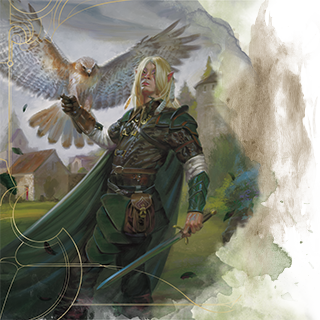
Zero Level Origin
History is full of examples of child prodigies, highly skilled youth capable of feats and abilities that rival and often surpass many adults. What follows is a set of rules, laid out in the form of an Origin Feat that provide a player the means to build and map out a more comprehensive background for their heroic character, whether it be fantasy, modern or futuristic role-play.
This special background allows a player to take the time to develop their character with details and features, that exceed what a normal character would be granted at 1st level with pre-established backgrounds.
These are the “other kids.” The ones that freak out the adults with their amazing, and unusual capabilities. Normal characters when created don't have this kind of focus. This kind of zero level character is akin to a real world genius like Beethoven, Newton, or Einstein. Perhaps the character is a child athlete built like a body builder, or a gifted martial artist. Zero level characters will retain many of the benefits obtained in their background, throughout the characters career.
While using zero level play rules, zero level characters do not gain Experience Points, but instead; earn Ability Score statistics, traits, skills, aptitudes, benefits, and apprentice-like class features over the course of play. These rules replace and bypass the normal limits imposed by picking a standard background. A player can start zero level play at a characters birth, and a character can remain zero level well past their teenage years, and even into young adulthood. The benefits a zero level character earns, will be commensurate with the amount of time invested by the player in zero level play. A DM will monitor the provided awards closely to insure that an imbalance in the game does not occur, making appropriate adjustments as needed.
Record Keeping
This feat requires that the player keep a record of acquired benefits as the character progresses. This information defines which Zero Traits will be lost and retained throughout the characters adulthood. When a character matures and becomes 1st level, any one of these Zero Traits in aggregate can serve as pre-qualifiers to acquire other class abilities, or feats. Record keeping will include ability score progress, hit points and all other relevant data to track a zero level characters young life as they strive to reach their first level.
Morality & Ethics
If morality is tracked in the game, the following might be considered. The influences around a Zero-Level character allow for some pretty quick moral and ethical shifts. As a result the zero level characters alignment will swing through the spectrum between law and chaos, while the evil and good pendulum will stabilize much quicker in youth. Of course, a DM can establish a prescribed set of circumstances that would reinforce one moral and ethical framework over another, such as infernal heritage, or a rigid moral upbringing.
The Folly of Fear and Fascination
The DM will call for occasional and appropriate ability checks or saving throws to determine if any reasonable challenge, such as an encounter with a creature, a social situation, or a game of dodge-ball, would deny the zero level character the ability to act without fear, anxiety, confusion or fascination.
These checks will be appropriate to the encounter or scene. If a character fails the assigned DC on one of these saves or checks, the character will be overwhelmed by the circumstances. As a result, a character struck by fear, might lose control and panic. They could suffer an anxiety attack, become mesmerized with awe, or become grievously perplexed over a social interaction. If they fail they might run away physically or emotionally shatter. They might lose control of their anger, or get struck with sadness for 1d4 rounds or minutes if they failed by a large margin. If the character fails the DC by 10; the zero-level character is likely ‘incapacitated’ and unable to act at all.
A zero-level character that frequently experiences similar encounters and had previously generated successful checks while dealing with them, might dispense with a check entirely. They would still feel fear, but wont be debilitated by it. It is a good idea for the player to record repeated encounters such as these, to be able to petition the DM for such improvements, due to their experiences.
What are Zero Traits?
A Zero Level character at birth and well into their young adult years will automatically possess and acquire many Zero Traits over time. A character will retain many of these zero traits throughout their life. Some of the zero traits gained will be altered as the zero-level character ages, ceasing alterations to them, once the character acquires their first level. The rule is "Anything can be earned, through quest, through training, and through dedication." If a player can spend all that time in zero level play, they can gain the fruits of that play, even if it appears to wildly exceed what a normal 1st level character would possess.
Zero Growth Trait: A zero-level character rolls a d6 die for each ability score when they are first created. They will later earn two additional d6 die, for each individual ability, when the character exhibits a pattern of success or failure, in tasks that utilize a specific ability. As a zero-level character ages, they will have earned 3d6 per ability score by the time they become a young adult. A character can earn the right, or be forced, to retrain/reroll, any previously earned d6 due to in game circumstances.
A player should keep track of a characters previously rolled d6 die, to be able to retrain/reroll them throughout a zero level characters career. Once a zero level character matures and all Ability Scores are established this trait is complete and will generally not allow Retraining or Rerolling any individual d6 again. It should be noted that when circumstances force a Reroll of an individual d6 in an ability score array, the player has to replace a specific, or previously rolled value, even if it is lower than the value it’s replacing. This simulates the trials and tribulations of growing up, for better or for worse.
Newborn: If a character starts play at birth, a DM will need to award 1 to 3 ability score points, overtime, to the newborn as it ages to toddler-hood, rather than giving the character a d6 die. Once a character becomes a toddler, the DM can award the character its first d6 for each ability score, as they are earned. It should be noted that it is possible to roll a lower value than what the toddler has already earned, and as mentioned above, if that value is lower, it is kept and recorded.
The DM will award a characters “eligibility” to apply three separate +1 bonuses to their ability scores, with a max of +2 to any single score. A player can delay assigning them once the character is eligible.
Zero Vigor Trait: All zero level characters start out with 3+ their Constitution modifier in hit points, with a minimum of 3. The DM will reward additional hit points based on circumstances as the character ages, often topping out at 6 points. However if circumstances permit, a zero level character can exceed this value due to extreme circumstances.
If the hit points acquired this way exceed what you would normally obtain from your first level, then the zero level value replaces it.
The young benefit from having bodies that heal quickly as they are constantly growing. A Zero-Level character has a higher threshold of death, allowing them to make death saving throws on a DC of 5, versus 10 as a young adult would. As a character ages into adulthood, they don't gain this specific benefit of the Zero Vigor Trait any longer, and their threshold DC of their death saving throw becomes the normal value of 10. An adult heals slower, and finds it harder to adapt to shock, as the adult is not as pliable as they were in youth. A zero level character, because of their pliability, often take rudimentary damage as exhaustion instead of hit point damage. If they do sustain hit point damage it is very debilitating. This trait goes away with maturity.
Zero Assault Trait: A zero-level character is not very skilled in combat and has a hard time landing a successful strike due to their lack of experience. An “opponent” of a zero-level character is considered to have resistance to all damage dealt by that character; however, the zero-level character can decide to attempt to do normal damage to an opponent if they decide to make that attack with disadvantage. This Trait goes away with maturity.
Zero Proficiency Trait: The longer a zero level character plays through events, the more “Zero Proficiency Traits” they can acquire as a reward. The DM will determine what limits to their acquisition they should be. These proficiency traits are either skills, or tools, acquired from their species, their culture, some form of education, specific training or from an occupational pursuit.
When they first acquire this zero proficiency trait, they have a score of 0, and are considered “Savvy”. If some check requires them to actually have a skill proficiency to roll it, or the DC is lower as a result of training, they will have met the requirements to make the check. Over time they can increase the bonus to 1 “Adept” or 2 “Proficient.”
Once a zero level character matures and takes on a class level they will follow the normal proficiency progression for a skill they are proficient with. For the traits they are only ‘savvy’ at or ‘adept’ in, they will need to acquire further training as a first level character to progress to normal proficiency levels; otherwise the bonus for a Zero Proficiency Trait is just 0 or +1 throughout the zero level characters career.
Zero Aptitude Trait: The longer a zero level character plays through events, the more “Zero Aptitude Traits” they can acquire as an award. The DM will determine what limits to their acquisition they should be. A zero aptitude trait is simply a +1 or +2 aptitude bonus to an ability or skill check in a very specific “circumstance.” An example is making an intelligence check, or picking a lock where “math” would be involved, meaning; a zero level character would have a ‘zero aptitude trait’ towards checks that involve ‘math.’
Zero Feat Trait: The longer a zero level character plays through events, the more “Zero Feat Traits” they can acquire as a reward. The DM will determine what limits to their acquisition they should be. A zero level character is only able to use one aspect of a normal feat, gained through training, or through some species or cultural source.
Examples of the benefits received, are a physical trick, a magical ability, or a combat bonus. This trait awards ‘only’ one aspect of a feat at a time. It is possible to gain a single feats entire suite of benefits, as individual zero feats, but it won’t ever award the zero level character the ability score bonuses offered by many of those feats.
Zero Save Trait: The longer a zero level character plays through events, the more “Zero Save Traits” they can acquire as a reward. The DM will determine what limits to their acquisition they should be. A character can only gain +1 to a specific saving throw as a zero level character. Any specific saving throw bonus acquired by gaining a class level supersedes this bonus, and is not in addition too.
If a zero level character should gain a saving throw bonus to a specific energy type, damage type, or circumstance, that bonus ‘does’ stack with any normal saving throws obtained later in a zero level characters career. The character retains these kinds of Zero Save Traits throughout their career.
Zero Benefit Trait: The longer a zero level character plays through events, the more “Zero Benefit Traits” they can acquire. The DM will determine what limits to their acquisition they should be. As the zero-level character reaches a milestone due to age, education, training, or natural growth, many benefits can be acquired. Some will come from their culture, their species, or ancestry, while others are circumstantial, supernatural, or innate to them.
An example is the species specific training in the use of a weapon, or the stone cunning capability. Some are similar to the above proficiency traits, only it doesn’t require a bonus to reflect the characters capability. An example of this is armor training, languages, innate spells, or other benefits from changes in environmental circumstances the zero-level character is exposed to. These benefits will be awarded individually and incrementally during play. There are some “Zero Benefit Traits” that can be awarded only to go away due to maturity or DM prescribed circumstances.
Zero Size Trait: The size of a youth is considered small, toddlers and lower are considered diminutive. The DM may decide at what point any character changes their size category, or apply the change early if the circumstances are appropriate. The DM will evaluate the age, health, cultural training, and their species to determine changes in size. As a zero-level character grows in size they gain all the benefits and drawbacks associated with their size. The Carrying Capacity of a child's is 1/4 what a mature adult/teenager can carry, a toddler its 1/6, an infant is 1/8 or not feasible. This Trait changes and eventually goes away with maturity and the characters Carrying Capacity is rated and calculated normally.
Zero Speed Trait: The characters speed is decided by virtue of the characters actual age category, not just size. It’s a minus 10 if they are toddlers, and minus 5 while they are a youth. The DM may decide at what point any character changes their speed. If a character is normally the size of an adult despite their age, their speed will be adjusted. The DM will evaluate the age, health, cultural training, and their species to determine their speed trait. This Trait changes with maturity and is rated and calculated normally.
Zero Vision Trait: The young have double the visual acuity of an adult barring any abnormalities, so all vision distances listed are doubled. This Trait goes away once the DM determines the character is mature.
Zero Apprentice Features Trait: A character gains and loses ANY Zero Apprentice Feature Traits incrementally, as they mature, make choices and encounter circumstances. Eventually they establish their actual 1st level Class features, saving throw proficiencies, Hit Die, Tool proficiencies, Skill proficiencies, that they would start out with, while overriding some zero-traits as appropriate. When a zero level character approaches their teenage and young adult stages of life, they begin to settle into Specific 1st level class features while losing other previously acquired class features that would not apply to their class.
For example, the Sneak Attack ability can be awarded as a “Zero Apprentice Feature Trait,” and then other specific traits at different times. This Zero Apprentice Feature Trait generally goes away once the class of a character is finally established. The DM may option using any specific 1st level class features as a base set of abilities with no options selected to simulate the abilities of an immature character. A Bards inspiration d2 or d3 die, a rogues d2 or d3 sneak attack ability, a fighter or barbarians base line abilities, a sorcerers innate magic as cantrips. Your zero level character would be classified as a pseudo-1st level character, even though your actual level is effectively 0.
Even when a zero level character establishes themselves as a 1st level character, a case could be made that some aspects of a class previously explored, and practiced for a long period of time, had a intrinsic effect on your characters history and story of success. The DM might allow the zero level character to retain some of those Zero Apprentice Class Feature Traits indefinitely. One example; is a character maintaining a d3 sneak attack ability throughout the characters career.
Previous Versions
| Name | Date Modified | Views | Adds | Version | Actions |
|---|---|---|---|---|---|
|
11/5/2024 10:07:59 AM
|
19
|
0
|
--
|
Coming Soon
|
|
|
10/13/2025 9:44:56 AM
|
27
|
2
|
--
|
Coming Soon
|
|
|
11/13/2025 9:37:40 AM
|
30
|
0
|
V3
|
Coming Soon
|
|
|
11/13/2025 9:49:50 AM
|
28
|
0
|
--
|
Coming Soon
|
|
|
1/3/2026 4:16:06 AM
|
39
|
0
|
5
|
Coming Soon
|
|
|
4/6/2026 8:54:14 AM
|
78
|
0
|
V6
|
Coming Soon
|
|
|
4/7/2026 8:16:16 AM
|
67
|
0
|
--
|
Coming Soon
|
Comments