



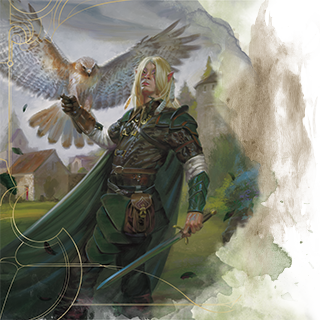
Knowledge Temptation
Roleplay feat / character flaw mechanic
The character’s hunger for knowledge is not simple curiosity. When reality reveals a hidden structure, they find it painful to look away before they have understood what kind of structure it is.
When the character encounters a dangerous, rare, ancient, forbidden, or poorly understood phenomenon, and there is a meaningful opportunity to observe, examine, record, preserve, or investigate it, the DM may call for a Wisdom saving throw.
Knowledge Temptation Save: Roll a Wisdom saving throw against the DC chosen by the DM.
The DC depends on the danger, rarity, and personal relevance of the mystery.
DC 10 — Minor Strange Phenomenon
Use this when the phenomenon is strange enough to attract attention, but not especially dangerous or personally important.
- A stone in a ruin is slightly warmer than the others.
- A plant grows where it should not survive.
- A small animal behaves with unnatural coordination.
- A faint symbol is scratched into a doorframe.
- A candle burns with the wrong color flame.
- A corpse is preserved slightly too well.
- A room echoes half a heartbeat late.
- A harmless spell has left minor magical residue.
DC 13 — Unusual Phenomenon
Use this when the phenomenon is clearly significant, potentially dangerous, or connected to unfamiliar magic, anatomy, history, technology, or natural law.
- An old inscription appears in a partly recognized language.
- A monster has strange anatomy or unnatural mutations.
- A warding mark has an unclear purpose.
- A relic carries magical residue but has no obvious function.
- A corpse has been altered by necromancy, transformation, or ritual work.
- Water flows uphill, roots avoid a chamber, or stone grows like wood.
- A magical trap appears inactive but not fully dead.
- An unknown machine, construct fragment, or arcane device is found.
- A creature acts against its expected instinct.
- A battlefield, ritual site, or grave preserves traces of an older event.
DC 15 — Personal Relevance
Use this when the phenomenon touches the character’s origin, identity, people, homeland, patron, lost memories, old bargain, personal relic, unanswered question, or central bond.
- A symbol is connected to the character’s people, family, order, temple, school, patron, or homeland.
- A clue resembles something from the character’s childhood or lost past.
- A relic resembles one the character already carries.
- A name, phrase, song, or inscription seems to remember the character incorrectly.
- A magical effect is tied to memory, identity, exile, belonging, or return.
- A fragment of lore may answer a question the character has pursued for years.
- A dangerous text mentions the character’s people, teacher, patron, bloodline, homeland, or old enemy.
- A place makes the character’s private history overlap with a larger historical mystery.
- An artifact responds to the character before they understand why.
- A half-correct record preserves something the character thought was secret.
DC 18 — Forbidden Answer
Use this rarely, when the phenomenon is forbidden, catastrophic, reality-warping, or capable of answering one of the character’s central life questions.
- A forbidden ritual is still partly active.
- A demon, aberration, ancient undead, or unique creature reveals hidden cosmological rules through its anatomy.
- A magical catastrophe is in progress.
- An active ward from a lost civilization still functions.
- A book, relic, or inscription could endanger a community if copied or misunderstood.
- A spell-structure appears to edit memory, identity, names, souls, or history.
- A clue may explain what the character lost in an old bargain.
- A truth could expose a hidden people, sacred place, sealed tomb, protected route, or dangerous secret.
- A phenomenon suggests the accepted history of the world is wrong.
- A discovery should clearly be destroyed, but might answer the question the character has built their life around.
On a success, the character may choose freely: flee, ignore the phenomenon, study it, preserve it, destroy it, or return later.
On a failure, the character is strongly compelled to spend one meaningful moment trying to observe, record, understand, preserve, approach, or identify the phenomenon before abandoning it, unless doing so would be immediately suicidal. In combat, this usually means a brief hesitation, one question, one note, one glance, or one action, as determined by the DM and player.
This compulsion should be interpreted as obsession, not stupidity. The character can still retreat, protect others, or act tactically, but unfinished knowledge creates friction.
Dangerous Notes
When the character knowingly risks safety, comfort, reputation, or tactical advantage in order to study a meaningful phenomenon, the DM may award Inspiration or allow the character to add 1d4 to one later check related to that same phenomenon.
The later check must be directly connected to what the character observed. It may be one of the following, as appropriate:
- Intelligence (Arcana)
- Intelligence (History)
- Intelligence (Nature)
- Intelligence (Religion)
- Intelligence (Investigation)
- Wisdom (Perception)
Examples of Meaningful Risk
- Taking a quick note on a monster instead of immediately retreating.
- Spending a round examining a ward before disabling or fleeing from it.
- Preserving a dangerous text instead of burning it immediately.
- Getting close enough to inspect a corpse, mutation, relic, or ritual mark.
- Delaying escape long enough to copy a symbol or sketch a mechanism.
- Asking one dangerous question when silence would be safer.
- Keeping a flawed record because destroying it would also destroy possible evidence.
The 1d4 bonus applies only if the risk was meaningful. Looking at a safe object in a quiet room does not count. Taking notes on a demon while others are deciding whether to run probably does.
Anatomy Before Panic
When the character sees a frightening creature, unnatural body, transformed being, demon, aberration, undead, monstrosity, construct, or other rare anatomy for the first time, they may attempt to study it before fully reacting.
The DM may call for one of the following checks:
- Intelligence (Nature)
- Intelligence (Arcana)
- Wisdom (Perception)
Example Triggers
- A ghoul has signs of unusual preservation or mutation.
- A demon’s body violates ordinary anatomy.
- A druid, lycanthrope, or shapeshifter is caught mid-transformation.
- A corpse is animated by a method the character does not recognize.
- A construct imitates organic movement too well.
- An aberration has sensory organs, limbs, or internal structures worth recording.
- A creature’s wounds reveal something impossible inside.
If the creature is dangerous and the character attempts to flee without first observing it, the DM may call for a Wisdom saving throw.
Anatomy Before Panic Save: Roll a Wisdom saving throw against the DC chosen by the DM, usually DC 13.
On a failure, the character hesitates long enough to take one quick note, ask one inappropriate question, or observe one anatomical feature before withdrawing. This should not force the character to stand still for an entire combat unless the player chooses to play the flaw harder.
Price of Knowledge
When the character discovers knowledge that could endanger a community, settlement, hidden people, ecosystem, faction, kingdom, or civilization if misused, but could also answer a major mystery, the DM may present this as a Knowledge Temptation.
Example Temptations
- A map to a hidden sanctuary, sealed tomb, sacred grove, protected route, or secret settlement.
- A ritual formula that could heal a land or destroy it.
- A record that exposes a secret people, faction, order, or refuge to outsiders.
- A spell that can restore lost memory but also rewrite identity.
- A dangerous machine that reveals a forgotten principle of magic.
- A demonological text that contains genuine anatomical or cosmological insight.
- A flawed translation that could mislead future scholars into disaster.
- A relic that proves an old myth was real, but also points toward where it can be found.
The character must choose one:
- Seal it: protect others, destroy or hide the knowledge, and lose immediate access to the answer.
- Study it: preserve or pursue the knowledge, accepting that it may create future danger.
- Delay it: attempt to secure the knowledge safely, requiring a relevant check, negotiation, ward, or future quest.
If the character tries to immediately choose the safe option while the knowledge is directly tied to their origin, people, homeland, patron, lost memories, old bargain, personal relic, unanswered question, or central bond, the DM may call for a Wisdom saving throw, usually DC 15 or higher.
Price of Knowledge Save: Roll a Wisdom saving throw against the DC chosen by the DM, usually DC 15 or higher.
On a failure, the character cannot immediately destroy or abandon the knowledge. They may still seek a safer way to contain, hide, delay, or control it.
Unfinished Bargain
The character may have gained knowledge through a bargain, lost something unnamed, made a pact, forgotten part of themselves, inherited a debt, or suspect that some part of their life was traded away.
When the character encounters magic or lore that affects memory, names, identity, home, exile, belonging, old bargains, lost souls, or forgotten debts, the DM may treat it as especially significant to them. They may gain advantage on checks to recognize its relevance, but may also be required to make a Wisdom saving throw to disengage from it while the mystery remains unresolved.
Example Triggers
- A spell alters memory, identity, names, belonging, or true form.
- A patron, spirit, devil, fey, god, or ancient force refers to a debt the character does not remember.
- A record describes the character’s life differently from how they remember it.
- A place feels like home even though the character has no memory of it.
- A bargain-mark, soul-mark, oath scar, or hidden sigil reacts to the character.
- An old contract, prophecy, or ritual text appears to include the character indirectly.
- A forgotten name, childhood phrase, or erased title returns in magical form.
Unfinished Bargain Save: Roll a Wisdom saving throw against the DC chosen by the DM, usually DC 15.
Previous Versions
| Name | Date Modified | Views | Adds | Version | Actions |
|---|---|---|---|---|---|
|
5/17/2026 12:28:00 AM
|
1
|
1
|
1
|
Coming Soon
|
|
|
5/17/2026 12:36:16 AM
|
1
|
1
|
--
|
Coming Soon
|
Comments