



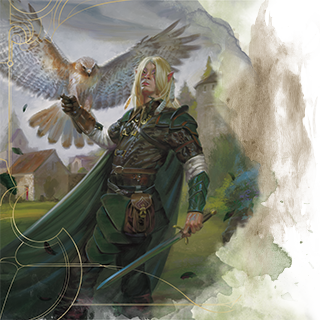
Combat Options from the Grit and Glory V6 optional rules. Combat options are common martial techniques available to anyone of any class. You can perform Combat Options only if you are proficient with the weapon you are wielding.
Select three of the choices from the provided list.
(Credits for Grit and Glory go to Apostol Apostolov, Kyle Taylor, Chip Llewellyn, and Jahmal McNair, with special help for the combat options from ilovegoodfood)
Melee Strikes
Power Attack: Before you make an attack with a melee weapon, you can choose to take a -5 penalty to the attack roll and attempt to put more of your raw strength behind a powerful blow. If the attack hits, you add 2 + your Strength modifier (minimum 1) to the attack's damage.
Feint: Before you make an attack with a finesse melee weapon that you are proficient with, you can spend your bonus action and perform a feint to deceive your target. Make an attack roll opposed by the target's Passive Insight. If you succeed, you have advantage on your next attack and you benefit from Dominance against your target until the start of your next turn. If you fail you have disadvantage on the next attack roll and you cannot succeed a Feint against this target for the rest of the encounter.
Shove/Trip: While wielding a melee weapon with the Reach property, or any Polearm weapon, you can spend one of your attacks to perform the Shove a Creature action (see Player's Handbook pg. 195) without the need of a free hand. Make an Attack roll instead of a Strength (Athletics) check.
Stagger: Before you make a melee attack with a bludgeoning weapon, you can choose to take a -5 penalty to the attack roll and try to disrupt the movement of your target while attacking. If the target takes damage, the target's movement speed is reduced by 10 until the end of its next turn. If its speed is reduced to 0 in this way, it immediately drops prone. Until the target recovers its movement speed to full it cannot use the Dash, Disengage and Dodge actions.
Melee Reactions
Deflect: When a creature that you can see declares a melee attack against you and you have Dominance over your target, you may use your reaction to attempt to deflect the attack. You can attempt to deflect only before damage is rolled. Attacks by Flexible weapons (such as flails) cannot be deflected. If you do and you are proficient with the weapon that you are currently wielding, roll your weapon damage dice without any modifiers. The damage is reduced by that result.
Riposte - If your weapon has the Parry property and your Deflect result negates all attack damage, you can follow up with a single melee attack against the same target.
Counter: When a creature misses you with a melee attack by 10 or more and you have Dominance over it, you may use your reaction to perform a single melee attack against that creature. You cannot Counter while using the Dodge action.
Raise Shield: If you are wielding a shield and another creature hits you with a melee attack you may use your reaction to interpose your shield between yourself and the attack and increase your AC by 2 potentially causing the attack to miss you. Your shield is damaged in the process and suffers a -1 penalty to its AC each time you block in this fashion. If your shield's AC reaches 0, it is destroyed. Magical shields self repair AC equal to their enchantment bonus each long rest and may block critical hits that meet the above criteria.
Give Ground: When you are hit with a melee attack and you haven't moved during your last turn, you can use your reaction to move 5 feet away from the creature, reducing the damage you take by 1d6 points (minimum of 1), as long as your movement speed is greater than 0. This movement does not provoke an opportunity attack from the attacker, and the attacker may immediately follow you into the space you just left. You cannot Give Ground while you are grappled by any creature, or knocked prone. You cannot Give Ground if you are already on, or would walk into difficult terrain.
Opportunity Grapple: In Grit and Glory, some combat options make attacks that provoke an opportunity attack from their target. When you are provoked in this way and their weapon has neither the Light nor Finesse property, you can use your reaction to perform an opposed Grapple check. If you succeed, you grapple the target and manage to avoid all damage from the attack that you reacted to, otherwise, the attack you reacted to becomes a critical hit.
Ranged Actions
Aim: If your target hasn't moved during its previous turn, you can spend your movement to stand still, hold your breath and aim with a ranged weapon. Until the end of this turn, your next ranged attack against that target has advantage. Aiming requires concentration. If you maintain spells requiring Concentration, Aiming causes them to end.
Movement Actions
Charge: When you move at least 20 feet towards a target, you may declare a charge attack as an action. You must have a clear path towards your target, and nothing should hinder your path (such as difficult terrain or obstacles). If you finish your movement within reach of your target, you may use your action to follow it with one of these options:
Strike - You may make a single melee attack with advantage. The attack deals additional damage equal to the distance you charged divided by 5, up to your Strength or Constitution modifier (your choice, minimum of 1). If you are riding a mounted animal that provides the movement instead of you, you may use its Strength or Constitution instead your own.
Slam - You may perform the Shove action (Player's Handbook, pg. 195) with advantage. If you succeed, the creature is shoved twice the normal distance, or shoved as normal then knocked prone. You may choose to move up to five feet in the direction you are shoving your target. If you fail, you provoke an attack of opportunity from your target.
Tackle - You may make a single Grapple attempt with advantage. If the Grapple fails, you provoke an attack of opportunity from your target and are knocked prone. If you succeed, both you and your opponent are knocked prone and your target is subjected to the Grappled condition.
Drive Back: Using one of your Attacks, you attempt to force back a standing creature. The target must be no larger than you in size and you must have Dominance over it. Make a Charisma (Intimidation) check against DC 10 + the target's Wisdom (Insight) check. If you have Dominance over your target, you have advantage to your Intimidation check. If you win the contest, the target backs away from you by 5 feet. As part of this attack, you can move 5 feet in the direction of the target. If you lose the contest, you provoke an attack of opportunity from the target and it may choose to use its reaction to perform a Drive Back action.
Brace: You can spend your movement to move up to half your speed to a solid object and brace yourself for additional support. This requires the use of both hands. For as long as you maintain your grip, any checks to move you or knock you prone are made with disadvantage. Furthermore, saving throws to resist being moved or knocked prone are made with advantage. Once braced, you can maintain this effect as long as you do not release your grip or use your hands for anything else. If you are moved further than 5 feet away from the braced object, or knocked prone, the effect ends.
Lunge: If you have Dominance over your target, you can make a special melee weapon attack that extends the reach of your weapon by 5 feet. You provoke opportunity attacks from enemies within 5 feet of you.
Special Actions
Dirty Fighting: Dirty fighting is a catch-all name for many socially rejected grappling techniques that exploit the opponent. If you have Dominance over your target, you can change one of your attacks into a dirty move from the list below. Engage in a contested Grapple check with your target. If you fail, you provoke an attack of opportunity from your opponent. If you succeed, apply the dirty move effect.
Restrain - The target is grappled and restrained by you.
Headlock - The target is grappled by you and suffocating (Player's Handbook, pg. 183) until the grapple is broken.
Eyejab - The target is Blinded until the end of its next turn. You may also Shove the creature as part of the Dirty Trick, but at disadvantage.
Groin shot - The target is Stunned until the end of its next turn. You may also Shove the creature as part of the Dirty Trick, but at disadvantage. Once you use a dirty move against a target, you cannot succeed with the same trick again until end of combat.
Sunder: You can spend your action to deliver a series of blows aimed at chinks in a creature's armor or shield. Instead of damage to the target, you attempt to apply the Sundered condition to Heavy Armor (or a component with the Hard property, if you use Realistic Armors, pg. 28). Flexible armors such as chain mail, and materials such as leather cannot be Sundered. Make a single melee attack against the target, and you get advantage to that attack. If it hits, roll for damage. You cannot apply class abilities or spells that award extra damage dice such as Smite or Sneak Attack. For each extra attack you can do in a round, add 2 to the damage. If the target is Grappled or Prone, add 2 to the damage for each condition. If your weapon has the Sundering property, add 5 to the damage. If the damage total is equal to or higher than the creature's armor Hardness (the hardenss of Iron and Steel is 19, for others check the Dungeon Master's Guide, pg. 246), you sunder the armor or shield (your choice). Sundered armor or shields decrease their bonus to AC by 2 until repaired. Sundered armor or shields cannot be sundered again. For optional rules, check Armor Degradation (pg. 31). You can also sunder smaller items if held in a hand (up to DM's decision) but the Sunder attack roll must be made at disadvantage.
Body-Shield: While a creature is Restrained or Pinned (pg. 14) by you, you may use half your movement to make an opposed Grapple check against that creature in order to position it in such a way that it shields you from one or more hostile creatures that you are aware of. If the creature is of your size it provides half cover and +2 AC, or, if the creature is one size larger than you, three-quarters cover and +5 AC. If the creature you shield yourself with becomes stunned, paralyzed or unconscious, make a Strength (Athletics) check at DC 15 plus 5 for each size category above yours.
Stealth Actions
Distraction: While you are hidden from a creature, you throw a pebble or make a sound meant to confuse and distract them. You must be aware of the creature's approximate location or direction of movement. Make a Dexterity (Sleight of Hand) or Charisma (Performance) check depending on your distraction method, contested by Wisdom (Insight) or Intelligence (Investigation) check (the targets choose the ability to use). If the creatures is alert, Passive Insight or Passive Investigation applies. If you succeed, the creature is Distracted until the end of its next turn. Distracted creatures have disadvantage to Wisdom (Perception) skill checks and cannot use their Passive Perception. You have advantage on attacks and grapple checks against any Distracted creature, and if grappled while Distracted it is Surprised until the end of its next turn. If you fail, you provoke a Wisdom (Perception) check with advantage from your targets opposed by your Dexterity (Stealth) skill. Your Passive Stealth (pg. 25) does not apply.
Stealth Grapple: While you are hidden from your target, as long as your Stealth check total or Passive Stealth are above the Passive Perception of all nearby targets, you can come out of stealth and perform an opposed Grapple check with advantage. If you succeed, you may use your reaction to follow it with one of the following effects. If you fail, you provoke an attack of opportunity or grapple of opportunity from your target. The chosen effect applies as long as the stealth grapple is maintained. While maintaining it, creatures other than your target have advantage on attack rolls against you, and you have disadvantage on Dexterity saving throws.
Gag - You attempt to gag the target's mouth to prevent it from making any sound. Make another opposed Grapple check with your target. On a success, the target is gagged until the grapple ends. A gagged creature cannot cast spells with verbal components and its speech is muffled and difficult to understand.
Choke Hold - You try to grab the creature by the throat and prevent it from breathing. Make another opposed Grapple check with your target. you have disadvantage on your roll. On a success, the target is also gagged and suffocating until the grapple ends. (Player's Handbook, pg. 183).
Silent Takedown - If your target is already grappled and gagged, you may attempt to strike it with a weapon with the Finesse or Concealed property. Make an opposed Grapple check to maintain the hold on your target. If you succeed, you can make a single special melee attack. Your target has vulnerability towards the damage dealt by that attack.
Stealth Drag: While you are grappling a creature that is unable to speak, you may attempt to return to stealth. The Stealth check is made at disadvantage. On a success,the movement speed penalty from dragging a grappled creature does not apply.
Coup De Grace: When you make an attack that qualifies as an automatic critical hit against a defenseless target, roll a regular Attack roll. If you hit the target's AC minus Dexterity modifier, the creature takes damage equal to its current HP and is dying. If you miss, the creature instead takes damage equal to half its current HP.
Comments