



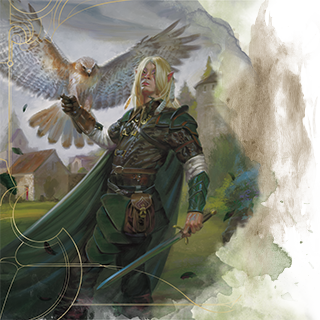
Your have become masterful with dual wielding weapons that others cannot. You gain the ability to dual wield weapons that have the Heavy, Two Handed or Versatile properties. When dual wielding weapons that are Heavy or Two Handed, the damage for these attacks become 1d10 + Strength Modifier. If you wish to use weapons that don't have Heavy or Two Handed, consult your DM about whether or not they'll allow it. For example, your DM may want your Long Swords to have added weight to them so that they become Heavy, this is all down to your DM however.
Because these weapons aren't usually an option to dual wield to this effect, you have a chance to miscalculate your swing, using strength and inertia to guide each attack. When making an attack roll, if you roll a number equal to or less than the DC of the Heavy Weapon you are wielding, you lose that attack and get the weapon stuck in the terrain around you. To get the weapon back, you must use an action to make an Athletics check to pull the weapon from the terrain around you. If you fail this save, the weapon will break and give you disadvantage on all attack rolls using it until you fix the weapon.
The Miss-swing DC depends on the weapon and the balance of the weapon. For example, a Great Axe has a lot more weight at the top so its DC would be 5, whereas if you were using a Great Sword, the DC would be 3 because it doesn't carry as much focused weight towards the top of the weapon.
This is something to always take into consideration and must be discussed with your DM if you are using improvised weapons as the shape of it can influence the DC of the rolls. Another issue that may arise which will also be down to your DM's discretion is the material of the improvised weapon, this is because a large lump of wood you've just picked up might instantly break if you fail the needed roll of its DC. This would mean that if you had a lump of wood with a DC of 3 and you rolled 3 or lower, it would shatter instantly with the force you were swinging it, no longer using the athletics check.
Miss-swing DC: 1 (DC will increase with the size of the weapon, for example a scythe would make the DC: 3 and a greataxe would make the DC: 5) - This DC affects the attack roll for the weapon, if you roll below the DC then you lose the attack and the weapon, and you must make an Athletics check (DC equal 10 + miss-swing score) or the weapon is broken. Consult the table below for the majority of weapons and the DC that each type will use. Ask your DM to make an independent decision on what DC a weapon would use if it isn't on the table.
| Miss-swing DC | Weapon Types | Athletics DC |
| 1 | Long Swords | 11 |
| 2 | Battleaxes, Flails, Great Clubs | 12 |
| 3 | Great-Swords, Pike | 13 |
| 4 | War-Picks, Glaives, Halberds, Scythe | 14 |
| 5 | Great-Axes, Maul, Lances, Morning Stars | 15 |
-
View User Profile
-
Send Message
Posted Sep 1, 2021Doesn't this feat make dual wielding anything but two-handed weapons actually worse? This gives the chance for critical failure to Longswords when usually, you could dual wield them just fine. You put the Dual Wielder feat as a prereq for this, but Dual Wielder already lets you use Heavy and Versatile weapons without any kind of possible penalty. Longswords, battleaxes, flails, war-picks, lances (when mounted), and morningstars are all worse to dual wield if you have this feat. The section about "If you wish to use weapons that don't have Heavy or Two Handed, consult your DM about whether or not they'll allow it. For example, your DM may want your Long Swords to have added weight to them so that they become Heavy, this is all down to your DM however." is completely irrelevant because you have to have the Dual Wielder feat to take this feat and the Dual Wielder feat already lets you Dual Wield Longswords without them having "added weight" or any kind of penalty.
-
View User Profile
-
Send Message
Posted Sep 4, 2021While I can see your points for the most part, this entire feat was based around push and pull mechanics of damage benefits combined with increased risks. Also, the bit about Longswords itself is kind of irrelevant as usually a natural 1 is considered a critical fail by most accounts, so in reality you're just swapping the D8 to a D10, with the only real risk being to break the weapon if it's non-magical in nature, to which an athletics check of 11 on most strength based characters that would use this feat is a very low bar to meet.
For example, a strength score of 20 (+5) and proficiency bonus of +5 would literally mean that even if you rolled a natural 1 (as by base dnd rules, you can't critical fail an ability check (last I remember anyways)) you'd literally beat a DC of 11. Longswords are well balanced in terms of weight which was why I put them to the easiest tier, however, flails are literally chunks of weight, on a chain, on a stick. There's so much that can go wrong when you try to control the weight but let the weight carry its heft into an opponent. (Also just noticed that I put Morning Star and Flail the wrong way around, they should be swapped, so my bad on that end.)
The added weight part is basically to say yeah, you can't dual wield daggers with this feat and have them do d10's of damage, as the main benefit from this feat was to meet in the middle with damage and be able to get roughly increased damage around the board. The DC's I set for the weapons at the time was based on how easy it would be to manage the weight of the weapon, such as centre of gravity. As I'm sure you can agree, swinging around two Mauls is a challenge in itself, without throwing yourself off balance. I know I sure as heck couldn't swing around two sticks with giant slabs of metal at the ends xP
The whole thing of this feat was it's supposed to collaborate with your DM, as it's likely your DM's approval you'd have to seek anyway for a Homebrew feat. Nothing in this feat says you have to use dual wielded weapons with the d10 bonus. You could by all accounts, use your longswords dual-weld with d8's for the damage and ignore this feat. I don't know about you, but most powerful late game items in DnD that are for the big beefy boys tend to be weapons with the two-handed or heavy properties. It's a terrifying prospect to have a barbarian tearing butt through a battlefield with two huge weapons imbued with the might of the gods or arcane masters of your world.
"but Dual Wielder already lets you use Heavy and Versatile weapons" An actually for what I've found, if a weapon is heavy, it's also two-handed. My final take on this for you though is that yes, there are drawbacks to dual wielding heavy weapons, but it also opens doors for narrative and character building as I used this feat throughout a campaign. It was honestly kinda hilarious as this man was more brawn than brain (was a fighter, not a barbarian) who ended up amassing a hoard of like 40 non-magical great weapons that he was dual wielding and throwing at his enemies.
But to do a short answer- No. It doesn't make everything worse as it's completely down to the wielder if they wish to use any weapon effected by the "Dual Wielder" feat as the base weapon itself, even when they have this feat. Just as you would choose to use a d10 on a versatile weapon, you would choose how to wield your weapon when you have this feat. A battlefield is moving constant that requires you to adapt, this is simply a tool to make use of those big weapons that may otherwise get overlooked when the choice comes down to one or the other.
Anyways, I hope you have a good day ma guy an thanks for your input to this. Honestly wasn't expecting it since I uploaded this a couple years ago. I do hope I justified it well, if not then please feel free to ask further.