



 Base Class: Fighter
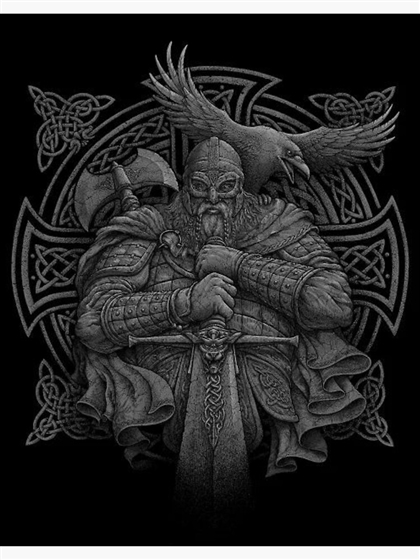
Vikings were Northern European seafarers, mainly Norsemen speaking the Old Norse language, who raided and traded from their homelands across wide areas of northern, central, eastern and western Europe, during the late 8th to late 11th centuries. And explored westwards to Iceland, Greenland, and Finland but they reached as far as Italy, Sicily, France and England. The term is also commonly extended in modern English and other vernaculars to the inhabitants of Norse home communities during what has become known as the Viking Age. This period of Nordic military, mercantile and demographic expansion constitutes an important element in the early medieval history of Scandinavia, Estonia, the British Isles, France, Kievan Rus' and Sicily. Facilitated by advanced sailing and navigational skills, and characterized by the longship, Viking activities at times also extended into the Mediterranean littoral, North Africa, the Middle East and Central Asia. Following extended phases of (primarily sea- or river-borne) exploration, expansion and settlement, Viking (Norse) communities and governments were established in diverse areas of north-western Europe, Belarus, Ukraine and European Russia, the North Atlantic islands and as far as the north-eastern coast of North America. This period of expansion witnessed the wider dissemination of Norse culture, while simultaneously introducing strong foreign cultural influences into Scandinavia itself, with profound developmental implications in both directions. Popular, modern conceptions of the Vikings—the term frequently applied casually to their modern descendants and the inhabitants of modern Scandinavia—often strongly differ from the complex picture that emerges from archaeology and historical sources. A romanticized picture of Vikings as noble savages began to emerge in the 18th century; this developed and became widely propagated during the 19th-century Viking revival. Perceived views of the Vikings as alternatively violent, piratical heathens or as intrepid adventurers owe much to conflicting varieties of the modern Viking myth that had taken shape by the early 20th century. Current popular representations of the Vikings are typically based on cultural clichés and stereotypes, complicating modern appreciation of the Viking legacy. These representations are not always accurate — for example, there is no evidence that they wore horned helmets.
Axe and Shield bearer
While wielding and axe and shield you gain the following; reroll 1's and 2's on damage rolls on both axe and shield. You must use the new roll, even if a 1 or 2.
Parry blows, when attacked by a target you can see, you can roll against their attack, and if higher, take half damage.
You gain the following skill proficiencies Nature, and Survival
Shielder
When a creature hit you or another creature within 5 feet with a melee attack while you are wielding a shield, you can use your reaction to reduce the damage taken by 1d8 and instantly shove that creature. In addition, if you have another friendly creature within 5 feet wielding a shield, you gain +1 to your AC.
Vengeful Warrior
Starting at 7th level, whenever a creature hits you with an attack, you gain advantage on all your melee weapon attacks against that creature on your next turn. And have advantage on initiative rolls.
Shielder improved
You gain one additional reaction on your turn. In addition, whenever a creature misses an attack from a melee weapon against you, you can use your reaction to make an attack against it
Axe and Shield Master
Successful parries now result in no damage. When you successfully parry you may attempt to disarm the attacker, DC 8+Str+Pro Dex save.
Also gain the Shield Master Feat.
Valhalla will have to wait
Starting at 18th level, your fighting spirit can delay the grasp of death. If you take damage that reduces you to 0 hit points and doesn’t kill you outright, you can use your reaction to delay falling unconscious, and you can immediately take an extra turn, interrupting the current turn. While you have 0 hit points during that extra turn, taking damage causes death saving throw failures as normal, and three death saving throw failures can still kill you. When the extra turn ends, you fall unconscious if you still have 0 hit points.
Once you use this feature, you can’t use it again until you finish a long rest.
Comments