



 Base Class: Bard
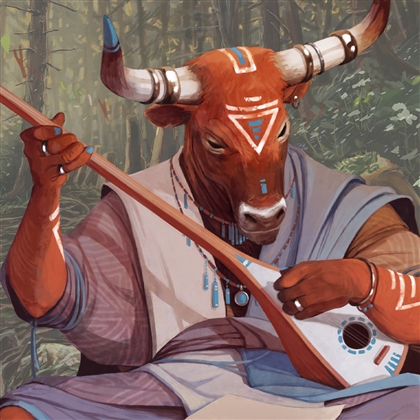
A bard’s words are laced with magic. Even beyond the tales they weave, they can rouse someone’s courage, heal their wounds, and even make them fall in love… But what holds the magic once the words have faded? Bards from the College of Arcanists have learned to weave their stories not into words but into talismans, charms, and amulets. Bestowing luck and fortune – and sometimes even curses – to anyone who owns a piece of their craft, these bards have found a way to make the magic of their stories last longer than the telling itself.
Inky Fingers
You gain proficiency with calligrapher’s tools. These tools act as an arcane focus where required.
Little Blessings
Once per day, you can spend 10 minutes making a small charm that can either be used by you, or given to another creature of your choice. You choose which type of charm you are making at this time. The charm’s magical effect lasts for 24 hours, after which point it becomes a mundane item. You can make only one charm per long rest.
Apple: A single apple pip, drilled through and hung on a silver chain. The first time that the creature bearing this charm is given a Bardic Inspiration die after acquiring this charm, it can be given without expending one use of the Bardic Inspiration feat.
Basil: A sprig of basil. As an action, the creature that has been given this charm can choose one ability score to increase by 1 for the duration of 1 hour. If the increased ability score results in a higher ability modifier, the increased modifier should also be applied for the duration of the charm’s effect. After the hour has passed, the creature’s ability score reverts to its usual value and the charm becomes a mundane item.
Bramble: This touch charm is made from a smoothed piece of bramble wood, tied with red thread. The creature carrying this charm can reroll one attack roll, saving throw, or ability check. Upon doing so they must use the new roll.
Mint: This charm, made from mint leaves sewn into a red cloth envelope, is commonly tucked in a pocket or sewn into clothing. While in possession of this talisman, the bearer gains one use of the message cantrip; after using this cantrip, the charm becomes a mundane item.
Birch: This paper talisman is made from the bark of a birch tree. At any point, the creature in possession of this charm may recall the tune or story that was performed the last time that you used the Song of Rest Bardic feature. In doing so, they may benefit from healing equivalent to your current Song of Rest level.
Sword Letters
Having made plenty of charms in your lifetime, you’ve now learnt how to adapt those trinkets into paper talismans suitable for battle. As with the Little Blessings feat, this trinket can be made in 10 minutes and lasts for 24 hours. Only one talisman can be created per long rest.
Calculating Letter: On a successful attack roll, one of the damage dice can be rerolled, and you can choose which result to use. This can be done three times before the letter loses all magical properties and becomes a mundane item.
Lucky Letter: The bearer of this letter may roll with advantage on one attack roll, saving throw, or ability check of their choice, after which the letter loses all magical properties and becomes a mundane item.
Reviving Letter: The bearer of this letter is protected from the inevitability of death; the first time that they are reduced to 0 hit points, they drop to 1 hit point instead. After this ability is used, the letter loses its magical properties and becomes a mundane item.
Shielding Letter: The bearer of this letter has one use of the shield spell. After use, the letter loses its magical properties and becomes a mundane item.
Vicious Letter: The bearer of this letter deals extra psychic damage once per round when making a physical attack. This damage is equal to your proficiency bonus and. Once a bonus action is used to activate the Letter, it is active for the next minute and then becomes a mundane item.
Masterpiece
You’ve reached the peak of your craft and are now able to craft items that only masters could dream of creating. Once per month, you can create a Masterpiece item. This can be any small-sized item, such as an amulet, crown, knife, ring, etc. The item can be kept by yourself or given to another creature of your choosing, but will require attunement. The Masterpiece takes 8 hours of downtime to make, which can be spread across several days if desired, and its magical efficacy lasts for a month before it becomes a mundane item.
Masterpiece of Determination: The metal for this Masterpiece comes from a tool or weapon that has been broken during use. When lowering the hit points of a creature to 0, or when landing a critical hit on an attack, you may make one extra attack as a bonus action.
Masterpiece of Enchantment: A Masterpiece reforged from an old spellcasting focus. Once per day, the holder can cast any spell at one level higher than the spell’s base level without having to expend a higher slot to do so. The original spell slot is still expended.
Masterpiece of Relocation: This Masterpiece is made from an item worn at a wedding or pairing ceremony. This Masterpiece consists of two matching pieces, which can be given to two separate creatures (who must then attune to their respective piece). The pieces allow one bearer to swap positions with the other, if they are willing and within 100 feet of each other. This can be done three times before requiring a long rest.
Masterpiece of Spirits: This Masterpiece is made by trapping a wandering spirit inside the item during its creation. This spirit appears as a glowing ball of light when summoned and can be called upon once per day for up to 1 hour. Whilst the Masterpiece is active, the bearer has advantage on Wisdom and Charisma saving throws, and gains immunity to being charmed or frightened.
Masterpiece of Unmaking: A Masterpiece made from natural and earthly materials, untouched by magic. When the bearer is attuned to this Masterpiece and makes a successful attack against a spellcaster, the spellcaster must make their Constitution saving throw for concentration with disadvantage.
Comments