



 Base Class: Wizard
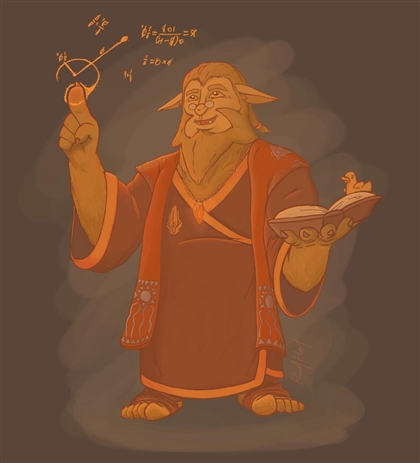
Mathematical functions formulate the laws that all reality abides by, and it is no different with the Weave - this is the fundamental tenet of Arithmancy. Wizards who strive to understand and manipulate these blueprints of magic are called arithmancers.
Often driven by the desire to find order in chaos, Arithmancers analyze the algorithms underlying all things, warping the fabric of reality and the Weave to create powerful metaphysical boons in their spells. While the gods may not play dice with the universe, the arithmancer gleefully does.
Sum of Its Parts
Starting at 2nd level when you choose this school, you learn how to use basic arithmancy to help you in moments of strife. When you roll an attack, ability check or saving throw with disadvantage, you can choose to treat the roll as the sum of the two die rolls instead. For example, if you roll a 7 and a 5, you can treat the roll as a 12.
You can't use this feature again until you finish a long rest.
Arcane Means
At 2nd level, you can assess the risks present in the chaotic matrix of the Weave and choose to "play it safe".
When you succeed on a spell attack, you can choose to inflict the average damage of the die roll (rounded up) for that spell instead of rolling for damage. For example, if the attack would inflict 2d6 damage, you can choose to have it inflict 7 damage instead of rolling. You can do this a number of times equal to your Intelligence modifier, and all expended uses are recovered after finishing a long rest.
Nth Degree
At 6th level, your arithmancy has taught you to bolster the fundamental force of your spell attacks.
Whenever you upcast a spell that deals damage, the damage die value of the attack is also raised (d4 to d6 to d8 to d10 to a maximum of d12) by a factor equal to the number of levels you are upcasting it by (unless upcasting the spell already alters the damage die value). For example, if a 1st level spell that has a damage die value of d6 is upcast to 3rd level, the spell's new damage die value becomes d10. The spell must have an instantaneous duration and deal damage of only one type in order to do this.
Golden Ratio
Starting at 14th level, your arithmantic studies have taught you how to manipulate the probability of your actions. Before you roll a d20, you can choose to substitute the die with dice of different values whose sum maximum equals 20 (for example, 5d4, 2d6 + 1d8, 2d8 + 1d4, etc.).
If you roll 1 on more than one of these dice, treat the roll as a 1. If you roll a critical success (20), you regain expended spell slots of combined level equal to your Intelligence modifier.
Gematria
Starting at 14th level, you experience moments of synchronicity with the universe while performing magic. Whenever you make a spell attack with a spell of 1st level or higher and the number you roll is equal to your wizard level, treat the roll as a 20. This feature still takes effect when using your Golden Ratio feature and even if you roll a 1 on more than one of your Golden Ratio die.
When you reach 20th level in the School of Arithmancy, you can treat a spell attack roll of 19 as a 20.
Comments