



 Base Class: Bard
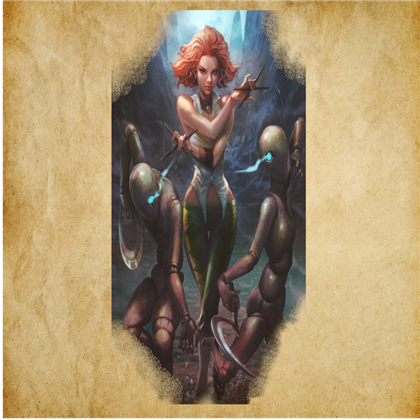
Arcane puppeteers are gifted magic users who channel their energy through another being, rather than through themselves. Some are afraid of confrontation, whilst others have the drive of a performer.
Arcane Strings
3rd-level College of Strings feature
Strings: Starting at 3rd level your magic can now be woven into magical arcane thread that is produced from your fingertips. This thread can be used to control puppets of any size, however, any size that is over yours will require the use of both hands in order to control properly. Any attempts at controlling something bigger than you could result in adverse side effects. The length of your strings starts at 60 feet, and goes up by 10 feet for every level thereafter, up to 150ft maximum. After 150 feet, the magic will start to fall off from your threads effectively making them no different from normal string. This thread is visible only to you, and other arcane strings users. This thread cannot be cut, dispelled, or manipulated by anyone other than the user. If another user would attempt to take control of whatever you are puppeting, make a contested CHA saving throw to maintain control.
Unwilling Puppet: Your strings are rather interesting, and can be used for things other than trying to control puppets. You can also control people as well, of course, they can fight your control. This feature does not use the length that you normally have and instead is restricted to 30ft due to the higher concentrated need for magical energy. Starting at third level when you attempt to take control of an unwilling creature, roll straight CHA (DM sets DC), and then at 4th, 8th, 12th, 16th you may add an additional +1 to your rolls for a total of +4 at 16th level. If you have successfully passed the check you have control over the target as if they were under the suggestion spell. You control their movements, and actions. You can use the creature's Action, Bonus Action, and reaction at the cost of your own, otherwise, the creature takes the dodge action of you make them do nothing. If you choose to use this ability on a willing creature/ally the effects are different. You may use your action to move, stand up, attack (this does not use the ally's action), or take the disengage action. If the creature is unconscious you may instead attach your strings to them free of charge, however you can use your bonus action to move them to half your movement speed, but they are still at risk of opportunity attacks.
Arcane Puppet
3rd-level College of Strings feature
Also at third level, you have after much practice, managed to craft and weave your arcane strings into your very own arcane puppet! The Arcane puppets starting stats are as follows:
You can craft an arcane puppet using the "crafting a magic item" downtime activity (DMG p. 128). At 3rd level, you can craft a common puppet. If you begin to play as an arcane puppeteer (but not when you multi-class into arcane puppeteer) you start with one common puppet. (At 5th, 10th, 15th, and 20th level you can craft the next level of puppet respectively).
An arcane puppet is a small animated object with the following statistics:
- Unlike other animated objects, it does not have blindsight, instead sharing your senses.
- If the puppet falls to 0 hit points, it is destroyed.
- It weighs 40 lbs. You can use an action to fold it up into Tiny size to be transported in a backpack, sack or basket; it takes another action to unfold it for use.
- The Puppet is able to use items and weapons instead of its slam attack.
Arcane Puppet
Medium Construct
Armor Class 16 (natural armor)
Hit Points 25 + whatever you gain on level up
Speed 30 ft.
Saves The arcane puppet shares is proficiency bonus with the caster, effecting its saving throws.
Skills Shares the casters ability scores, as long as caster is able to perform certain skills through the arcane puppet.
Condition Immunities It has immunity against the conditions blinded, charmed, deafened, frightened, incapacitated, paralyzed, petrified, poisoned, stunned, exhaustion
Senses darkvision 60 ft., passive Perception 14
Languages understands the languages you speak
Doll. The arcane puppet takes your initiative but, takes its own turn, has an action, bonus action, reaction
Equipable. The arcane puppet is able to use items and weapons instead of its slam attack
Puppet Saving throw. While your puppet is magical in nature, any saves that need to be made against certain features of some puppets will be based off of the casters saving throw.
Weapon Proficiencies. While the arcane weapon is able to equip different weapons, it is only proficient with weapons that the caster is proficient with.
Actions
Slam. Melee Weapon Attack: your spell attack modifier to hit, reach 5 ft., one target you can see. Hit: 1d8 + casters dex mod + proficiency bonus
- Repairing Puppets
Puppets that have less than their maximum hit points but greater than 0 hit points can be repaired. This can be done during a long or short rest and requires your tinker's tools. During a short rest, you can repair 2 hit points × your arcane puppeteer level. During a long rest, you can repair all your puppets back to their maximum hit points. A destroyed puppet cannot be repaired but can be salvaged for parts for building a new puppet. It provides materials equal to half its original value. If you choose, you may cast mending to fix the puppet, but it will use 1 level 1 spell slot as payment instead. This method cannot fix a destroyed puppet.
Controlling Puppets
Using your strings ability, you may control two puppets at once (granted they are the same size as you or smaller), as long as they don't go over your size by one, anything over and you must use two hands. However each puppet has its own action economy, and only one can go on your turn at a time. For example, if you are controlling a Warrior puppet and a Cleric puppet, you may take your actions as normal, but only one puppet may currently be used this turn. If you are controlling two puppets and attempt to cast a spell that has somatic components, you may do so but you must roll at dexterity check to see if you maintain your strings on both your puppets. On a failed save, you must drop control of one puppet in order to cast the spell. On a successful save, you may cast the spell with the hand that has a the non-acting puppet.
Crafting Puppets
After you have gathered enough material, you may be interested in crafting yourself a new puppet to command the battlefield with, or maybe even help your allies who are in a pinch. There are a few levels of premade puppets that you can craft, but also get with your DM and come up with new and interesting ideas that might better suit your game, play style, or just for fun. Crafting puppets cost materials which is 100 times the puppets level times the modifier in the parenthisis.
Level One puppets (1x)
- Knight Puppet
- This puppet resembles a noble knight with a shield.
- Shield. It has +2 to AC.
- Protector. When a creature you can see attacks a target and your puppet is within 5 feet of the target (The target of the attack cannot be your puppet) you can use your reaction to impose a disadvantage on the attack roll.
- Warrior Puppet
- This puppet resembles a typical humanoid soldier, armed with a banded club.
- Brute. You gain a +2 bonus on the damage rolls of its slam attack.
- Artisan Puppet
- A puppet resembling an Artisan, with slender hands and delicate tools.
- Journeyman. The rate at which you craft arcane puppets is increased by 25 gp per day.
- Cleric Puppet
- This puppet resembles a regal acolyte dressed in a gown.
- Healer. As an action, you may cast Cure Wounds. You can use this ability a number of times equal to your Charisma Modifier per long rest.
Level Two puppets (3x)
- Boreas Puppet
-
Boreas resembles an old man with snakes for feet and arms.
- Snake-limbed. When a Boreas puppet makes a grapple, you add double proficiency bonus to the check. If this puppet is grappling a Medium or smaller humanoid, you can use your action to attempt to control the target on your turn. The target makes a Strength saving throw using your puppet DC. On a failure, you can move the target (and puppet) up to 10 feet and have it make a melee attack.
- Poison Bite. When a Boreas puppet makes an attack its arms and legs make a bite attack, taking 2d6 piercing if hit. On a successful hit, the target must be a Constitution saving throw against your Puppet DC. On a failed save the target takes 4d4 poison damage, and half as much on a saved throw.
- Caeneus Puppet
-
Caeneus has an exaggerated masculine body, to the point of caricature.
- Impervious Skin. It has resistance to bludgeoning, piercing, and slashing damage from nonmagical weapons. At 20th level, it becomes immune to bludgeoning, piercing, and slashing damage from nonmagical weapons.
- Guardian. When taking the shove attack action you add double your proficiency bonus to the Athletics check.
- Telchine Puppet
-
Telchine has flippers instead of hands, and the head of a dog. You can use it to work metals and alloys quickly, and into detailed or precise shapes. The oil from its bite is a mixture of abyssal water and sulfur.
- Adept. The rate at which you craft arcane puppets is increased by 45 gp per day.
- Stygian Spit. It can use its action to spit at a creature within 30 feet. The target must make a Dexterity saving throw, using your Puppets DC. On a failed save, the target takes 3d10 acid damage. On a successful save, the damage is halved.
- Shinobi Puppet
-
This puppet resembles a masked Shinobi with dark garbs.
- Shuriken. As an action, you can shoot two shurikens out of the Shinobis' elbows. Make two ranged attacks, adding your Dexterity modifier and proficiency bonus. Shurikens deal 1d8 + your Dexterity Modifier.
- Substitution. As a bonus action, your Shinobi can enter a substitution stance. If a spell or attack would hit the Shinobi, it is instead replaced with a log, and the Shinobi teleports 20ft in a direction within string range of its original location. This does not provoke attacks of opportunity.
Level Three puppets (5x)
- Shield Guardian Puppet
- Shield guardians could be made with various sizes and strengths, but the simplest and cheapest to make stood about nine feet (nearly three meters) tall and weighed over 1,200 pounds (540 kilograms). They looked something like a large stick figure made of wood with rocky appendages and metal parts.
- Spell storing A spellcaster who controls the puppet can cause the puppet to store one spell of 4th level or lower. To do so, the user must cast the spell on the puppet. The spell has no effect but is stored within the puppet. When commanded to do so by the user or when a situation arises that was predefined by the spellcaster, the guardian casts the stored spell with any parameters set by the original caster, requiring no Components. When the spell is cast or a new spell is stored, any previously stored spell is lost.
- Punch attacks Melee Weapon Attack: Reach 5 ft., One Target. Hit 2d6 + DEX bludgeoning damage.
- Shield When a creature makes an Attack against the puppeteer or any other player, the puppet shield guardian grants a +2 bonus to the wearer's AC if the guardian is within 5 feet of the wearer or the puppet moves into the place of the player or puppeteer.
- Manticore Puppet
- A manticore puppet, whilst humanoid, resembles its namesake with an upright lion's body and the head of a wild man. It can open its mouth to fire a volley of needles.
- Needle-mouth. It can use an Attack action to make two ranged melee attacks, range 20/60, 5d4 piercing damage.
- Tough. It has a +2 Constitution and an additional 15 hit points.
- Wings. It has a fly speed of 40 feet.
- Phrike Puppet
- Phrike resembles a typical child's doll, with porcelain skin and unnerving eyes.
- Eye Beams. Ranged Spell Attack: Reach 60ft., One Target. Hit 2d8 Force damage.
- Uncanny Visage. It can use its Action to make a horrifying gaze. Each creature in a 30-foot cone originating from this puppet must succeed on a DC 14 Wisdom saving throw or become frightened by this puppet for 1 minute. You must finish a short or long rest before you can use this feature again.
- Shattering End. When it has less than 15 hit points left, but more than 0, you can use your Bonus action to have it explode. This destroys the puppet. Each creature within 20 feet must make a Dexterity saving throw using your puppet DC, taking 4d10 piercing damage and 3d6 psychic damage on a failed save, or half as much on a successful save. 4d10 hours after its "end" its shards can be reformed into the Phrike during a short rest, however, the puppet's health is permanently halved (stacking indefinitely). If the puppet's maximum health is lower than 15, you can no longer activate Shattering End.
Level Four puppets (7x)
- Medusa Puppet
-
Medusa resembles a humanoid with snake tendril hair and glossy stone eyes that will turn those foolish enough to look into her eyes to stone.
- Petrifying gaze. The puppet uses its gaze to turn any creatures in a 30ft range cone to stone. (No save if eye contact/multi-eyed being)
If they are shielding their eyes or otherwise blocking their eyesight, they must make a Wisdom saving throw with a DC 5
- Beauty beyond compare. The puppet uses its unearthly beauty in order to charm (1 min) opponents in a 30ft cone, using the puppet save DC, they have to do a Wisdom saving throw. Works on both genders. Can be used twice per long rest.
- Venomous hairdo. The puppet Stretch her hair out to bite the opponents, they must make a Dexterity saving throw, dealing 5d6 piercing plus 4d6 poison on a failed puppet DC saving throw, or half as much on a successful save.
- Slippery. The puppet is able to use her reaction to slip out of a grapple or dodge an attack roll made against her. Against a grapple, make an Athletics/Acrobatics using Puppet DC as the requirement, on a success the grapple fails (this must be used before the grapple check). Against an attack, the attacker gets a disadvantage on the attack roll.
- Wyvern/Dragon Puppet
-
Dragon resembles a typical dragon you would usually see in the monster's manual with scaly skin and different kinds of colors and breaths.
- Wings. It has a fly speed of 40 feet and is able to use its wings to move creatures nearby 15 feet and up to half of its flying speed.
- Breath attack. It can use its action to use its breath attack,3d8(refer to damage to type), depending on the type of dragon puppet you have. Wyvern=Arcane Breath, Other Dragons=different breaths.
- Sharp Fangs. It can use its action and/or its bonus action to bite its opponent, 3d6+5 piercing.
- Roar of the Furious. It can use an action or bonus action to roar loudly frightening others around you in a 20ft diameter for 3 minutes, puppet DC, Wisdom saving throw. Disadvantage on kobolds, goblins, dryads, and all creatures under size: "Large".
Level Five puppets (10x)
- Lich Puppet
-
This puppet is a hallowed-out human wizard with withered flesh, eyes that succumbed to decay, and almost skeletal looking.
- Undead presence. It has resistance to necromancy-based attacks made to it or to yourself when using this puppet and when using its slam attack it has the advantage against attacking undead.
- Spell casting ability. The spell-casting ability of the puppet makes your own spells or the puppet, more powerful and able to hit +4
- Arcane Horror. It is able to use its action or bonus attack to induce fear into your opponents in a 30ft cone must succeed on a DC 18 Wisdom Throw or become frightened by this puppet. 3 uses a day, recharging 1d4+1 on a short rest or long rest in order to use this ability again.
Extra charges are stacked, once they reach ten or more, the lich gains sentience and if defeated can be remade into a puppet with two additional spells.
- Necromancy Spell book. It has a certain spell book that you are able to write spells from the necromancy wizard spell list up to Level 7.
- Commander of the undead. It has the Create, Destroy, and Command undead spells at will and is able to use them as cantrips.
- King Puppet
-
The king resembles a typical king with its rod/scepter and crown with a big red flowing cape.
- Command others. It has the ability to make others do its bidding during its action instead of making an action, The commanded creature does not use its action when commanded or used in this way. Charisma Saving Throw (Puppet DC+Puppeteer CHA)
- Royal presence. Its very presence inspires others to do things perfectly,+4 to all ability checks and saving throws.
- Knighting. When the king knights a character, that character gains temporary hit points equal to 4d10 plus your Charisma modifier. You can do this only 1 + your Charisma modifier (with a minimum of 1) times per day.
- Checkmate. When the puppet is about to be attacked, it can use its reaction to either move away from the attacker or bring another creature and move it into its place.
- Payday. The puppet tosses money around itself distracting all within 30ft of it. These creatures must make a Charisma saving throw equal to your spell save DC, on a failed save the creature is knocked prone grabbing as many coins as the creature can physically hold.
Improved Puppetry
6th-level College of Arcane Strings feature
Improved control
Starting at 6th level, you have found a way to reinforce the strings inside of your puppets, giving them a small boost to their ac. All of your puppets now gain a +1 to AC and a +1 to saving throws.
Travel Trunk
Also at 6th level, you have unlocked the ability to infuse a clothing trunk with your arcane strings. After spending 1 hour with a non-magical trunk, the trunk springs to autonomous life, sprouting wooden legs for it to walk around on. You may only have one arcane travel trunk at any given time, and if it gets destroyed, all the contents inside of the trunk spill out unharmed, but you must spend an hour preparing a new arcane trunk to store your puppets. The trunk is seemingly bottomless in regards to your puppets, but cannot hold any other type of item. The weight limit for the trunk is 500 lbs, and can hold any folded-up puppets, regardless of there size. Once per turn, if you are within 60ft of your trunk, you can call the name of a puppet causing it to spring out of the trunk and unfold itself. While puppets are inside of the trunk they regain 1d6 hp for every hour they are inside of the trunk.
One with the strings
14th-level College of Arcane Strings feature
At 14th level, you now have the ability to fuse two of your puppets together, making a more devastating creation then ever thought before.
If you have two puppets within 5 feet of each other (they do not need to be controlled by you at the time of using this ability) you may spend your bonus action to have them combine into a single form. Two small puppets become a medium puppet. Two medium puppets become a large puppet. Two large puppets become a huge puppet.
Two combined puppets will count as a single puppet, however, if they are one size above yours you will require both hands to control it. You may not fuse a fused puppet with another puppet/fused puppet. The fusion will fail and cost you your action as a result.
- The combined puppet has a hit point maximum of the two original puppets
- The better scores of each puppet are used for the ability scores
- Whichever puppet has the better AC becomes this puppets AC
- The combined puppet may attack twice in one action instead of once
- Any special features that the original puppets had the combined puppet has
The combined puppets will stay as such until you use a bonus action to separate them, where the total hp is divided in half and given to each respective puppet up to the puppet's maximum hp.
Also at 14th level you have learned to harden your strings as your puppets now have resistance to bludgeoning, piercing, and slashing damage from nonmagical weapons.
Comments