



 Base Class: Cleric
Survival of the fittest and the winnowing of the weak are Malar’s legacy. A brutal, bloody death or kill has great meaning. The crux of life is the challenge between the hunter and the prey, the determination of who lives or dies. View every important task as a hunt. Remain ever alert and alive. Walk the wilderness without trepidation, and show no fear in the hunt. Savagery and strong emotions defeat reason and careful thought in all things. Taste the blood of those you slay, and never kill from a distance. Work against those who cut back the forest and who kill beasts solely because they are dangerous. Slay not the young, the pregnant, so that prey will remain plentiful.
In civilized settings, the church of Malar is widely loathed, for its members--often evil lycanthropes--are some of the most dangerous threats to the safety of the local populace. Along the frontier and in wilderness settings, however, those who must hunt for food reluctantly pay homage to the Beastlord, even as they fear his cruelty. Outsiders sometimes differentiate between “Hunts,” as Malarite bands are known, that operate openly and those that stalk the night. Some realms, such as Cormyr, legally recognize the former as having dominion over hunting while considering the latter to be little more than dangerous predators to be driven off or slain.
Clerics of Malar pray for spells at night, preferably under a full moon. They also offer prayers to the Beastlord before the chase, during pursuit, and while drinking a toast over the slain quarry (sometimes with its blood). The droning Bloodsong is intoned over the bodies of all creatures slain during a hunt, and specific ritual prayers and chants accompany feasting on any prey. Two great rituals are the Feast of the Stags and the High Hunt. In the former, clerics and worshipers of Malar hunt plenty of game before Highharvestide and then invite all (especially those not of the faith) to join them at a feast, where they pledge to hunt in the coming winter to provide for the needy. (This is one of the few things the church does that pleases the common folk.) During the High Hunt, held each season, worshipers adorned in kill trophies hunt a humanoid, who can win his or her life and a boon by escaping or surviving a day and a night. Malar’s clerics often multiclass as barbarians, rangers, or druids. Many are evil lycanthropes such as werewolves.
Clerics of Malar indulge in hunting as often as possible. They drive the hunt to make it as dangerous as possible to prey and predator alike, and try to ensure that its bloody finale takes place in a settled area. Common folk do not appreciate having desperate wolves, displacer beasts, and the like chased through town, and they tend to hate and fear Malar’s faithful--which is the whole idea. Malarite clergy also preach the joy and bounty of the hunt and work to thwart the expansion of civilization to preserve as much wilderness as possible.
Temples of Malar are rare, as most Hunts eschew formal buildings for shadowed wilderness glades. Unlike most druidic circles, those of Malar’s worship consist of inwardly curving, fang-shaped stones arranged in a ring. In more civilized settings, where the activities of Malarites are viewed with loathing, the sacred area may be hidden within extensive limestone caverns accessible via a sinkhole above the center of the stone circle. The twisting subterranean passages serve as hunting grounds through ruthless Malarties stalk sentient prey (particularly humanoids) captured from the surrounding region.
Ceremonial headgear is made from the pelt and head of the most impressive beast the cleric has killed with bare hands (usually a bear or great cat, but sometimes an owl bear, displacer beast, or a stranger creature). Malarties carry hunting horns at their belts and are never without several daggers sheathed in boots and belts, strapped to either forearm, or hidden in a stealth at the nape of the neck under the hair or in an armpit. Woodland garb of red or brown is the favored dress for hunts, often concealed by day under a wood cloak of mottled black, gray, and green. Clerics looking to make an impression may also wear necklaces of animal bones, fangs, and claws and a variety of pelts.
The church of Malar is loosely bound and without a central hierarchy. It is organized around the concept of the Hunt and consists of local, independent cells. This makes it all the more difficult to counter or remove, for as soon as one den of Malarties is contained, another arises. Huntmasters are the informal religious leaders of the church and may be clerics, druids, rangers, or shape changing predators. They decide the locale, time, and prey of the ceremonial hunts of the faithful. The office of Huntmaster is won by challenge--a fight to the death if the incumbent does not resign.
Savagery Domain Spells
You gain domain spells at the cleric levels listed in the Savagery Domain Spells table. See the Savagery Domain class feature for how domain spells work.
Hunt Domain Spells
| Cleric level | Spells |
|---|
1st Hunter's Mark, Longstrider
3rd Darkvision, Pass without Trace
5th Clairvoyance, Fear
7th Freedom of movement, Locate creature
9th Commune with nature, Tree stride
Survivalist
When you choose this archetype you gain proficiency in the Nature and Survival skills if you don’t already have it.
Bonus Proficiencies
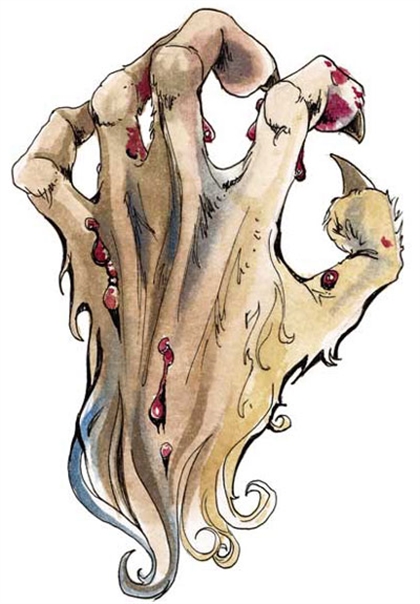
You gain proficiency with light and medium armor, shields, martial weapons. You also gain proficiency with Claws of Malar(It is a metal armband or bracer with steel claws that projected over the back of the wielder's hand, to a length of some 4 inches (10 centimeters) past their outstretched fingers like lion claws – they are light, finesse weapons that do 1d6 slashing damage). The Claws of Malar can be used as a holy symbol when casting spells.
Spellcasting
You may choose your spells (including starting cantrips) from the normal cleric spell list, as well as from the Ranger lists.
Swift Stalker
At 2nd level increase your movement speed by 10ft if your not wearing heavy armor.
Channel Divinity: Brutal Slayer
Beginning at 2nd level, when you hit a foe who is already wounded with a melee weapon attack, you can expend one use of your channel divinity as a reaction to deal +2d8 damage.
Channel Divinity: Relentless Hunter
Beginning at 6th Level, you can use your Channel Divinity to unerringly track any creature you have personally wounded in the last week. For the next eight hours, you always know which direction the target is located, and roughly its distance from you.
Focused Anger
At 8th level, You have advantage on saving throws against being frightened and charmed.
Malar's Fury
At 17th level, your weapon attacks score a critical hit on a roll of 18–20.
Comments