



 Base Class: Bard
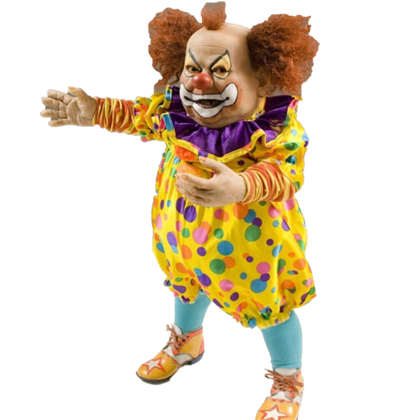
Barding is not always eloquent and glamourous as most would have you believe. The court jester, the circus clown, even the village idiot, while often mocked and scorned, can on occasion become every bit as worthy of the bard title as the verbose vagabond spinning their tales or the tavern-tame tune turner boosting ale sales. While the latter tend to crave the attention and adoration of their audience, the former forgo their own glory and dignity and are often vulnerable to ridicule and embarrassment whether intentional or not.
You are among the luckiest of these frequently frustrated fellows and fefellows, finding a rare bit of fortune when you find and follow the College o' 'Foons and learn to use your innate buffoonery in ways that make your friends shimmer and your enemies dimmer. You learn ways of redirecting your frequent mishaps to make a companion look better next to you, and making your tricks distract an enemy from what they do.
Some will recognize your contributions and some will write you off as incompetent but that doesn't bother you. Maybe your pride took a ride long ago or maybe it's safe beyond others' agro; either way, you see the actual effects of your over-the-top, only-sometimes-feigned clumsiness and always-terrible puns. And that's enough for a foon.
"If charisma is a divinely conferred power or talent then it's only a matter of recognizing your buffoonery as suck [sic]." - Wiggly, the OG Foon
(Adapted from Skojar's "Clown College" and ArkRedpanda's "College of Clowns")
Cower Power
At 3rd level, your foon mentor(s) help make your spectacularly obvious incompetence more than just exasperating, but also distracting. You take the Dodge action and sell your fear or ineptitude, whether real or not, in a manner that makes your nearest companion look good by comparison. If you have not already used your bonus action, you may take the Help action as a bonus action on this turn. If you use this Help bonus action to aid a friendly creature with their attack, the target of their attack can be any creature that can see you.
Buffoonery
Also at 3rd level, you begin to learn that botched performances can have effects that bolster or distract others. At 6th level, you become practiced enough to affect multiple creatures with some of these effects. The effects are fueled by special dice called buffoonery dice.
Buffoonery Effects
Choose three of the Buffoonery Effects below, which can cause benefit or detriment to others. You can cause up to two effects per round as long as one of them uses your reaction. You learn how to cause two additional effects at 6th level and two more at 14th level. Each time you learn new effects, you can also replace one effect you know with a different one.
Buffoonery Dice
Whenever you succeed on an attack roll, ability check, or saving throw, you may choose instead to fail in a clumsy or comedic way and gain one buffoonery die (two on a critical success), which is a d8. You also gain one buffoonery die when any of these rolls result in a critical failure. You may hold a maximum number of buffoonery dice at one time equal to your proficiency bonus. Upon completing a long rest, all of your buffoonery dice are lost.
Saving Throws
Some Buffoonery Effects require others and yourself to make a saving throw to resist the effect. The saving throw DC is calculated as follows: Effect save DC = 8 + your proficiency bonus + your Charisma modifier
Exaggerated Gestures
6th level Buffoonery Effect
When another creature who can see you rolls a d20, you may use your reaction to confuse them through exaggerated gestures. You expend all of your held buffoonery dice and cause the creature to roll the same number of additional d20s, using the lowest result.
Infectious Laughter
6th level Buffoonery Effect
You begin to laugh uncontrollably, causing others to join in. Use your action to target as many creatures as possible (up to the number of buffoonery dice you are holding) that can clearly hear you or another affected creature, expending all of your held buffoonery dice.
Each target must succeed on a Wisdom saving throw or fall prone, becoming incapacitated and unable to stand up until the start of your next turn.
A creature with an Intelligence score of 4 or less cannot be affected.
Juggling Mishap
3rd level Buffoonery Effect
Use your action and expend one buffoonery die to juggle any number of tiny and small objects of your choice from your inventory. You "lose control" of one of the objects, causing a target within 20 feet to use their reaction in an attempt to deflect the object.
Make a Dexterity based attack roll against the target's AC. If you hit or if the target does not have a reaction available then they take damage equal to 1d4 + your DEX modifier. The damage type is at the discretion of the DM according to the object being fumbled.
Pantomime
6th level Buffoonery Effect
You use your action to perform a mime routine for all to see. Target as many creatures as possible (up to the number of buffoonery dice you are holding; excluding your allies if you wish) that can see you, expending that number of buffoonery dice. A creature with an Intelligence score of 4 or less cannot be affected.
The targeted audience must make an Intelligence saving throw. On a failed save they are forced to perform the routine with you, believing their performance is reality. While in this state, they suffer the effects of the Paralyzed condition except their movement is limited to what is allowed by the routine.
As long as you maintain your performance, the routine may last until the start of your next turn. If you take an action, bonus action, reaction or movement during that time, or you take damage, make a concentration check. On a failure or if the target loses line of sight on you, or if you are in any way rendered unable to continue performing, the routine ends along with its effects.
Patch of Laughter
3rd level Buffoonery Effect
You use your action to draw a laugh from a damaged but conscious creature within 30 feet who can see or hear you (depending on how you make them laugh) with an Intelligence score of 5 or more.
Expend one buffoonery die to heal them through their laughter for a number of hit points equal to the number rolled on your buffoonery die + your level in bard.
When you reach 6th level, you may heal multiple creatures at once, expending one buffoonery die for each creature healed.
Recall Antics
3rd level Buffoonery Effect
When another creature who can see you and was present when you gained at least one of your currently held buffoonery dice, rolls a d20, you may use your reaction to catch their attention, reminding them of the buffoonery they witnessed. You expend all of your held buffoonery dice and cause the creature to roll the same number of additional d20s, using the highest result.
Slapstick
3rd level Buffoonery Effect
When a creature that is within your melee reach takes melee damage from a creature other than you, you may expend one buffoonery die and use your reaction to make an unarmed strike or attack with a light bludgeoning weapon against the creature that took the damage. This attack automatically hits and your damage die is replaced by one buffoonery die.
Slippery Goop
6th level Buffoonery Effect
As an action you produce a large tub labelled "Slippery Goop" and promptly spill it, expending one buffoonery dice. This has the same effects as the Grease spell except it has a range of 15 feet. If you are included in the area of effect, you are unaffected for as long as you do not use your movement.
Trick Flower
3rd level Buffoonery Effect
You tap your lapel, causing one creature within 10 feet who can see you to look directly at the trick flower pinned there. Use your bonus action and expend one buffoonery die to make the trick flower spit liquid in the target's eyes, forcing them to make a CON saving throw. On a failure the target is blinded until the end of their next turn and stumble five feet away from you.
Pratfall
At 6th level, you have come to realize the power that a sudden burst of laughter can provide and you know the surest way to create such a powerful burst in others.
At the start of your turn, you can use your action to fall comedically prone in an over-the-top display. After you do so, until the start of your next turn you cannot use a bonus action or a reaction and your movement speed drops to 0.
This jolt causes an arcane misfire that expends your highest available spell slot. Each of your allies in order of initiative has the opportunity to immediately absorb your expended spell casting power through their sudden burst of laughter. Once they do, the power is no longer available to be absorbed by others.
If that ally casts a spell before the start of your next turn, the effects of that spell are bolstered as if the spell were cast at a higher level equal to the level at which they cast it plus the level of spell slot you expended. For example, if you expend a 3rd level spell slot using this feature and your ally then casts a 1st level spell, the effects of the spell are applied as if it were cast at 4th level.
Party Trick
At 14th level, your buffoonery and your magic merge to make your party tricks more than just entertaining or distracting.
You may spend at least one minute performing a party trick such as shadow puppets, balloon animals, face painting, etc. to create the form or image of a creature. If you then roll higher than your own spell save DC on a Charisma (Performance) check, that creature becomes an animated construct that remains in the form or image of the party trick.
To find the maximum challenge rating of creatures you can animate, subtract 10 from your bard level and divide the result by 2 (round down). Use the stat block most similar to your animated creature but consider the creature type as a construct.
The party trick is loyal to you and you can issue commands to it as a bonus action. If no command is issued it will take the dodge action. The party trick disappears if it drops to 0 hit points, is dismissed as a bonus action, you become unconscious, or this feature is used again.
You can use this feature a number of times equal to your proficiency bonus before finishing a long rest.
You can use the filters at dndbeyond.com/monsters to find a list of creatures that fit your criteria.
Comments