



 Base Class: Blood Hunter
Blood Hunters of the Order of Witch Hunters dedicate themselves to confronting those who abuse arcane, divine, primal, occult, or pact-bound power. They pursue corrupt spellcasters, fiendish bargainers, soul binders, magical slavers, cursed covens, and entities that use supernatural power to dominate the helpless.
Despite their name, responsible members of the order do not consider every witch, mage, priest, or warlock an enemy. Magic is a tool, force, language, and living influence woven throughout Aetheris. Attempting to destroy all magic would be both impossible and catastrophic.
The order instead judges conduct. Its sanctioned quarry includes practitioners who employ magic to enslave minds, steal souls, spread unnatural corruption, summon hostile entities, conceal mass atrocities, or place entire communities under supernatural control.
Witch Hunters combine investigative training with specialized hemocraft. Their blood can react to active spells, reveal hidden enchantments, destabilize concentration, and create wounds that resist magical restoration. Senior hunters can dismantle protective magic with a weapon strike and condemn a dangerous caster beneath a blood-sealed writ that punishes further spell use.
The order’s methods make it vulnerable to fanaticism. A hunter who begins treating magical ability as proof of guilt can become more dangerous than the practitioners they pursue. For this reason, legitimate chapters require evidence, testimony, and careful distinction between consensual magic, cultural practice, involuntary corruption, and deliberate abuse.
Origins in Aetheris
The Order of Witch Hunters developed from several independent traditions formed in response to magical atrocities.
The March of Draeven maintains some of the oldest formal records. Early hunters were attached to military tribunals investigating battlefield curses, summoned fiends, magical sabotage, and officers controlled through enchantment. Their work produced the first standardized procedures for preserving arcane evidence.
Within the Helbrann League, hunters emerged in response to hidden covens, cursed mountain settlements, and infernal pacts concealed behind respectable institutions. Helbranni chapters contributed methods of patient surveillance, legal investigation, and coordinated capture.
The Dominion of Xathrin’s use of soul binding, magical slavery, infernal contracts, and compulsory enchantment transformed the order from a regional practice into an international necessity. Witch Hunters became central participants in identifying Xathrin agents, destroying soul contracts, and liberating victims of magical control.
The Obsidian Hegemony produced different threats: corrupted artificers, mutation cults, warlocks, and ritualists who fused arcane power with mass sacrifice. Hunters fighting the Hegemony developed more aggressive battlefield techniques for disrupting active magic.
Aurimundus, Aurvalis, and the Volarion Republic contributed scholars, artificers, lawful mages, and investigators who argued that the order required arcane expertise rather than reflexive hostility. Their influence established the modern doctrine that magical practice alone is never sufficient evidence of corruption.
The order’s chapters are known as Ashen Tribunals. Each Tribunal maintains investigators, field hunters, scribes, occult specialists, and sealed archives of dangerous spells, pacts, curses, and artifacts.
Philosophy and Doctrine
The Order teaches that magic must remain accountable to the same moral principles as any other form of power.
Power Is Evidence, Not Guilt
The possession of magical ability does not establish wrongdoing. A hunter must investigate conduct, intent, consent, and consequence.
The Enslaved Are Victims
A possessed, cursed, charmed, or unwillingly transformed creature must not automatically be treated as the source of the threat.
Knowledge Must Precede Judgment
Hunters are expected to understand the tradition they investigate. Ignorance can transform unusual but harmless practices into false evidence.
Consent Cannot Be Manufactured
Magic used to control desire, loyalty, memory, testimony, or agreement is inherently suspect. Consent produced through coercion is not consent.
Corruption Must Be Contained
Artifacts, rituals, and creatures capable of spreading supernatural corruption must be isolated before they are studied or destroyed.
No Hunter Stands Above Inquiry
Members of the order are subject to the same investigations they conduct. Hemocraft, secrecy, and authority do not excuse abuse.
Redemption Remains Possible
Some corrupted practitioners can be released, cured, or persuaded to abandon dangerous magic. Destruction is not always the first or most just solution.
The central tension of the order lies between vigilance and paranoia. Witch Hunters must recognize concealed danger without treating secrecy, difference, or magical talent as crimes.
Visual Identity
Witch Hunters favor practical equipment combining the appearance of investigators, traveling magistrates, monster hunters, and occult soldiers.
Common clothing and equipment includes:
- Long reinforced coats
- High collars
- Layered leather armor
- Darkened mail
- Silver buckles and fasteners
- Protective gloves
- Rune-inscribed bracers
- Seal cases
- Evidence satchels
- Shackles marked against teleportation
- Ash, salt, and powdered silver
- Hooded lanterns
- Alchemical test strips
- Annotated grimoires
- Writs of investigation
- Protective eyewear
- Spell-component containers
Common colors include black, charcoal, deep red, ash white, dark brown, dull silver, and muted gold.
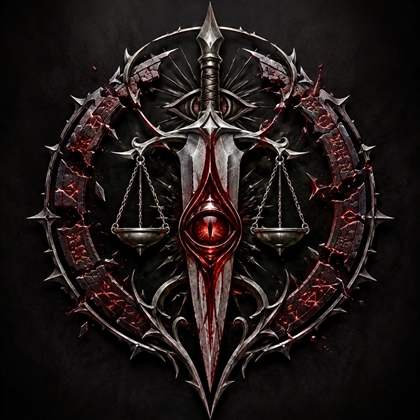
The order’s symbol commonly depicts a crimson eye, blood drop, or upright blade surrounded by a broken circle of arcane script. Legitimate Tribunals often incorporate an open hand or balanced scales to distinguish judgment from indiscriminate destruction.
Each hunter bears an Ashen Writ, a tattoo, brand, metal badge, parchment seal, or scar representing the authority under which they operate. The Writ records the hunter’s Tribunal and may contain protective runes.
When their hemocraft is active, nearby magical effects may flicker. Illusions briefly reveal seams, runes brighten beneath surfaces, and rite-bearing weapons leave sharp red fractures through spell effects.
Role in Aetheris
The Order of Witch Hunters functions as an anti-spellcaster striker, investigator, and magical controller.
On the battlefield, members:
- Identify active spells and magical creatures
- Penalize hostile spell attacks
- Disrupt concentration
- Expose invisible or illusion-hidden enemies
- Break protective magic
- Suppress teleportation
- Punish repeated spellcasting
- Protect allies from magical damage
- Track pact-bound, cursed, or magically altered quarry
Outside combat, they serve as:
- Investigators of magical crimes
- Curse hunters
- Exorcists
- Pact specialists
- Magical forensic examiners
- Hunters of rogue spellcasters
- Destroyers of cursed objects
- Inspectors of arcane institutions
- Protectors of magically exploited communities
- Witnesses in supernatural tribunals
- Trackers of fiends and aberrations
- Specialists in recovering stolen memories or souls
Within an adventuring party, a Witch Hunter excels against enemies relying on concentration, invisibility, teleportation, magical defenses, or repeated spell use.
Subclass Integration
Major Polities
March of Draeven
The March maintains highly regulated Ashen Tribunals associated with military law and supernatural investigation. Hunters possess significant authority but are expected to document every sanctioned action.
Helbrann League
Helbranni Tribunals operate under canton law. Their hunters are known for extended investigations and careful infiltration before confronting suspected covens.
Concord of Veltrion
The Concord permits Witch Hunter activity but requires cooperation with local magistrates and recognized magical authorities. Unsanctioned persecution is treated as a serious crime.
Republic of Aurimundus
Aurimundus encourages cooperation between Witch Hunters, artificers, and magical scholars. Its chapters emphasize evidence, containment, and technical understanding.
Kingdom of Aurvalis
Aurvalian hunters frequently work beside elven mages and royal wardens. They focus on magical corruption, forbidden relics, and threats to ancient sites.
Volarion Republic
Volarion Tribunals answer to local cantons. Their authority varies widely, though most emphasize civic accountability and protection from magical coercion.
Freeholds of Rhonadral
The Freeholds contain independent hunters, private investigators, and locally sponsored Tribunals. Their flexibility enables rapid action but creates opportunities for corruption and personal vendettas.
Dominion of Xathrin
Xathrin soul binders, contract mages, enchanters, and summoners are among the order’s most persistent enemies.
Obsidian Hegemony
The Hegemony employs sacrificial ritualists, corrupted artificers, and destructive warlocks. Witch Hunters opposing it often work as battlefield specialists rather than investigators.
Skyborne Dominion
Relations with the Skyborne Dominion are tense. Dominion arcanists resent outside oversight, while Witch Hunters distrust magical institutions that consider themselves beyond ordinary law.
Organizations, Guilds, and Orders
Likely allies include:
- Responsible wizard colleges
- Temple inquisitors
- Paladin orders
- Anti-slavery organizations
- Curse breakers
- Relic wardens
- Monster-hunting lodges
- Magical forensic societies
- Civic watch organizations
- Arcane investigators
- Pact scholars
- Artificer guilds
- Exorcists
- Planar wardens
The order commonly opposes:
- Dominion of Xathrin soul traffickers
- Obsidian Hegemony ritualists
- The Sanguine Compact
- The Veiled Court
- Old One cults
- Corrupt witches
- Fiendish pact brokers
- Mind-controlling enchantment circles
- Magical slavers
- Rogue artificers
- Necromantic traffickers
- Fallen Witch Hunters known as the Ashen Zealots
Religious and Philosophical Movements
The order has no unified religion.
Some members serve gods of justice, knowledge, protection, truth, or lawful judgment. Others view magical accountability as a civic duty rather than a sacred obligation.
Temples often welcome hunters who pursue possession, curses, and soul theft. They oppose chapters that claim authority over all religious magic or treat unfamiliar faiths as evidence of corruption.
The order’s most important philosophical division concerns whether magical power is inherently corrupting. Mainstream Tribunals reject that belief. Ashen Zealots embrace it and seek the elimination or control of all spellcasters.
Subclass Features
Order of Witch Hunters Features
|
Blood Hunter Level |
Feature |
|
3rd |
Witch Hunter’s Training, Rite of Arcane Censure |
|
7th |
Spellbreaker’s Precision |
|
11th |
Mark of the Witch |
|
15th |
Arcane Reaper |
|
18th |
Witch’s Doom |
Optional Subclass Techniques
The following techniques may be offered as Tribunal training, investigative rewards, specialized mutations, or optional Blood Hunter abilities at the Game Master’s discretion.
Ashen Sight
Prerequisite: Order of Witch Hunters, 3rd level
When you cast detect magic through Witch Hunter’s Training, its duration becomes 1 hour and it does not require concentration.
Once you gain this extended duration, you cannot do so again until you finish a long rest.
Silver Writ
Prerequisite: Order of Witch Hunters, 7th level
Your weapon attacks count as silvered.
When you hit a fiend, shapechanger, or creature carrying a magical pact, you can expend one Censure Die and add it to the attack’s damage.
Spell-Scent
Prerequisite: Order of Witch Hunters, 7th level
After examining a creature, object, or location for 1 minute, you can determine whether a spell was cast there within the previous 24 hours.
You learn the spell’s school, if any, but not its identity or caster.
Witchbane Manacles
Prerequisite: Order of Witch Hunters, 11th level
During a long rest, you can inscribe one set of restraints with anti-magic hemocraft.
A creature restrained by these manacles has disadvantage on concentration saving throws and Charisma saving throws made to teleport or travel between planes.
The manacles lose their special properties when you inscribe another set.
They do not prevent spellcasting by themselves.
Hunter of the Hidden Hand
Prerequisite: Order of Witch Hunters, 11th level
You have advantage on saving throws against enchantment and illusion spells.
When you succeed on such a saving throw, you immediately know the direction of the spell’s caster if it is within 120 feet.
Tribunal’s Shelter
Prerequisite: Order of Witch Hunters, 15th level
When you use Arcane Disruption, choose one ally within 30 feet.
That ally gains temporary hit points equal to one roll of your Censure Die plus your Hemocraft modifier.
Playing This Subclass
The Order of Witch Hunters is designed as an anti-spellcaster striker, investigator, and controller.
Its central combat rhythm involves activating Rite of Arcane Censure, identifying the most dangerous magical enemy, applying Mark of the Witch, and preserving Censure Dice for concentration disruption or defensive reactions.
The subclass is strongest against:
- Concentrating spellcasters
- Invisible casters
- Teleporting enemies
- Creatures protected by magical Armor Class bonuses
- Pact-bound creatures
- Summoners
- Enchanters
- Illusionists
- Magical controllers
- Enemies relying on repeated spellcasting
Censure Dice power both offense and defense. Spending them aggressively on damage can leave the hunter unable to protect allies from a dangerous spell.
The subclass does not automatically stop spells. Arcane Disruption modifies one attack, one saving throw, or inflicts backlash. Final Abjuration provides a stronger counterspell-like effect, but only once during the capstone.
Hemocraft Strike imposes disadvantage on concentration rather than causing automatic failure.
Seal the Invocation restricts a specific magical behavior rather than forbidding all high-level spellcasting.
Mark of the Witch provides strong benefits against one creature but does not grant disadvantage on every saving throw it makes.
Spell Rend reproduces part of dispel magic, but it requires two Censure Dice and an ability check against stronger spells.
Roleplaying This Subclass
Witch Hunters are commonly disciplined, suspicious, analytical, and intensely attentive to small signs of magical influence.
Common habits include:
- Checking reflections for inconsistencies
- Recording exact wording of promises
- Refusing food or drink from unknown magical sources
- Testing doorways for wards
- Observing whether shadows move correctly
- Carrying multiple writing tools
- Preserving magical evidence
- Avoiding casual acceptance of supernatural bargains
- Asking whether a magical effect was consensual
- Watching companions for altered behavior
- Memorizing the appearance of allies
- Distrusting unexplained gaps in memory
Common character themes include:
- A survivor of magical domination
- A former apprentice betrayed by a mentor
- A hunter whose family was destroyed by a coven
- A lawful investigator committed to evidence
- A former zealot seeking redemption
- A mage who joined the order to police magical abuse
- A victim of an infernal pact
- A hunter pursuing a possessed loved one
- An agent investigating corruption within their own Tribunal
- A character who fears becoming as ruthless as their quarry
Common narrative tensions include:
- Vigilance versus paranoia
- Justice versus vengeance
- Magical regulation versus personal freedom
- Evidence versus intuition
- Protecting spellcasting allies while distrusting magic
- Distinguishing cultural ritual from dangerous sorcery
- Deciding whether a corrupted practitioner can be redeemed
- Confronting wrongdoing within the order
- Recognizing when lawful authority protects magical abuse
- Refusing to confuse unfamiliar magic with evil
Suggested Characteristics
Personality Traits
- I watch hands, eyes, and shadows whenever someone begins to speak.
- I record evidence before I draw conclusions.
- I assume every supernatural bargain contains a hidden cost.
- I remain calm when magic becomes chaotic.
- I ask spellcasters to explain their methods before trusting them.
- I collect harmless magical curiosities to remind myself that magic is not inherently evil.
Ideals
- Magic must serve the world rather than dominate it.
- Power does not place anyone beyond accountability.
- Corruption thrives where no one is willing to look.
- A corrupted practitioner may still be saved.
- No spell should erase another person’s will.
- Fear must never replace evidence.
Bonds
- A mage destroyed my home, and I will ensure no one suffers the same fate.
- A spellcaster once saved me from becoming a zealot.
- My Tribunal is my family, though I fear it is hiding something.
- I carry the Ashen Writ of a hunter falsely executed for sorcery.
- I seek the fiend holding a loved one’s soul contract.
- I protect a magical community that other hunters would condemn.
Flaws
- I assume secrecy is evidence of corruption.
- My desire for certainty makes me slow to trust.
- I sometimes treat magical allies like suspects.
- Vengeance can make me interpret every clue in the worst possible way.
- I believe suffering is acceptable if it reveals the truth.
- I fear magic so deeply that I envy those who wield it freely.
Faction and Organization Connections
Likely allies and patrons include:
- Ashen Tribunals
- Responsible magical academies
- Temple inquisitors
- Paladin orders
- Curse breakers
- Relic wardens
- Arcane investigators
- Anti-slavery organizations
- Civic magistrates
- Exorcists
- Planar wardens
- Monster-hunting lodges
- Artificer guilds
- Communities harmed by magical exploitation
Likely enemies include:
- Dominion of Xathrin soul binders
- Obsidian Hegemony ritualists
- Old One cults
- The Veiled Court
- The Sanguine Compact
- Fiendish contract brokers
- Magical slavers
- Rogue enchanters
- Corrupt summoners
- Necromantic traffickers
- Ashen Zealots
- Tribunals that fabricate evidence
- Institutions claiming immunity from investigation
Adventure Hooks
- The Innocent Coven. A Tribunal orders the destruction of a rural coven accused of blood sacrifice. Evidence suggests the victims were killed by the hunter leading the investigation.
- The Missing Spell. Every record of a particular spell has vanished, including the memories of those who once cast it. One Witch Hunter still remembers.
- The Ashen Writ. A respected hunter’s authorization seal appears at several magical crime scenes occurring hundreds of miles apart.
- The Silent Academy. An entire magical college ceases communicating. Its protective wards remain active, but each window shows a different interior.
- The Pact Without a Patron. Hundreds of ordinary citizens develop identical warlock powers, yet no fiend, deity, or entity claims responsibility.
- The Zealot Tribunal. A powerful Ashen Tribunal begins arresting all local spellcasters. Its leaders insist that they have seen a future in which magic destroys the city.
Notable NPCs
Magistrix Elara Voss, Keeper of the Ashen Writ
Elara commands a respected Tribunal operating in the March of Draeven.
She is patient, severe, and committed to evidentiary procedure. Elara has removed several hunters from service for treating suspicion as proof.
Her left eye is permanently covered by a silver lens that reveals active enchantments but also shows every person as they might appear under magical corruption.
Kasimir Renn, the Spellscarred Witness
Kasimir is a Helbranni Witch Hunter who survived years of magical imprisonment.
He specializes in identifying altered memories and enchantment. Kasimir is compassionate toward victims but nearly incapable of trusting powerful enchanters.
Arcane script appears across his skin whenever someone attempts to influence his mind.
Veyra Ash, the Burning Magistrate
Veyra once led a celebrated campaign against a fiendish coven.
She became convinced that all spellcasting inevitably leads to corruption. Her followers now imprison mages, burn grimoires, and forcibly suppress magical children.
Veyra considers herself the only true Witch Hunter remaining and views the established Tribunals as compromised.
Balance Notes
Intended Role
Primary role: Anti-Spellcaster Striker
Secondary roles: Controller, Investigator, Magical Support
The subclass is intended to pressure one dangerous magical opponent while helping allies survive hostile spells.
Damage Profile
Sustained damage comes from Crimson Rite and Censure’s Edge.
Hemocraft Strike provides limited burst damage against concentrating enemies.
Witchbreaker’s Verdict supplies capstone damage once per turn.
Spellscourge punishes casting but can damage a creature only once per turn.
The subclass deals less additional damage against enemies that do not use magic.
Survivability
The subclass gains survivability through:
- Bonuses to saving throws against specific spells
- Temporary hit points
- Movement after magical effects collapse
- Reduced magical Armor Class bonuses
- Concentration disruption
- Teleportation control
- Limited spell negation at 18th level
It does not gain broad magic resistance or permanent resistance to spell damage.
Utility
The subclass provides:
- Detect magic
- Arcana expertise
- Magical forensics
- Illusion and invisibility mitigation
- Concentration disruption
- Spell identification
- Active-spell removal
- Pact and possession detection
- Teleportation suppression
- Magical tracking
- Anti-enchantment options
Resource Economy
Censure Dice equal the hunter’s proficiency bonus and return on a long rest.
They power:
- Arcane Disruption
- Hemocraft Strike
- Seal the Invocation
- Counterward
- Mark of the Witch
- Spell Rend
- Optional techniques
Spell Rend consumes two dice, preventing frequent removal of high-level spells.
Reaper’s Bane can restore only one Censure Die between rests.
Witch’s Doom restores one die each turn but lasts only 1 minute and is usable once per long rest.
Comparison to Similar Subclasses
The Order of Witch Hunters shares themes with Paladin oath hunters, Mage Slayer martial characters, inquisitors, and anti-magic Rangers.
Unlike a full spellcaster, it does not gain counterspell, dispel magic, antimagic fields, or broad magical protection as ordinary spells.
Unlike a Paladin, it lacks Divine Smite, Lay on Hands, and Aura of Protection.
Unlike a dedicated investigator, it retains strong weapon combat but has fewer broad social and exploration tools.
Its power is strongest against active magic and significantly less dominant against purely martial enemies.
Summary
The Order of Witch Hunters is an anti-magic Blood Hunter tradition devoted to identifying and confronting those who abuse supernatural power.
Its members combine magical forensics, hemocraft, weapon skill, and carefully limited spell disruption. Censure Dice allow them to weaken hostile spells, disrupt concentration, expose concealed quarry, and dismantle magical protections.
Mark of the Witch focuses the hunter’s attention on one dangerous practitioner, while Spell Rend allows active enchantments and wards to be torn away through a rite-bearing weapon.
At the height of their power, Witch Hunters can place a magical enemy under Witch’s Doom, punishing spell use, limiting escape, and issuing a single decisive abjuration.
Within Aetheris, legitimate Ashen Tribunals protect communities from soul binders, magical slavers, corrupt covens, fiendish bargains, and supernatural domination. Their greatest danger is becoming persecutors who mistake magical ability for guilt.
The subclass is best suited to players who enjoy anti-spellcaster combat, investigation, reaction management, magical forensics, focused quarry mechanics, and the moral tension between necessary vigilance and destructive zealotry.
“A true hunter does not ask whether magic was used. They ask who was harmed, who consented, who profited, and who was silenced.”
—The Four Questions of the Ashen Tribunals
Level 3: Witch Hunter’s Training
You are trained to recognize, investigate, and survive hostile magic.
Action Type: Passive; reaction for Arcane Disruption
Uses: Censure Dice equal to your proficiency bonus per long rest
Duration: Varies
Scaling: Censure Dice become d8s at 11th level and d10s at 18th level
You gain proficiency in Arcana.
If you already have proficiency in Arcana, you gain expertise in it instead.
You can cast detect magic as a ritual. Intelligence is your spellcasting ability for this spell, though the spell requires no material components when cast through this feature.
Magical Forensics
You have advantage on Intelligence checks made to identify:
- The school of an active spell
- A magical trap
- The approximate age of a ritual
- A curse
- A summoning circle
- A planar pact
- Magical possession
- Enchantment or altered memory
- A creature created or substantially altered by magic
- The remains of a recently dispelled effect
This feature reveals the nature of evidence but not automatically the identity or motive of the creature responsible.
Censure Dice
You gain a pool of Censure Dice equal to your proficiency bonus. These dice are d6s.
You regain all expended Censure Dice when you finish a long rest.
Your Censure Dice become d8s at 11th level and d10s at 18th level.
Arcane Disruption
When a creature you can see within 60 feet casts a spell, you can use your reaction and expend one Censure Die.
Choose one of the following effects.
Disrupting Hex
If the spell requires an attack roll, subtract the Censure Die from the first spell attack roll made as part of the spell.
You use this feature after the attack is rolled but before its outcome is determined.
Fractured Invocation
If the spell forces one or more creatures to make a saving throw, choose one creature affected by the spell that you can see.
That creature adds the Censure Die to its first saving throw against the spell.
The die can be added after the d20 is rolled but before the outcome is determined.
Unstable Casting
The caster must make a Constitution saving throw against your Hemocraft save DC.
On a failed save, it takes force damage equal to two rolls of your Censure Die immediately after the spell is resolved.
If the spell requires concentration, the caster also has disadvantage on the first concentration saving throw it makes before the start of its next turn.
Arcane Disruption does not automatically cause a spell to fail or change its saving throw DC for every affected creature.
Rite of Arcane Censure
You learn the Rite of Arcane Censure as part of your Crimson Rite feature. It does not count against the number of Crimson Rites you know.
Action Type: Part of the bonus action used to activate a Crimson Rite
Uses: At-will, subject to normal Crimson Rite rules
Duration: Until the Crimson Rite ends
Scaling: Additional magical suppression at 11th level
While the rite is active, the weapon’s rite damage is force or psychic damage. You choose the damage type when you activate it.
Once during each of your turns when you hit a creature with a weapon bearing this rite, you can mark it as Censured until the start of your next turn.
While Censured:
- The creature cannot become invisible.
- It cannot benefit from bonuses to its Armor Class produced by a spell cast after it was marked.
- It has disadvantage on the first Constitution saving throw it makes to maintain concentration before the mark ends.
This feature does not dispel an existing spell and does not prevent a creature from casting.
At 11th level, a Censured creature also cannot teleport or enter the Ethereal Plane until the start of your next turn unless it succeeds on a Charisma saving throw against your Hemocraft save DC.
Level 7: Spellbreaker’s Precision
Your weapons and hemocraft can disrupt the structure of active magic.
Action Type: Passive; part of a successful weapon attack
Uses: Censure Dice
Duration: Instantaneous or until the end of your next turn
Scaling: Expanded by later features
Your weapon attacks count as magical for the purpose of overcoming resistance and immunity to nonmagical attacks and damage.
You also gain the following options.
Hemocraft Strike
Once during each of your turns when you hit a creature concentrating on a spell or magical effect, you can expend one Censure Die.
The attack deals additional force or psychic damage equal to two rolls of the die.
The target has disadvantage on the concentration saving throw caused by the triggering attack.
If the target loses concentration because of this saving throw, you can move up to 10 feet without provoking opportunity attacks.
Hemocraft Strike does not automatically end concentration.
Seal the Invocation
When you hit a creature with a weapon bearing Rite of Arcane Censure, you can expend one Censure Die to force it to make a Constitution saving throw against your Hemocraft save DC.
On a failed save, choose one of the following restrictions until the end of its next turn:
- It cannot cast spells as reactions.
- It cannot cast a spell and teleport during the same turn.
- The range of its spells is halved.
- It cannot cast a spell while invisible.
- It cannot use a magical feature that would change its shape.
Seal the Invocation does not prevent all spellcasting or restrict spells solely by level.
Counterward
When a creature you can see within 30 feet gains temporary hit points, magical resistance, or a bonus to Armor Class from a spell, you can use your reaction and expend one Censure Die.
Reduce the temporary hit points or numerical bonus by the result rolled, to a minimum of 0.
If the effect grants resistance rather than a numerical benefit, the protected creature instead loses that resistance against the next damage instance it takes before the start of its next turn.
Counterward does not affect artifact-level or divine effects unless the Game Master determines otherwise.
Level 11: Mark of the Witch
You inscribe a blood-sealed judgment upon a creature whose magic you intend to dismantle.
Action Type: Bonus action
Uses: One Censure Die per use
Duration: 1 minute
Scaling: Censure Dice become d8s at this level
As a bonus action, expend one Censure Die and choose one creature you can see within 90 feet.
The creature becomes marked for 1 minute.
The mark ends early if:
- You mark another creature;
- You dismiss it without using an action;
- You become unconscious; or
- The creature dies.
The mark is a magical effect but does not require concentration.
While a creature bears your Mark of the Witch, you gain the following benefits.
Arcane Exposure
You know whether the marked creature:
- Is concentrating on a spell;
- Is under the effect of one or more spells;
- Is possessed;
- Has assumed another form through magic;
- Is carrying a bound soul or active pact;
- Has spell slots or innate spells remaining.
This feature does not reveal exact spells, spell levels, or remaining uses.
Unmasked Quarry
The marked creature cannot benefit from invisibility against you.
You recognize the marked creature through illusion-based disguises and magical shapechanging, though you do not automatically see its original form.
The creature cannot benefit from blur, mirror image, or similar effects against your attacks unless the effect was created by an artifact, deity, or creature of substantially greater power than you.
Censure’s Edge
Once during each of your turns when you hit the marked creature with a weapon attack, you deal additional force or psychic damage equal to one roll of your Censure Die.
You do not expend the die when rolling it for this damage.
If the marked creature has cast a spell since the end of your last turn, add your Hemocraft modifier to this additional damage.
Blood-Sealed Judgment
The marked creature has disadvantage on the first saving throw it makes against one of your Blood Hunter or Order of Witch Hunters features during each round.
This disadvantage does not apply to all saving throws and does not benefit attacks made by your allies.
Follow the Weave
You know the direction of the marked creature while it is within 1 mile of you and on the same plane of existence.
If it teleports while within 120 feet, you know its destination if that destination is also within 120 feet.
Level 15: Arcane Reaper
You can feed upon collapsing magic and tear active spells from your quarry.
Action Type: Passive; reaction or part of a successful attack
Uses: Limited by Censure Dice and once-per-turn restrictions
Duration: Instantaneous
Scaling: None
You gain the following features.
Reaper’s Bane
When a hostile creature you can see within 60 feet is reduced to 0 hit points or loses concentration on a spell, you can draw strength from the collapsing magic.
Choose one of the following benefits:
- Gain temporary hit points equal to one roll of your Censure Die plus your Hemocraft modifier;
- Regain one expended Censure Die;
- Move up to 15 feet without provoking opportunity attacks; or
- Gain advantage on the next saving throw you make against a spell before the end of your next turn.
You can use Reaper’s Bane only once during each round.
You cannot regain more than one Censure Die through this feature between short or long rests.
Spell Rend
Once during each of your turns when you hit a creature with a weapon bearing an active Crimson Rite, you can expend two Censure Dice and attempt to end one spell affecting it.
Make an Intelligence ability check, adding your proficiency bonus.
The DC equals 10 plus the spell’s level.
On a successful check, the selected spell ends on the target.
On a failed check, the spell remains, but the target takes force damage equal to the total rolled on the two Censure Dice.
If the spell is 3rd level or lower, you can choose to succeed automatically instead of making the check.
Spell Rend cannot end:
- A spell with an instantaneous duration;
- A curse or effect that specifically requires remove curse, greater restoration, or similar magic;
- An artifact-level effect;
- A divine intervention;
- A permanent transformation that is no longer being maintained as an active spell; or
- A magical effect that cannot ordinarily be dispelled.
Arcane Backlash
When you successfully end a spell through Spell Rend, the creature responsible for casting that spell takes psychic damage equal to one roll of your Hemocraft die plus your Hemocraft modifier, provided it is within 120 feet of you.
Level 18: Witch’s Doom
You pronounce a blood-bound sentence against a creature whose magic threatens those around it.
Action Type: Bonus action
Uses: Once per long rest
Duration: 1 minute
Scaling: Final subclass feature
As a bonus action, choose one creature you can see within 120 feet.
It becomes subject to Witch’s Doom for 1 minute.
If the creature does not already bear your Mark of the Witch, it becomes marked for the duration without requiring a Censure Die.
Witch’s Doom ends early if you are incapacitated or use it against another creature.
While the doom lasts, you gain the following benefits.
Condemned by Blood
The creature has disadvantage on the first saving throw it makes during each round.
If the saving throw is against one of your Blood Hunter or Witch Hunter features, it cannot cancel this disadvantage through advantage unless an effect specifically states that it cannot suffer disadvantage.
Spellscourge
Whenever the creature casts a spell, it takes force or psychic damage equal to two rolls of your Censure Die plus your Hemocraft modifier immediately after the spell resolves.
If the spell requires concentration, the creature has disadvantage on the first concentration saving throw it makes before the start of its next turn.
A creature can take this damage only once per turn.
Sealed Path
The creature’s speed is reduced by 10 feet.
When it attempts to teleport, become ethereal, or travel to another plane, it must succeed on a Charisma saving throw against your Hemocraft save DC.
On a failed save, the movement fails, and any action, reaction, spell slot, charge, or other resource used is expended.
On a successful save, the effect functions normally.
The creature can attempt this saving throw no more than once during each turn.
Ruin the Ward
Your weapon attacks against the condemned creature ignore bonuses to Armor Class granted by spells.
The creature cannot benefit against your attacks from:
- Blur;
- Mirror image;
- Sanctuary;
- Shield;
- Magical invisibility; or
- Similar spell effects that directly obscure it or prevent your attacks.
This feature does not dispel those spells or remove their benefits against your allies.
Witchbreaker’s Verdict
Once during each of your turns when you hit the condemned creature with a weapon attack, the attack deals an additional 2d8 force or psychic damage.
If the creature has cast a spell since the end of your last turn, the additional damage becomes 4d8.
Unending Censure
At the start of each of your turns, you regain one expended Censure Die.
You cannot have more Censure Dice than your proficiency bonus.
Final Abjuration
Once during Witch’s Doom, when the condemned creature casts a spell, you can use your reaction to attempt to unravel it.
Make an Intelligence check and add your proficiency bonus. The DC equals 10 plus the spell’s level.
On a success, the spell fails and has no effect. Any spell slot or limited-use resource is expended.
On a failure, the spell functions normally, but the caster takes 4d10 force damage after it resolves.
Final Abjuration is not a spell and cannot itself be counterspelled.
Once you use Witch’s Doom, you cannot use it again until you finish a long rest.
Previous Versions
| Name | Date Modified | Views | Adds | Version | Actions |
|---|---|---|---|---|---|
|
7/24/2026 7:54:25 PM
|
9
|
4
|
1
|
Coming Soon
|
Comments