



 Base Class: Monk
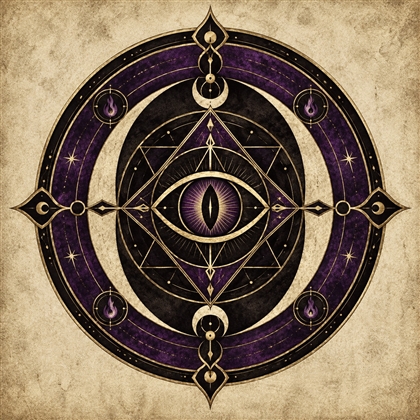
Monks of the Way of the Occult seek the truths that polite temples, cautious academies, and fearful rulers bury beneath doctrine and taboo. They believe reality is layered: flesh over spirit, law over chaos, light over shadow, memory over forgotten things, and mortal perception over deeper structures that can be studied, touched, and wielded. To walk this path is to accept that ignorance may be safer, but it is also a cage.
These Monks combine physical discipline with esoteric study. Their training includes breath control, martial forms, meditation, sigil-tracing, shadow work, dream interpretation, forbidden languages, ritual geometry, and the controlled use of spells drawn from both Warlock and Wizard traditions. Unlike Warlocks, they do not necessarily bargain with patrons. Unlike Wizards, they do not rely only on books and formulae. They make the body itself into a ritual instrument.
The Way of the Occult is dangerous because it teaches contact without surrender. Its students handle cursed manuscripts, meditate in darkness, study the names of dead gods, map the borders between waking and dream, and learn spells that sane teachers might forbid. Some emerge wiser, calmer, and better prepared to protect others from hidden powers. Others become secretive, manipulative, or convinced that every moral law is merely another veil to cut.
In Aetheris, this subclass is ideal for characters drawn to occult investigation, shadowed monasteries, forbidden libraries, hidden societies, arcane conspiracies, planar mysteries, dream-haunted ruins, necromantic relics, and philosophical danger. It is not necessarily evil, but it is never innocent.
Origins in Aetheris
The Way of the Occult has no single founding monastery. It is less a unified order than a recurring pattern: wherever disciplined Monks encounter forbidden knowledge and choose study over fear, some version of this path can emerge.
In Ozythralis, Occult Monks may arise near places where Shadowfell influence, old ruins, cult activity, and spiritual contamination overlap. Unlike the Eldritch Hunter, who studies darkness to destroy specific horrors, the Occult Monk is often more willing to preserve and interpret dangerous knowledge. This makes them useful, controversial, and sometimes suspect.
In Arganthyr, the tradition may appear among monasteries that study the Underdark’s psychic ecosystems, ancient subterranean ruins, strange fungal networks, and half-buried civilizations. These Monks learn that the world below is not merely physical depth; it is symbolic descent, a journey into buried history and buried thought.
In Sahariad, Occult Monks may be tied to comet-scarred sites, glassed ruins, lost Zepharan fragments, star cults, and desert hermitages where initiates meditate beneath impossible constellations. Some believe the Comet of Suthakhet cracked not only the land, but the boundary between mortal understanding and cosmic truth.
In Velmyris and Myrdrithis, the Way may overlap with fey mysteries, dream rites, glamour, ancestral bargains, and old forest magic. These branches are often less necrotic and more symbolic, working through masks, riddles, shadows, and the names of things that do not wish to be named.
In great cities, Occult Monks may operate out of hidden reading rooms, sealed shrines, abandoned observatories, black-market libraries, philosophical salons, or monasteries disguised as ordinary schools. Their lineages often survive because they are useful to people in power — and dangerous enough that those same people prefer to deny they exist.
Philosophy and Doctrine
The Way of the Occult teaches that hidden truth is not inherently corrupting, but the unprepared mind is easily consumed by it. Knowledge is a blade. In disciplined hands, it cuts chains, lies, and illusions. In careless hands, it opens doors that should have remained sealed.
Its central teachings include:
The unseen governs the seen. A ruler’s decree, a lover’s oath, a battlefield wound, and a child’s nightmare may all be surface expressions of deeper forces.
Fear is not wisdom. To refuse all forbidden knowledge is to leave it in the hands of cultists, tyrants, and fools.
Curiosity must be chained to discipline. A question asked without restraint can become an invocation.
The body anchors the mind. Breath, pain, posture, fasting, repetition, and motion keep the Monk grounded when occult study threatens to dissolve ordinary certainty.
The veil exists for a reason. To pierce hidden truth is not always to reveal something that should be shared.
Occult Monks often disagree among themselves. Some believe knowledge should be democratized and taken from elites. Others believe dangerous lore must be controlled by disciplined initiates. Some serve temples, some serve secret societies, and some reject all authority except the hard lessons of experience. This tension makes the tradition fertile ground for both heroes and villains.
Visual Identity
Occult Monks tend to look like wanderers between monastery, archive, shrine, and graveyard. Their clothing is practical but symbolic: dark robes, layered sashes, ink-stained sleeves, hooded mantles, prayer cords, bone or iron beads, fingerless wraps, occult diagrams stitched into inner linings, and hidden pockets for chalk, salt, black thread, folded charms, and small ritual knives.
Common colors include black, violet, indigo, bone-white, ash-gray, tarnished silver, deep red, and old gold. Some lineages use elaborate sigils and visible tattoos. Others hide every mark beneath plain clothing, believing secrecy protects both the Monk and the world.
Their spellcasting is physical, precise, and unsettling. An Occult Monk might cast by striking pressure points on their own body, drawing a spiral with two fingers, breathing a syllable backward, opening one eye while closing the other, or tracing a sigil in the air with a bleeding thumb. Their magic often manifests as black-violet flame, silver thread, pale smoke, geometric shadows, inverted script, whispering motes, or ripples in the air like unseen hands pressing against reality.
In combat, they move with eerie calm. They strike nerves and meridians, step through darkness, speak words that make enemies hesitate, and lace their blows with psychic pain or necrotic chill. Their presence suggests that the battlefield is not only physical terrain, but a ritual circle waiting to be completed.
Role in Aetheris
On the battlefield, Occult Monks are mobile spell-skirmishers and esoteric controllers. They use Monk movement to reach vulnerable angles, Warlock and Wizard spells to manipulate the field, and psychic or necrotic techniques to punish enemies who underestimate them. They are not full casters, but their spell access gives them unusual flexibility.
Socially, they are seekers, investigators, hidden advisers, exorcists of last resort, secret-keepers, and sometimes dangerous radicals. They are called when a noble dreams in a dead language, when a shrine’s shadow points the wrong way, when a sealed book bleeds through its binding, or when a wizard insists the experiment is perfectly safe.
Adventuring Occult Monks work well in campaigns involving forbidden tomes, cults, planar mysteries, political secrets, haunted ruins, secret societies, cursed bloodlines, ancient pacts, magical crime, or the moral cost of knowledge.
Subclass Integration
Major Polities
In Ozythralis, Occult Monks may be treated with caution. Their willingness to study darkness can make them useful against Shadowfell and occult threats, but their ambiguity may unsettle more orthodox defenders.
In Arganthyr, they may serve as scholars of the Lowerdark, interpreters of buried civilizations, or specialists in psychic and subterranean mysteries.
In Sahariad, they may be drawn to comet-scarred ruins, lost Zepharan fragments, glass-waste anomalies, and star-haunted desert monasteries.
In the Shorin Dominion, Occult Monks may appear as esoteric temple scholars, hidden advisers, onmyōji-like martial mystics, or secretive agents who study curses, spirits, shadows, and forbidden rites.
In the Helbrann League, they may exist at the margins of official institutions: consulted by scholars, watched by canton authorities, and occasionally used by intelligence circles when ordinary investigation fails.
Organizations, Guilds, and Orders
Occult Monks may belong to forbidden libraries, sealed monasteries, hidden philosophical circles, shadow temples, occult universities, curse-breaker guilds, spy networks, anti-cult cells, or orders that preserve dangerous knowledge under strict discipline.
Religious and Philosophical Movements
Some serve gods of knowledge, shadow, death, magic, secrets, fate, or judgment. Others distrust divine revelation and prefer occult empiricism: test the rite, trace the sigil, survive the answer.
Rival Factions and Enemies
Their enemies include cults that worship what should be studied only from behind wards, tyrants who hoard knowledge, magical censors, reckless wizards, corrupt necromancers, pact-brokers, false prophets, memory thieves, and occult orders that have abandoned discipline for power.
Occult Spellcasting
Action Type: Passive
Uses: At-will spellcasting through spell slots
Duration: Permanent
Scaling: Uses half-caster spell slot progression and limited spells known
You learn to combine monastic discipline with occult spellcraft, drawing from both forbidden pact-lore and formal arcane study. Your spells are not granted by a patron or shaped purely through academic formula. They are focused through breath, posture, will, sigil, and the disciplined body.
Spellcasting
When you choose this tradition at 3rd level, you gain the ability to cast spells.
Cantrips
You learn two cantrips of your choice from the Warlock or Wizard spell list. You learn one additional Warlock or Wizard cantrip of your choice when you reach 11th level in this class.
Spell Slots
The Occult Spellcasting table shows how many spell slots you have to cast your spells of 1st level and higher. To cast one of these spells, you must expend a spell slot of the spell’s level or higher. You regain all expended spell slots when you finish a Long Rest.
You use the spell slot progression of a half-caster. Your Monk level determines your spell slots, as shown on the Occult Spellcasting table.
Spells Known of 1st Level and Higher
You know three 1st-level spells of your choice from the Warlock or Wizard spell list.
The Spells Known column of the Occult Spellcasting table shows when you learn more Warlock or Wizard spells of your choice. Each spell you learn must be of a level for which you have spell slots.
Whenever you gain a Monk level, you can replace one of the Warlock or Wizard spells you know from this feature with another spell of your choice from the Warlock or Wizard spell list. The new spell must be of a level for which you have spell slots.
Spellcasting Ability
Wisdom is your spellcasting ability for your Occult spells. Your magic is shaped through perception, discipline, intuition, and the ability to hold hidden truths in the mind without being ruled by them.
Spell Save DC = 8 + your Proficiency Bonus + your Wisdom modifier
Spell Attack Modifier = your Proficiency Bonus + your Wisdom modifier
Spellcasting Focus
You can use your own body as a spellcasting focus for your Occult spells. This focus may take the form of occult tattoos, branded sigils, prayer beads, mudras, ritual scars, inked sutras, knuckle-wraps, a hidden charm, a carved bone token, or precise esoteric gestures woven into your martial forms.
You can perform the Somatic components of your Occult spells even while holding Monk weapons, provided at least one hand is free enough to trace a sigil, form a mudra, strike a pressure point, or complete the required gesture.
Occult Spellcasting
|
Monk Level |
Cantrips Known |
Spells Known |
1st |
2nd |
3rd |
4th |
5th |
|
3 |
2 |
3 |
3 |
— |
— |
— |
— |
|
4 |
2 |
4 |
3 |
— |
— |
— |
— |
|
5 |
2 |
4 |
4 |
2 |
— |
— |
— |
|
6 |
2 |
4 |
4 |
2 |
— |
— |
— |
|
7 |
2 |
5 |
4 |
3 |
— |
— |
— |
|
8 |
2 |
6 |
4 |
3 |
— |
— |
— |
|
9 |
2 |
6 |
4 |
3 |
2 |
— |
— |
|
10 |
2 |
7 |
4 |
3 |
2 |
— |
— |
|
11 |
3 |
7 |
4 |
3 |
3 |
— |
— |
|
12 |
3 |
8 |
4 |
3 |
3 |
— |
— |
|
13 |
3 |
8 |
4 |
3 |
3 |
1 |
— |
|
14 |
3 |
9 |
4 |
3 |
3 |
1 |
— |
|
15 |
3 |
9 |
4 |
3 |
3 |
2 |
— |
|
16 |
3 |
10 |
4 |
3 |
3 |
2 |
— |
|
17 |
3 |
10 |
4 |
3 |
3 |
3 |
1 |
|
18 |
3 |
11 |
4 |
3 |
3 |
3 |
1 |
|
19 |
3 |
11 |
4 |
3 |
3 |
3 |
2 |
|
20 |
3 |
12 |
4 |
3 |
3 |
3 |
2 |
Forbidden Insight
Action Type: Passive
Uses: At-will
Duration: Permanent
Scaling: Skill value scales naturally with proficiency
Your occult studies have trained you to recognize the hidden structures behind symbols, dreams, curses, and magical phenomena.
You gain proficiency in Arcana. If you already have proficiency in Arcana, you gain Expertise in it instead.
You also learn one language of your choice, usually one associated with occult study, ancient lore, planar research, spirits, fiends, aberrations, fey, undead, or magical scholarship.
In addition, you have Advantage on Intelligence (Arcana), Intelligence (History), Intelligence (Religion), and Wisdom (Insight) checks made to identify, interpret, or understand any of the following:
- Occult symbols, forbidden rites, magical diagrams, or ritual circles.
- Curses, pacts, bindings, possessions, and spiritual contamination.
- Shadow magic, necromancy, psychic magic, or dream influence.
- Secret societies, hidden cults, esoteric orders, or forbidden texts.
- Planar breaches, eldritch anomalies, haunted sites, or magical omens.
Occult Infusion
Action Type: Passive; no action required
Uses: Proficiency Bonus per Long Rest, or by expending Focus Points
Duration: Instantaneous
Scaling: Damage uses your Martial Arts die
You learn to lace both strike and spell with occult force, letting hidden power bleed through the point of contact.
Once per turn when you damage a creature with an Unarmed Strike, Monk weapon, or Occult spell, you can deal extra Psychic or Necrotic damage to that creature equal to one roll of your Martial Arts die.
You can use Occult Infusion a number of times equal to your Proficiency Bonus, and you regain all expended uses when you finish a Long Rest. If you have no uses remaining, you can expend 1 Focus Point to use it again.
When you deal this extra damage, choose one of the following signs of occult manifestation:
Whispering Nerve. The target cannot take Reactions until the start of your next turn.
Grave-Cold Meridian. The target’s Speed is reduced by 10 feet until the start of your next turn.
Unveiling Strike. If the target is Invisible, magically disguised, shapeshifted, or hidden by illusion magic, it must succeed on a Wisdom saving throw against your Spell Save DC or the effect briefly falters. Until the start of your next turn, the target gains no benefit from being Invisible against you, and you know its location if it is within 60 feet of you and not behind total cover.
You can apply only one of these signs each time you use Occult Infusion.
Shadow Step
Action Type: Bonus Action
Uses: At-will in dim light or darkness; expanded use by expending Focus Points
Duration: Instantaneous
Scaling: Tactical value increases with spellcasting and later subclass features
Your occult training teaches you that shadow is not absence, but passage. You can step through the hidden seam between one darkness and another, vanishing from the visible world and reappearing where the eye least expects you.
While you are not wearing armor or wielding a Shield, you gain the following benefits.
Step Between Shadows
When you are in dim light or darkness, you can take a Bonus Action to teleport up to 60 feet to an unoccupied space you can see that is also in dim light or darkness.
After you teleport in this way, you have Advantage on the first melee attack you make before the end of the current turn.
Occult Transposition
When you use Step Between Shadows, you can expend 1 Focus Point to ignore the requirement that your starting space be in dim light or darkness. Your destination must still be an unoccupied space you can see in dim light or darkness.
Alternatively, you can expend 1 Focus Point to ignore the requirement that your destination be in dim light or darkness. Your starting space must still be in dim light or darkness.
You can expend 2 Focus Points to ignore both requirements, teleporting up to 60 feet to an unoccupied space you can see.
Shadowed Casting
When you use Shadow Step, the first Occult spell you cast before the end of the current turn does not require Verbal components, provided the spell has a casting time of an Action or Bonus Action.
If that spell deals Psychic or Necrotic damage to at least one creature, you can add your Wisdom modifier to one damage roll of the spell.
Occult Convergence
Action Type: Passive; no action required
Uses: Once per turn; spell-triggered benefit
Duration: Instantaneous, with some effects lasting until the end of your next turn
Scaling: Deepens the subclass’s martial-spellcasting fusion
You no longer treat spell and strike as separate disciplines. Your body becomes a moving ritual circle, your breath a verbal component, and your blows the punctuation marks of hidden power.
You gain the following benefits.
Eldritch Meridian
Once per turn when you hit a creature with an Unarmed Strike or Monk weapon, you can deal extra Psychic or Necrotic damage to the target equal to one roll of your Martial Arts die.
If you already dealt extra damage to the target with Occult Infusion this turn, you cannot apply this extra damage to the same target until the start of your next turn.
Spell and Fist
When you use your Action to cast an Occult spell of 1st level or higher, you can make one Unarmed Strike as a Bonus Action.
If the spell you cast dealt Psychic or Necrotic damage, created darkness, charmed or frightened a creature, revealed hidden knowledge, exposed an illusion, or teleported you, this Unarmed Strike has Advantage.
Open the Hidden Gate
When you hit a creature with the Unarmed Strike granted by Spell and Fist, you can mark the target with occult pressure until the end of your next turn.
The next time the marked creature makes a saving throw against one of your Occult spells before the mark ends, you can roll your Martial Arts die and subtract the result from the saving throw.
Once a creature has had a Martial Arts die subtracted from a saving throw by this feature, you cannot use Open the Hidden Gate again until the start of your next turn.
Eyes Behind the Veil
You can see normally in dim light and darkness, both magical and nonmagical, out to 60 feet.
In addition, you can perceive faint occult disturbances. You have Advantage on Wisdom (Perception) and Intelligence (Investigation) checks made to detect hidden magical sensors, invisible ritual marks, concealed spell effects, disguised undead, shadow magic, necromantic traces, or creatures hidden by magical darkness.
Master of the Occult
Action Type: Bonus Action and Passive
Uses: Once per Long Rest, or by expending Focus Points
Duration: 1 minute
Scaling: Capstone feature
Your discipline has pierced the veil between visible form and hidden truth. You do not merely study the occult; you become a living occult convergence, a disciplined mortal vessel through which shadow, thought, death, and secret knowledge move without ruling you.
As a Bonus Action, you enter a state of occult mastery for 1 minute. This state ends early if you are Incapacitated. You can also end it early at any time, no action required.
While this state is active and you are not wearing armor or wielding a Shield, you gain the following benefits:
Sight Beyond the Veil
You can see normally in darkness and magical darkness out to 120 feet. Within this range, you can also see Invisible creatures and objects, perceive the true form of shapeshifted creatures, and recognize visual illusions as illusory. This sight does not allow you to see through total cover.
Mind and Grave Made Still
You have Resistance to Psychic and Necrotic damage.
In addition, you have Advantage on saving throws against being Charmed, Frightened, possessed, magically dominated, or affected by spells and magical effects that would read, alter, erase, or implant memories.
Sovereign Shadow Step
When you use Shadow Step, you can teleport from or to any space within 5 feet of a creature or object that casts a shadow, even if that space is not in dim light or darkness.
In addition, after you teleport with Shadow Step, you can choose one creature you can see within 10 feet of your destination. That creature must succeed on a Wisdom saving throw against your Spell Save DC or be unable to take Reactions until the start of your next turn.
Occult Apotheosis
Once on each of your turns when you damage a creature with an Unarmed Strike, Monk weapon, or Occult spell, you can deal extra Psychic or Necrotic damage to that creature equal to two rolls of your Martial Arts die.
If the target is in dim light or darkness, under the effect of one of your Occult spells, Charmed, Frightened, Invisible, magically disguised, possessed, or affected by an illusion or curse, this extra damage becomes three rolls of your Martial Arts die instead.
Final Unveiling
Once during this state, when a creature fails a saving throw against one of your Occult spells, you can force the hidden truth of the spell deeper into the target. Choose one of the following effects:
Dread Revelation. The target is Frightened of you until the end of your next turn.
Severed Veil. The target cannot benefit from Invisibility, magical disguise, or illusion-based concealment until the end of your next turn.
Silenced Secret. The target cannot take Reactions and cannot speak above a whisper until the end of your next turn.
Grave-Writ Mark. The next time the target takes Psychic or Necrotic damage before the end of your next turn, it takes additional damage equal to three rolls of your Martial Arts die.
Once you use Final Unveiling, you cannot use it again until the next time you enter this state.
Once you use Master of the Occult, you cannot use it again until you finish a Long Rest unless you expend 5 Focus Points to use it again.
Optional Subclass Techniques
These optional techniques can be offered as feats, training rewards, secret order initiations, downtime benefits, or esoteric lessons from an Occult master.
Black Thread Sutra
During a Short or Long Rest, you can bind a black thread, inked charm, bone bead, or written sigil to yourself or one willing creature. Until the creature finishes its next Long Rest, it has Advantage on the first saving throw it makes against being Charmed, Frightened, possessed, cursed, or magically dominated.
Once a creature benefits from this technique, it cannot benefit from it again until it finishes a Long Rest.
Candleless Reading
You can read writing, inscriptions, spell diagrams, occult symbols, and ritual markings in darkness and magical darkness as though they were illuminated.
In addition, you have Advantage on Intelligence (Arcana) and Intelligence (Investigation) checks made to study books, scrolls, inscriptions, or magical writing in poor lighting, hidden chambers, ruins, crypts, or other occult spaces.
Grave-Mirror Palm
When you deal Necrotic damage with Occult Infusion or Occult Apotheosis, you can choose to gain Temporary Hit Points equal to one roll of your Martial Arts die. Once you gain Temporary Hit Points from this technique, you cannot do so again until the start of your next turn.
Whisper-Behind-the-Eye Method
When you deal Psychic damage with Occult Infusion or Occult Apotheosis, you can choose to impose Disadvantage on the next Wisdom (Perception) or Wisdom (Insight) check the target makes before the end of your next turn.
Door in the Shadow
When you cast an Occult spell that teleports you or when you use Shadow Step, you can leave behind a faint occult mark that lasts until the start of your next turn. The first ally who enters the space you left can move 10 feet without provoking Opportunity
Comments