



 Base Class: Barbarian
The Musical Soul is a barbarian who's rage has allowed them to create music, guided by the passion of the barbarian. Musical Soul Barbarians are much like bards, their artistic will manipulating The Weave and creating the ability to cast spells. However, the Musical Soul is a bit different, as they have fully melded their abilities as a barbarian into the music they create. The songs they play are reflections of their personalities, or even a look into the personalities themselves. A bard creates a song to sing and inspire, a Musical Soul creates a song like a paladin's oath, a sound to live their life by. As a result, The Musical Soul is often more spiritual in nature than the average bard or barbarian. The song they play during battle, called their "Song of The Soul," is a powerful spell cast by The Musical Soul through their Bonded Weapon, a piece of the barbarian's history which fully connects their rage to their music, allowing it to shine brightest during time of greatest passion.
Musical Weapon
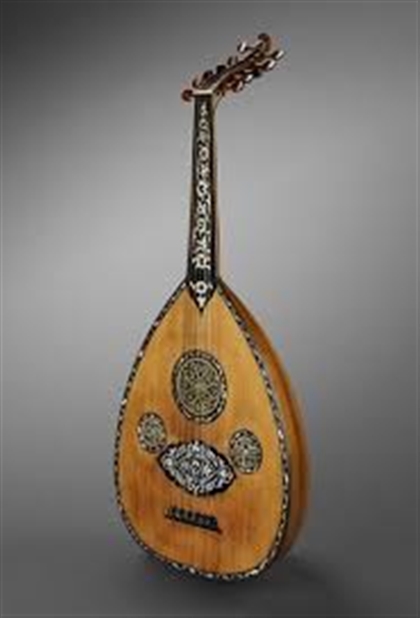
Starting when you choose this path at 3rd level, you learn a ritual transform the instrument of your rage, you weapon, into the instrument for your music. The ritual takes place over 1 hour, which can be done during a short rest. The weapon must be in reach the entire hour, at the end of which you touch the weapon, forming the musical bond. From that point forward, you can use the bonded weapon to cast spells, using it as a bardic focus for your magical powers. You can use it to make performance checks, using it in your music in some way. You can describe how this looks, from a great axe becoming a lute, to a dagger becoming a microphone for your voice. You can also use this instrument to perform your Song of The Soul, using it as your core instrument.
If you lose your bonded weapon, you can summon the weapon with a bonus action, so long as it's on the same plane of existence. The weapon is considered a magic weapon, and if destroyed, another can be made in the ritual. You can have up to 2 bonded weapons at once, and can only summon one with each bonus action. If you try to bond with a third weapon, you will have to break your bond with one the other two.
Fearless Rage
Beginning at 3rd level, you can’t be charmed or frightened while raging. If you are charmed or frightened when you enter your rage, the effect is suspended for the duration of the rage. You no longer gain the resistance to piercing, slashing, and bludgeoning damage you would normally gain from your rage.
The Musical Soul barbarian is not as physically powerful as other barbarians, their rage going more into their creativity and willpower than their physical might. As such, they are more capable at fending off mental attacks in the passion of battle.
Spellcasting
Beginning at 3rd level, you augment your passionate strength with the ability to cast spells.
You learn 2 cantrips of your choice from the bard spell list. You learn an additional bard cantrip of your choice at 10th level.
The Eldritch Knight Spellcasting table shows you how many spell slots you have at each level. To cast the spell, you must expend a spell slot equal or greater than the level of the spell you're casting. For example, if you were to cast Cure Wounds, and have a first level and second level slot available, you could use either one to cast the spell. You regain all expended spell slots on a long rest.
You know three 1st-level bard spells of your choice, two of which must be from the Transmutation or Enchantment schools of magic. The Eldritch Knight spellcasting table shows when you'll learn more spells of 1st level or higher. Each of these new spells must be Transmutation or Enchantment spells, (except at 8th, 14th, and 20th, which can be from any school) and must be for a level of which you have spell slots. For instance, when you reach level 7 in this class, you can learn a new spell of either 1st level or 2nd level. Whenever you level up in this class, you can replace one of the bard spells you know with another spell from the bard spell list. The spell must be at a level you have slots for, and must be a transmutation or enchantment spell, except for the spells you at 3rd, 8th, 14th, and 20th level.
You use your Charisma modifier for your bard spells, since you're using your personality and beliefs to cast the spells. You use your charisma modifier whenever a spell refers to your spellcasting ability. Moreover, you use your charisma modifier to set the DC of a spell you cast's saving throw, as well as when you make an attack roll with a spell.
Spell Save DC = 8 + your proficiency bonus + your charisma modifier
Spellcasting Ability = your proficiency modifier + your charisma modifier
Song of The Soul
Starting at 3rd level, you gain the power to manifest your magical energies as a song. Choose one of these 3 songs as your Song of The Soul:
Song of Healing: Choose a number of creatures equal to your rage damage within 30 ft, target heals for an amount equal to your bardic inspiration dice.
Song of Protection: Choose 1 creature within 30 ft, targets are given a boost to their Armor Class (AC) equal to your rage damage. This boost lasts a number of rounds equal to your bardic inspiration dice. The maximum number of creatures this can affect is equal to your rage damage. If you want to target another creature with the ability, you'll need to end the effect on one of the previous creatures.
Song of Violence: Choose a number of creatures equal to your rage damage within 10 ft, targets gain a boost to their weapon damage equal to your bardic inspiration dice. This lasts for 1 round.
Bardic Inspiration Dice: 1d6 at level 3, 1d8 at level 5, 1d10 at level 10, and 1d12 at level.
Rage Damage: 2 at level 1, 3 at level 9, 4 at level 16.
This song can be played during times of great tension. (A.K.A. when you use your rage) After you've started your rage, you can use a bonus action to perform a DC 5 performance check to play your song, activating one of 3 effects depending on the Song you've chosen. Every successful check raises the DC by 5 for the next round, until you've failed to perform it, at which point, it goes back down to 5.
You can play this song until your rage ends. You rage will now only end if you fail both to attack an enemy or attempt to play the song. When you level up, you can trade one song for another.
Jack of Most Trades
You have slowly been learning to master your weakest points, hoping to become a more well-rounded and capable individual. Among the Strength, Dexterity, Constitution, and Charisma stats, find the one that's the weakest. You gain +2 to that stat, which can go no higher than 20. If multiple of these stats tie for the weakest, distribute the points as you see fit between them.
Magical Harmony
You're Song of The Soul grows in power as you learn how to better perform the it using your spellcasting ability, and your primal understanding of magic. You gain the following benefits depending on your Song of The Soul:
Song of Healing: You can now add your spellcasting modifier to the amount healed.
Song of Protection: You may now add your spellcasting modifier to the maximum number of creatures you can affect with the AC bonus.
Song of Violence: You may now add your spellcasting modifier to the damage bonus. Range now extends to 20 ft.
Primal Magic
You have become so attuned to your emotions and your fury that you can now use that fury to further enhance your capabilities as a bard. While raging, you can choose either your strength or constitution scores, and add that score to your spellcasting ability. (so spellcasting ability would become strength/constitution modifier + charisma modifier while raging) This would apply for any spells cast, as well as spellcasting modifier/ability's use in Song of The Soul.
The Song's Will Is Greater Than The Flesh
The powers of your music have advanced to a point that your song has been ingrained into your very being. You gain one of the following benefits depending on your Song of The Soul:
Song of Healing: You gain a bonus to any healing you get. When you're healed by any healing spell or effect, (including the song) multiply it by 2.
Song of Protection: You gain a +2 bonus to your AC. This counts towards your base AC.
Song of Violence: You gain a +2 to attack rolls.
Spellcasting+
The years of barding has finally paid off! Your mastery over simple spells is extraordinary! You can now cast 1st level spells at will. If you upcast them, you will have to expend a spell-slot of the appropriate level.
The Greatest Song
The Song of your Soul is perfected. It is the perfect embodiment of your inner feelings, shaped by your strength, and made manifest by the inherit magic you now command. Your chosen song gets one of the following effects:
Song of Healing: Whenever a creature is affected/healed by the spell, it can now also cast remove curse or dispel magic on the target. You choose whether or not this happens. The spells are cast at the highest level of magic you manage at your level. (At level 14, 3rd level)
Song of Protection: The +2 bonus becomes a +3. More than that, the bonus now applies to the target's saving throws as well.
Song of Violence: Now when a creature is affected by the spell, they also gain a bonus to their attack rolls equal to your rage damage. This bonus now applies to all attacks, and if the target attempts to cast a spell on someone in that time, add the bonus to the spell's DC. Range of the spell now extends to 30 ft.
Comments