



 Base Class: Artificer
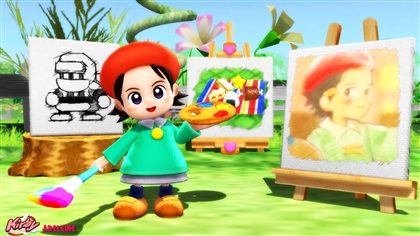
Artisans are skilled professionals who create brilliant works of visual art, and are some the most common artificers seen all across the world. An Artisan treats their tools as an extension of themselves, their talents and expressions flowing through the artistic medium to craft astounding illusions, construct impressive assistants, and manifest powerful magic items.
Though the specialist featured here focuses on Painter's Supplies, all Artisans impart their own unique styles into their artwork. This subclass should serve as a guide; feel free to reflavor any of the Painter aspects with a different fine Artisan's Tool of your choice from the following list:
Calligrapher's supplies, Cartographer's tools, Cook's utensils, Glassblower's tools, Jeweler's tools, Leatherworker's tools, Potter's tools, Tinker's tools, Weaver's tools, Woodcarver's tools
Expert Tool Proficiency
When you adopt this specialization at 3rd level, you gain expertise with one set of Artisan's Tools in which you are already proficient.
You also gain proficiency with Painter's Supplies or a second type of Artisan's Tool of your choice.
Artisan Spells
Starting at 3rd level, you always have certain spells prepared after you reach particular levels in this class, as shown in the Artisan Spells table. These spells count as artificer spells for you, but they don’t count against the number of artificer spells you prepare.
Artisan Spells
| Artificer Level | Spell |
|---|---|
|
3rd |
|
|
5th |
|
|
9th |
|
|
13th |
|
|
17th |
Painter Prodigy
At 3rd level, get ready to put your painting prowess to the test! You learn additional spells, which must be cast using your Painter's Supplies as the spellcasting focus. These spells are all cast using your Intelligence:
- You learn the Minor Illusion cantrip. It becomes an artificer spell for you, and it doesn't count against your number of cantrips known.
- Artisans can cast Minor Illusion as either an Action or a Bonus Action once on their turn.
- Add your INT modifier to the duration of Minor Illusion (minimum 1 minute) to extend the amount of time your painted illusion can be active.
Artisans can also transmute edible pick-me-ups through use of their tools in a pinch! With Artisan's Tools in hand, you are able to cast Goodberry at 1st level without expending a spell slot, without preparing the spell, and without material components.
- Once you cast Goodberry with this feature, you can’t cast that spell with it again until you finish a short or long rest, as it does not become an artificer spell for you.
- Add your INT modifier to the healing amount (minimum 1 HP) of each painted food item --which are not limited to being berries-- for a more potent recovery bonus.
Furthermore, as an Artisan, you share the same passion and potential that inspires Bards all across the land! When your Spellcasting feature lets you learn an artificer cantrip or prepare an artificer spell of 1st level or higher, you can choose the new spell from the bard spell list, in addition to the artificer spell list.
You gain a special amount of extra spell slots that can only be used to cast these additional bardic spells. You gain a number of spell slots that equals your proficiency bonus (PB).
- With your Bard spells of choice, prepare a number of them equal to your INT modifier for the levels in which you have spell slots available. For example, if you are a 3rd level Artisan artificer and your Intelligence is +3, you can prepare three 1st level bard spells. This amount does not count against the number of artificer spells you can prepare.
Additionally, once you reach 8th level in this subclass: Phenomenal Painter Prodigy
- When you cast Minor Illusion, you can create both a sound and an image with a single casting of the spell.
- When you cast Goodberry, each piece of food heals for a base 5 HP (+ INT modifier) when consumed.
- You can inspire others that gaze upon your beautifully painted illusions and summons. To do so, you use a Bonus Action on your turn to choose one creature other than yourself within 60 feet of you who can see any of your active Illusion spells or Summoned creatures. If there are currently no illusions or summons that you have created within view, or if that creature is blinded, the move fails.
- If successful, that creature gains a Bardic Inspiration die, 1d6, here called Artisan Inspiration. Once within the next 10 minutes, the creature can roll the die and add the number rolled to one ability check, attack roll, or saving throw it makes. The creature can wait until after it rolls the d20 before deciding to use the Artisan Inspiration die, but must decide before the DM says whether the roll succeeds or fails. Once the Artisan Inspiration die is rolled, it is lost. A creature can have only one Artisan Inspiration die at a time. You can use this feature a number of times equal to your Intelligence modifier (minimum once) regaining any expended uses when you finish a long rest.
Artful Augmentation
Starting at 5th level, your artful magic springs to life colorful creatures and effects from your canvas! Any time you cast a spell that summons a creature, that being is considered a Construct, regardless of what creature type is indicated in its stat block.
- You know the Mending cantrip. Artisans can cast this spell as an Action, instead of the usual 1 Minute casting time, starting at this level, and it doesn't count against your number of cantrips known.
- The summoned creatures you construct can be healed for 1d6 Hit Points per casting if the Mending spell is used on them.
At this level, your experience with the brush has granted you exceptional chromatic ability. With your Painter's Supplies in hand, you always have the Chromatic Orb spell prepared. It counts as an artificer spell for you, and it doesn't count against the number of spells you can have prepared. You cast Chromatic Orb without expending a spell slot and without the required material components, provided your Painter's Supplies are the focus. You can do so a number of times equal to your proficiency bonus, and you regain all expended uses when you finish a long rest.
Your further knowledge of an Artisan's color pallet allows you to alter the raw elements produced through your unique spellcasting. Whenever you cast a spell using your Painter's Supplies as the focus and the spell deals acid (green), cold (blue), fire (red), lightning (yellow), poison (violet), or thunder (orange) damage, you can substitute that damage type for another one from that list. You can do so a number of times per day equal to your proficiency bonus.
Additionally, once you reach 12th level in this subclass: Advanced Artful Augmentation
- The summoned creatures you construct can be healed for 2d6 Hit Points per casting if the Mending spell is used on them. You can cast Mending from a range of 30 feet.
If a weapon attack or a spell attack you deliver deals bludgeoning, piercing, or slashing damage, you can augment the attack to inflict an additional 2d6 acid (green), cold (blue), fire (red), lightning (yellow), poison (violet), or thunder (orange) damage of your choice once as part of your attack. If the weapon you use isn't magical, it becomes a magic weapon for the attack. You can augment your damage a number of times per day equal to your proficiency bonus.
Each of the above features that reference your proficiency bonus (PB) have their own number of uses equal to your current level PB. You can use each of these features no more than once on a turn. You regain all expended uses when you finish a long rest.
Spell Scroll Savant
At 9th level, you can tap into your reserves of magical energy to create a Spell Scroll. You can spend 1 use of the your artificer Magical Tinkering feature to create a scroll instead of producing its regular effects.
Once per short or long rest, you can spend 30 minutes with your Painter's Supplies and Paper (one sheet) to create a spell scroll containing one spell from the artificer list (no check required). Alternately, you can attempt to create a spell scroll containing one spell from the bard list (INT Check 10 DC + spell level) or to duplicate another spell scroll you possess that comes from any other available class list (INT Check 20 DC + spell level). Before attempting to craft the scroll, subtract the spell's level from the total uses you have for Magical Tinkering (Max 5). This reduction to your Magical Tinkering applies until you use the scroll and then finish a long rest, or if unsuccessful, just until you finish a long rest. You can create multiple spell scrolls over multiple rests, granted you have more uses of Magical Tinkering remaining.
The spell scrolls produced in this manner are unique, as they resemble colorfully painted pictures instead of text. Besides you, only those who know these scrolls contain spells and can decipher the symbolic language of the image (INT Check 15 DC + spell level) are able to produce their effects. These picture scrolls last indefinitely, or as an action, you can touch the object and end the property early. Once cast of their magic, the image vanishes from the page, and the scroll returns to being a regular sheet of paper.
Manifest Marvelous Masterpiece
By 15th level, your vast expertise in the arts has granted you the ability to craft a very rare wonderous item as one of your Artificer Infusions: Marvelous Pigments. Once per long rest, you can magically produce 1d4 pots of Marvelous Pigments in an unoccupied 5 foot square in front of you, if you concentrate for 1 hour while using your Painter's Supplies as a focus. To do this requires a slot of your Infused Items feature, but this feature does not count against your number of Infusions Known. At the end of each day, the pigments lose their magic and become regular paints, but the objects produced through their conventional use remain.
These pigments allow you to create three-dimensional objects by painting them in two dimensions. The paint flows from the brush to form the desired object as you concentrate on its image. Each pot of paint is sufficient to cover 1,000 square feet of a surface, which lets you create inanimate objects or terrain features--such as a door, a pit, flowers, trees, cells, rooms, or weapons-- that are up to 10,000 cubic feet. It takes 10 minutes to cover 100 square feet.
When you complete the painting, the object or terrain feature depicted becomes a real, nonmagical object. Thus, painting a door on a wall creates an actual door that can be opened to whatever is beyond. Painting a pit on a floor creates a real pit, and its depth counts against the total area of objects you create. Nothing created by the pigments can have a value greater than 25 gp. If you paint an object of greater value (such as a diamond or a pile of gold), the object looks authentic, but close inspection reveals it is made from paste, bone, or some other worthless material. If you paint a form of energy such as fire or lightning, the energy appears but dissipates as soon as you complete the painting, doing no harm to anything.
Additionally, as an ability unique to Artisans, if you have and choose to use a minimum of 3 pots of your Marvelous Pigments, you can cast Summon Celestial at 5th level without expending a spell slot or providing other material components. The spell counts as an artificer spell for you, and it doesn't count against the number of prepared spells (since you don't need to prepare it). Also, you are able to cast Summon Elemental for 2 pots of pigment and Summon Beast for 1 pot of pigment, both at their lowest levels, without expending a spell slot or providing other material components. Finally, if you choose to summon any of these creatures using your Marvelous Pigments, all of the summoned creatures are considered constructs, none of these spells require concentration to maintain, and the spell's duration becomes 1 Minute for that casting.
Once the summon's duration has expired, it becomes lifeless and shrinks down into a tiny, painted sculpture form of the creature it resembled. These trinkets are highly sought after by collectors, and can be sold for up to 25 gp per sculpture.
Previous Versions
| Name | Date Modified | Views | Adds | Version | Actions |
|---|---|---|---|---|---|
|
3/9/2021 7:44:37 AM
|
77
|
0
|
--
|
Coming Soon
|
|
|
3/9/2021 7:58:19 AM
|
69
|
0
|
--
|
Coming Soon
|
|
|
3/9/2021 7:39:29 PM
|
70
|
0
|
--
|
Coming Soon
|
|
|
3/10/2021 12:12:11 AM
|
75
|
0
|
--
|
Coming Soon
|
|
|
3/10/2021 3:07:38 AM
|
76
|
0
|
--
|
Coming Soon
|
|
|
3/10/2021 3:08:50 AM
|
77
|
0
|
--
|
Coming Soon
|
|
|
3/10/2021 2:28:25 PM
|
76
|
0
|
--
|
Coming Soon
|
|
|
3/10/2021 2:38:39 PM
|
79
|
1
|
--
|
Coming Soon
|
Comments