



 Base Class: Wizard
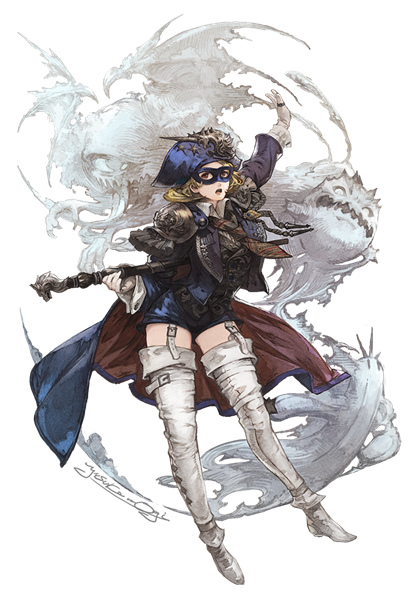
There exists among the many arcane traditions of wizards, a school that practices magic so esoteric that it garners skepticism bordering on unsettling fear. These wizards are known for their study and emulation of monsters, mythological scholars with the ability to acquire unusual powers from the creatures they face and add them to their repertoire. By entwining their lives with those of the monstrous beings that roam the world and treating their subjects with a degree of respect and camaraderie, some of these wizards even come to be adopted by packs or societies of the more intelligent monstrosities.
Monstrous Mythos
Starting when you choose this tradition at 2nd level, you have spent great amounts of time among monstrous beings, possessing a great wealth of knowledge regarding their customs and characteristics. Whenever you make a check to remember or discern information about a non-humanoid creature you gain advantage on the roll.
Mimicry of Monsters
Starting when you choose this tradition at 2nd level, your studies of monsters and their innate magical traits allow you to perform mimicries of their abilities. You can learn and possess a number of mimicries equal to your proficiency bonus. You can replace one mimicry that you know whenever you attempt to copy a new one.
Learning Mimicries. Whenever you successfully help to kill a non-humanoid monster that you can see in battle, you can attempt to glean some of its essence to mimic one of its innate abilities. To successfully mimic a creature, you must fulfill all of the following criteria:
- The Challenge Rating of the creature you are trying to mimic must be equal to half your level in this class or lower (rounded down).
- You must have seen or been affected by the ability you are trying to mimic.
- The ability you are trying to mimic cannot be tied to an item.
- The ability you are trying to mimic cannot be Legendary, Mythic, or other special actions and resistances, innate spellcasting, or multiattack.
Using Mimicries. You can use or benefit from a mimicry once, to do so again you must finish a short or long rest. At 14th level, you can benefit from each mimicry twice.
Stark Imitation
At 6th level you are able to draw on the essence of your mimicries to momentarily employ an innate characteristic of a monster. Before you make an attack roll, saving throw, or ability check, you may choose to replace your ability modifier used in the roll, with the ability modifier of a monster you currently possess a mimicry from. You can use this feature twice, and regain all expended uses upon finishing a long rest.
Cryptid Defense
By 10th level, you have made extensive studies into the unique demographics of monsters and their tendencies. Choose a creature type other than Humanoid, whenever you are forced to make a saving throw or whenever you make an ability check to escape a grapple imposed by the creature type you chose, add 1d8 to your roll.
Abberations
Aberrations are utterly alien beings. Many of them have innate magical abilities drawn from the creature’s alien mind rather than the mystical forces of the world. The quintessential aberrations are aboleths, beholders, mind flayers, and slaadi.
Beasts
Beasts are nonhumanoid creatures that are a natural part of the fantasy ecology. Some of them have magical powers, but most are unintelligent and lack any society or language. Beasts include all varieties of ordinary animals, dinosaurs, and giant versions of animals.
Celestials
Celestials are creatures native to the Upper Planes. Many of them are the servants of deities, employed as messengers or agents in the mortal realm and throughout the planes. Celestials are good by nature, so the exceptional celestial who strays from a good alignment is a horrifying rarity. Celestials include angels, couatls, and pegasi.
Constructs
Constructs are made, not born. Some are programmed by their creators to follow a simple set of instructions, while others are imbued with sentience and capable of independent thought. Golems are the iconic constructs. Many creatures native to the outer plane of Mechanus, such as modrons, are constructs shaped from the raw material of the plane by the will of more powerful creatures.
Dragons
Dragons are large reptilian creatures of ancient origin and tremendous power. True dragons, including the good metallic dragons and the evil chromatic dragons, are highly intelligent and have innate magic. Also in this category are creatures distantly related to true dragons, but less powerful, less intelligent, and less magical, such as wyverns and pseudodragons.
Elementals
Elementals are creatures native to the elemental planes. Some creatures of this type are little more than animate masses of their respective elements, including the creatures simply called elementals. Others have biological forms infused with elemental energy. The races of genies, including djinn and efreet, form the most important civilizations on the elemental planes. Other elemental creatures include azers, invisible stalkers, and water weirds.
Fey
Fey are magical creatures closely tied to the forces of nature. They dwell in twilight groves and misty forests. In some worlds, they are closely tied to the Feywild, also called the Plane of Faerie. Some are also found in the Outer Planes, particularly the planes of Arborea and the Beastlands. Fey include dryads, pixies, and satyrs.
Fiends
Fiends are creatures of wickedness that are native to the Lower Planes. A few are the servants of deities, but many more labor under the leadership of archdevils and demon princes. Evil priests and mages sometimes summon fiends to the material world to do their bidding. If an evil celestial is a rarity, a good fiend is almost inconceivable. Fiends include demons, devils, hell hounds, rakshasas, and yugoloths.
Giants
Giants tower over humans and their kind. They are humanlike in shape, though some have multiple heads (ettins) or deformities (fomorians). The six varieties of true giant are hill giants, stone giants, frost giants, fire giants, cloud giants, and storm giants. Besides these, creatures such as ogres and trolls are giants.
Monstrosities
Monstrosities are monsters in the strictest sense — frightening creatures that are not ordinary, not truly natural, and almost never benign. Some are the results of magical experimentation gone awry (such as owlbears), and others are the product of terrible curses (including minotaurs and yuan-ti). They defy categorization, and in some sense serve as a catch-all category for creatures that don’t fit into any other type.
Oozes
Oozes are gelatinous creatures that rarely have a fixed shape. They are mostly subterranean, dwelling in caves and dungeons and feeding on refuse, carrion, or creatures unlucky enough to get in their way. Black puddings and gelatinous cubes are among the most recognizable oozes.
Plants
Plants in this context are vegetable creatures, not ordinary flora. Most of them are ambulatory, and some are carnivorous. The quintessential plants are the shambling mound and the treant. Fungal creatures such as the gas spore and the myconid also fall into this category.
Undead
Undead are once-living creatures brought to a horrifying state of undeath through the practice of necromantic magic or some unholy curse. Undead include walking corpses, such as vampires and zombies, as well as bodiless spirits, such as ghosts and specters.
Grand Mimicries
Starting at 14th level, you can use or benefit each of your mimicries from your Mimicry of Monsters feature twice, rather than once, and you regain all expended uses when you finish a short or long rest.
Comments