



 Base Class: Bard
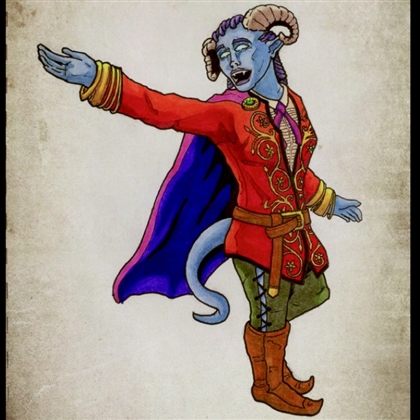
Bards who follow the ways of the College of Prophets do not see themselves as mere entertainers or performers, but rather as mouthpieces for a variety of deities. Each of these bards is as different as the god or goddess they purport to serve; they can be of any alignment or outlook, their personalities and traits usually reflecting the deity that grants them their power. Some speak their deity’s will with a quiet and powerful reverence, some chant in low sonorous tones of worship, and some sing battle hymns to glorify the name of the one they serve. Depending on the god or goddess and how well they are loved, feared, hated, or admired, bards of the College of Prophets can be welcomed, distrusted, reviled, or revered.
Warding Words
When you join the College of Prophets at 3rd level, your deity grants you a blessing of protection. As a reaction, roll one Bardic Inspiration Die without expending it, and add the total to your AC for the duration of an attack against you. You can use this feature a number of times equal to your charisma modifier per long rest.
Powerful Voice
Also at 3rd level, your voice strengthens and you gain greater control of your magic. You can now cast any of your spells using only the Verbal Component. In addition, you can expend a Bardic Inspiration Die as an Action to cast either an eldritch blast or shocking grasp Cantrip.
Booming Voice
Starting at 6th level, your deity works through your words to aid you or hinder your enemies. As an Action, you can concentrate to create an Aura of power in a 30 foot radius centred around you. You choose which effect you want the aura to have from the list below. To be effective, creatures in the aura must be able to see or hear you, and undead or constructs are unaffected. You can drop the Aura as a Bonus Action, and you can only have one Aura in effect at a time. Creatures affected by an Aura are still under its effect even if they subsequently move out of the Aura’s range. You can use this ability a number of times equal to your Charisma Modifier per long or short rest, and an Aura is considered a Concentration Spell.
Aura of Disruption
Choose a number creatures within the Aura equal to your charisma modifier. Until the start of your next turn, the chosen creatures have disadvantage on their next Attack Roll, Skill Check, or Saving Throw, whichever they use first.
Aura of Divine Smite
Choose a number of creatures within the Aura equal to your Charisma Modifier. The next time the chosen creatures takes damage from an attack, it suffers an additional 4d6 psychic damage.
Aura Of Leadership
Up to 6 creatures within the Aura who can understand you gain temporary hit points equal to your Bard Level plus Charisma Modifier and gain Advantage on their next Attack Roll, Skill Check, or Saving Throw, whichever comes first. Creatures affected by this Aura cannot benefit from it again until after their next long or short rest.
Voice of God
At 14th Level, you can directly channel the power of the divine. As a Bonus Action, you may roll and expend as many Bardic Inspiration Dice as you want from your available supply, add your Proficiency Bonus and Charisma Modifier, and divide the total by 2 (rounded down). You do not need to roll all your dice at once, instead adding rolls as you see fit. The following chart shows the formula:
Bardic Inspiration Rolls + your proficiency bonus + your Charisma modifier, halved, rounded down
You can then, as an Action on the same or a subsequent turn, cast any spell from any class from a level equal to or less than the result. Whichever spell you choose counts as a Bard Spell for you, and does not count against your total of Known Spells. You retain this spell until it is cast, you dismiss it (no additional action required), or for up to 1 minute, at which point it fades.
Comments