



 Base Class: Fighter
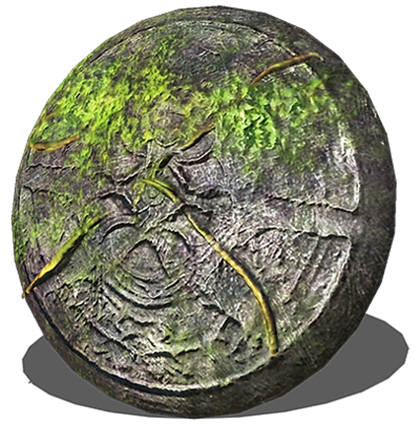
The Greatshield is a massive weapon and active armor piece which covers the Bastion’s body almost entirely when held. Its prodigious size renders it an effective bludgeoning weapon to be swung or thrown. With enough experience the Bastion will learn how to have their thrown shield return to them like a boomerang; reflect damage from projectiles using only their shield and reflexes; dual-wield two full sized shields; and even provide a nearly impregnable, full-cover defense for nearby party members. Bastions are found amongst the stouter or athletically gifted races, such as Goliaths or Dwarfs, but there are exceptions.
BASTION TRAITS
Bastion Disadvantages
Given the cumbersome nature of the Greatshield, its wielder is slowed down considerably. For this reason, Bastions have a -5 to their speed total for each Greatshield they are currently wielding (Dwarven Bastions only receive a penalty to their speed for the second Greatshield).
Greatshields
Shields are normally thought of as extensions of wearable armor by most and are therefore commonly used in a defensive manner. There are some however who see shields to be more akin to weapons like swords in that they are tools of war with a wide range of offensive uses. The Greatshield takes the latter perception to the extreme; it is a weapon, and a piece of active armor to be used to pulverize skulls just as often as it is to be used to protect them from harm. Greatshields are formed using unreasonably large hunks of hard material (dense wood, stone, metal, etc.) which have been shaped into the concave forms of shields. They are two-handed weapons with the capability of being swung like circular mauls or thrown like huge discuses towards unenviable foes.
Greatshield Proficiency
Once you choose the Bastion as your Fighter Archetype at level 3, you gain Proficiency with Greatshields.
Dual Shield
At level 3, you’ve begun to get the hang of this whole shielding thing. You may now carry at-hand two shields of normal size simultaneously, reaping the benefits from both. Normal shields deal 1d4 bludgeoning damage. You cannot dual-wield Greatshields.
Bulwark
Starting at level 3, you have learned how to apply your cover benefits to nearby allies. When wielding a Greatshield or two normal shields at once, you may provide half cover for a willing target within 5 feet of you. Your target must be either to your left or right, and your shield must be between them and the threat.
Battering Ram
By level 7, you’ve been handling shields for long enough to know how to best utilize them offensively. When you use your action to dash and travel at least 10 feet in a straight line, you may make an attack as a bonus action using your shield. On a successful hit, you deal damage equal to your Strength modifier plus your Proficiency bonus, and shove your target back up to 10 feet. If you try to break an inanimate object such as a door or a gate this way, you gain advantage on the attempt.
Shield Boomerang
Beginning at level 10, your skill throwing your shield has reached its peak, as has your magical connection to it. Whenever you throw your shield at an enemy your shield will, after either hitting or missing your target, return to you at the beginning of your next turn. If a creature has entered the line of sight between you and your shield before the start of your next turn, they must make a Dexterity saving throw with a DC of 12 to see if it hits them. A failed save results in a normal damage roll. On your shield’s return it may hit your allies. Regardless of whether or not the shield hits someone on its way back to you, it still continues until it reaches your arm.
Reflect
By level 15, your defensive instincts have evolved considerably. You may now use a reaction whenever you are targeted and missed by incoming missiles that don’t incur area damage (arrows, thrown weapons, magic missiles, etc.). For this kind of reaction, roll a d20 and add your Proficiency bonus. If the resulting number meets or exceeds the AC of the enemy who originally fired the missile at you, it ricochets off of your shield and hits them for half of what the missile’s max damage would be if it had hit you. You may do this up to 3 times between short and long rests.
Example: If a rogue with a shortbow were to fire an arrow at a Bastion and miss, the Bastion could attempt to use Reflect on the errant arrow, returning it. If the Bastion is successful in beating the rogue’s AC, then the rogue is hit by the arrow he just shot, taking 3 damage,
or half of his bow’s 1d6 damage die.
Shield Master
Upon reaching level 15, you have become an offensive and defensive master with a shield. You gain the following benefits while you are wielding a shield:
• If you take the Attack action on your turn, you can use
a bonus action to try to shove a creature within 5 feet
of you with your shield.
• If you aren’t incapacitated, you can add your shield’s AC bonus to
any Dexterity saving throw you make on a spell or other harmful effect that targets only you.
- If you are subjected to an effect that allows you to
make a Dexterity saving throw to take only half dam -
age, you can use your reaction to take no damage if
you succeed on the saving throw, interposing your
shield between yourself and the source of the effect.
Phalanx
Finally, at level 18, you have become a walking rampart. You may now wield two Greatshields at once, reaping the benefits from both. Furthermore, you can now provide 1/2 cover for two allies who are each within 5 feet of you simultaneously, or 3/4 cover for one of them. Holding two Greatshields at the same time grants you full cover. Your targets must be to your left and right and your shield must be between them and the threat in order for them to gain the Phalanx’s cover benefits.
Comments