



 Base Class: Wizard
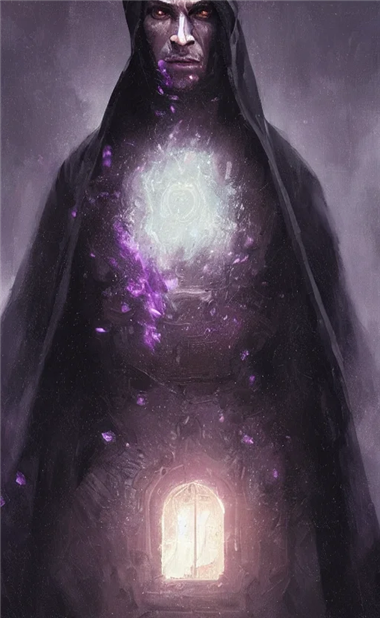
Whereas some wizards may call themselves "Illusionists," Shadowcrafters scoff at such whimsical notions of "mere trickery." These mages have devoted their studies to the elemental plane of shadow, and to ways of harnessing its mysterious magic. This magic manifests in illusions, making them not just appear real, but to take on shades of true reality, drawn from a well of substance which is little understood, and often much feared.
Shadow Sensation
Beginning when you select this school at 2nd level, you begin channeling the plane of shadow through yourself. This close relationship enhances your skills in subterfuge; you gain proficiency in the Deception and Stealth skills. If you already have proficiency, you instead gain expertise in those skills.
Silent Spells
Beginning at 2nd level, you have already begun mastering the essence of silence inherent to shadow. If an Illusion spell you cast with a duration of longer than one round would normally have a verbal component, you can ignore the requirement for that component.
Expert in Illusion
Starting at 6th level, you have focused so much on illusion spells that they all but appear transparent to you. You gain advantage on Wisdom saving throws against all Illusion spells, and enemies have disadvantage on Wisdom saving throws against Illusion spells you cast.
Additionally, you gain Expertise in the Intelligence (Investigation) skill.
Blurred Reality
Difficult Discernment: Beginning at 10th level, your illusions begin to manifest with physical volume composed of elemental shadow, making them almost indistinguishable from reality. When making saving throws against or attempting to investigate the reality of Illusion spells you cast, an opponent must first make a Discernment Check:
Discernment Check: A creature attempting to discern whether an illusion is real must roll a 1d8. If the d8 result is equal to or lower than the spellcaster's proficiency bonus, they get no saving throw against that spell, and determine the illusion to be fully real, even if they have Truesight or a similar ability to penetrate illusions. If the spell lasts for multiple rounds, they can attempt another Discernment Check once per following round each time they interact with the illusion.
Upon succeeding on a Discernment Check, an enemy may make an immediate saving throw or Investigation check, rolled with disadvantage, and do not need to make a Discernment Check again until confronted with a different spell. An enemy with Truesight who succeeds on their Discernment Check automatically detects it and overcomes its saving throw.
Additionally, illusory creations and Illusion spells you cast with a duration of more than one round are semi-solid. Creatures attempting to pass through them must make a Discernment Check to do so, and they can be treated as half-cover if placed between yourself and an enemy, even if the enemy has successfully determined the spell to be an illusion.
Spreading Shadows
Starting at 14th level, you can tap into the shadow plane as a source of true creative energy. You can sacrifice any spell slot in which you have prepared Silent Image, Mirror Image, or Major Image in order to cast any Conjuration or Evocation spell you know of a level equal to the sacrificed spell. Conjuration and Evocation spells cast in this way are treated as illusion spells and have the following effects applied to their casting:
- An unwilling target of the spell may make a Discernment Check (as in the Blurred Reality class feature) in order to determine that the spell is an illusion. If they succeed, they can make any normal saving throw with disadvantage, or if they have Truesight, they are treated as automatically having made any saving throws. If a targeted spell does not have a saving throw, it can be ignored entirely upon making a successful Discernment Check.
- An unwilling creature may make an immediate Intelligence (Investigation) check in the place of the usual saving throw the spell would require. Either roll is made with disadvantage.
- If the spell does damage, any damage is treated as Psychic damage. Any damage applied by the spell is halved, and the spell does no damage if it would normally do half damage to a creature.
- If the spell has a duration longer than one round, that duration is halved.
- The effects of casting the spell with a higher spell slot can still be replicated by sacrificing an additional spell slot of the appropriate level, if one is available.
Additionally, illusions lasting longer than 1 round (including Conjuration and Evocation spells cast via the Spreading Shadows feature), when placed between yourself and an enemy, provide you with at least three-quarters cover, even if the enemy has determined the spell effects to be an illusion.
Comments