



 Base Class: Wizard
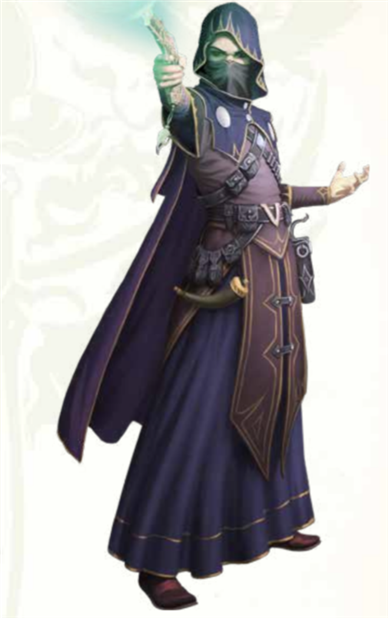
SCHOOL OF BLACK POWDER
The school of black powder bridges magic and
technology. Wizards of this school form a magical
bond with a firearm, allowing them to channel their
magic through the weapon to enhance its effects.
Students go beyond simple offensive magics, using
their black powder magic to great utility in aiding
allies and hindering foes. Practitioners of this school
refer to themselves as powdermancers, though many
folk refer to all spellcasters with an affinity for firearms
as “gun mages,” not fully understanding firearms or
the differences between the various magical disciplines
and styles that utilize them.
Gun Savant
Gun Savant
When you select this school at 2nd level, you gain proficiency with simple firearms and with the musket (see the Adventuring Gear chapter for details on these weapons). When attacking with firearms, you can use your Intelligence modifier, instead of Dexterity, for the attack and damage rolls. You can use a firearm as a spellcasting focus. In addition, you gain proficiency with alchemist’s supplies or gunsmith’s tools (your choice).
Arcane Arms
Arcane Arms
Starting at 2nd level, you can imbue your firearm
with arcane power to create minor magical effects.
As an action, you can invoke one of the following
effects, provided you have a gun in your hand. The
effects created by this feature don’t cause the firearm
to release an audible boom, but other attacks or
effects from your firearm still create the sound. You can use this feature a number of times equal to your proficiency bonus. You regain all expended uses when
you finish a long rest.
Arcane Dusting. You shoot a 15-foot cone of magical
dust from the barrel of your firearm. Each creature or
object in the area that is currently being affected by
a spell, such as mage armor, or that is magical, such as
bracers of archery, glows until the end of your next turn,
shedding dim light in a 5-foot radius.
Flare. You fire a bright ball of magical light from
the barrel of your firearm. If fired into the air, the ball rises to a maximum height of 100 feet, unless stopped by an intervening obstacle, hovers until the end of your next turn, then falls slowly, reaching the ground by the end of the next round. The light extinguishes when it hits the ground. The flare can be seen up to 1 mile away in daylight or up to 5 miles in darkness. Alternatively, the flare can be fired up
to 50 feet away in any other direction. Each creature
within 5 feet of the path of the flare must succeed on
a Dexterity saving throw against your spell save DC
or have disadvantage on Wisdom (Perception) checks
that rely on sight for 1 minute.
Lockbuster. You fire a magical shot from your
firearm at a lock within the weapon’s normal range.
Make an attack roll with the firearm. If the result is
equal to or exceeds the DC required to pick the lock,
your shot destroys the lock. You have advantage on
this attack roll if the lock is protected by magic, such
as the arcane lock spell.
Smokescreen. A cloud of smoke billows from your
firearm, creating a 10-foot-radius sphere of smoke
centered on you. The sphere spreads around corners,
and its area is heavily obscured. The cloud lasts until
the end of your next turn or until a wind of moderate
or greater speed (at least 10 miles per hour) disperses
it. When you reach 6th level, the sphere’s radius
increases to 20 feet.
Starter’s Gun. You discharge your firearm into the
air. Each friendly creature of your choice within 30
feet of you has its speed increased by 10 feet until the
start of your next turn. When you reach 10th level,
each affected creature can also Dash as a bonus action
on its turn.
Tracer Shot. You fire a ball of light at a creature you
can see within 60 feet of you. Make a ranged attack
with your firearm. On a hit, the attack deals damage
as normal, and the target is outlined in light, as if
affected by the faerie fire spell, until the start of your
next turn. When you reach 10th level, the target is
outlined in light for 1 minute.
Firearm Rules
Gunpowder.
Gunpowder is an often-unpredictable substance. As such, firearms, bombs, and other weapons and items utilizing gunpowder have the potential to deal significant damage. If you roll the highest possible number on an individual damage die (such as a 6 on a d6 or a 12 on a d12) when you attack with this weapon, you can roll that die again and add
the result to the total.
For example, if your 2d4 roll resulted in a 3 and a 4, you can reroll the 4, adding the result to the current total of 7. When a damage die results in the highest possible number on the die, it is called a “burst.”
If you roll the highest possible number again, you can roll the damage die again and add the result to the total, further
increasing the weapon’s damage. Any of the damage
dice for this weapon, including extra dice such as from
a critical hit or sneak attack, can burst and result in a reroll. For each attack you make with this weapon, you can reroll only a number of burst dice equal to your proficiency bonus, regardless of how many damage dice result in the highest possible number.
For example, a 2nd-level rogue fires a pistol and scores a critical hit with sneak attack. The character rolls 4d6 damage dice that result in a 1, a 3, a 6 and another 6. The character then rerolls each 6, resulting in a 4 and a 6. The character adds those results to the current damage total for a final damage total of 26. Since the character’s proficiency bonus is +2, the character can’t reroll the new 6, ending
the gunpowder bursts for that attack. When that character makes another attack with the pistol, this process starts anew.
If a single attack with a weapon or item with this property hits multiple targets, the damage is treated as one attack or effect for the purposes of determining how many times the damage can experience a burst, regardless of how many targets take the damage.
Magazine.
This weapon can hold several pieces of ammunition in a removable box, cylinder, or other container. A value in parentheses appears with the property, indicating how much ammunition its magazine can hold. Each time you make an attack roll with this weapon, a piece of ammunition is expended from the magazine. This weapon doesn’t need to be reloaded between each attack, provided the magazine
has ammunition remaining, allowing you to make multiple attacks with the weapon if you’re able to make multiple attacks with the Attack action.
When the ammunition from the magazine is depleted, you can swap out the empty magazine for a full magazine as an action or bonus action. Refilling an empty magazine with ammunition takes 1 minute.
Spell Shot
Spell Shot
Starting at 6th level, when you cast a spell that
requires a melee spell attack roll, you can instead
project the spell through your firearm, using the
firearm’s normal range as the range of the spell. You
can use this feature a number of times equal to your
proficiency bonus. You regain all expended uses when
you finish a long rest.
In addition, your attacks with a firearm count as
magical for the purpose of overcoming resistance and
immunity to nonmagical attacks and damage.
Improved Arcane Arms
Improved Arcane Arms
Shot in the Arm. As a bonus action, you can fire a crackling bolt of energy from your firearm at a friendly creature you can see within 60 feet of you. If the target is suffering from exhaustion, its level of exhaustion is reduced by 1. If not, the target gains 5 temporary hit points for 1 hour and has advantage on its next ability check, attack roll, or saving throw.
Warning Shot. You fire a shot into the air, producing
a magically enhanced, thunderous boom. Each
creature of your choice that you can see within 30
feet of you becomes indifferent about creatures of
your choice that it is hostile toward. This indifference
lasts for 1 minute. It ends early if an affected target is
attacked, is harmed by a spell, witnesses any of its allies
being harmed, or if you use your firearm to invoke
another Arcane Arms effect before the duration ends
Improved Arcane Arms
At 10th level, you are able to imbue your firearm with more powerful magical effects. When you use your Arcane Arms feature, you can choose one of the following effects instead. In addition, you can expend a spell slot of 2nd level or higher to regain a number of expended uses of your Arcane Arms feature equal to half the level of the spell slot.
False Shot. You fire an illusionary shot at a target
within 30 feet, your weapon booming and smoking
as if you had actually made an attack. The target must
make a Wisdom saving throw against your spell save
DC. On a failed save, the target is paralyzed with fear
until the start of your next turn. On a successful save,
the target is frightened of you until the start of your
next turn.
Invigorating Burst. You discharge your firearm into
the air, dispersing a magical dust that settles around
you. Each creature of your choice within 20 feet of
you, including yourself, gains 2d4 temporary hit
points for 1 hour.
Shot in the Arm. As a bonus action, you can fire a crackling bolt of energy from your firearm at a friendly creature you can see within 60 feet of you. If the target is suffering from exhaustion, its level of exhaustion is reduced by 1. If not, the target gains 5 temporary hit points for 1 hour and has advantage on its next ability check, attack roll, or saving throw.
Warning Shot. You fire a shot into the air, producing
a magically enhanced, thunderous boom. Each
creature of your choice that you can see within 30
feet of you becomes indifferent about creatures of
your choice that it is hostile toward. This indifference
lasts for 1 minute. It ends early if an affected target is
attacked, is harmed by a spell, witnesses any of its allies
being harmed, or if you use your firearm to invoke
another Arcane Arms effect before the duration ends
Hand Cannon
Hand Cannon
At 14th level, when you make a ranged attack roll
with a firearm, you can expend a spell slot of 1st level
or higher to imbue the firearm with great arcane
power. If you do, you gain a bonus on the attack roll
equal to the spell’s level. If you hit the target, the force
of the shot continues in a 30-foot line that is 5 feet
wide directly away from you and originating from
the target. Each creature in that line must make a
Dexterity saving throw against your spell save DC.
On a failed save, a creature takes 1d6 force damage
for each slot level of the spell expended. On a
successful save, a creature takes half as much damage.
This damage can experience bursts, as described in the
gunpowder weapon property, but this effect counts
as a single effect for the purposes of determining how
many times the damage can burst, regardless of the
number of targets affected.
Comments