



 Base Class: Druid
POWER OF NATURE
Druids revere nature above all, gaining their spells and other magical powers either from the force of nature itself or from a nature deity. Many druids pursue a mystic spirituality of transcendent union with nature rather than devotion to a divine entity, while others serve gods of wild nature, animals, or elemental forces. The ancient druidic traditions are sometimes called the Old Faith, in contrast to the worship of gods in temples and shrines.
Druid spells are oriented toward nature and animals—the power of tooth and claw, of sun and moon, of fire and storm. Druids also gain the ability to take on animal forms, and some druids make a particular study of this practice, even to the point where they prefer animal form to their natural form.
PRESERVE THE BALANCE
For druids, nature exists in a precarious balance. The four elements that make up a world—air, earth, fire, and water—must remain in equilibrium. If one element were to gain power over the others, the world could be destroyed, drawn into one of the elemental planes and broken apart into its component elements. Thus, druids oppose cults of Elemental Evil and others who promote one element to the exclusion of others.
Druids are also concerned with the delicate ecological balance that sustains plant and animal life, and the need for civilized folk to live in harmony with nature, not in opposition to it. Druids accept that which is cruel in nature, and they hate that which is unnatural, including aberrations (such as beholders and mind flayers) and undead (such as zombies and vampires). Druids sometimes lead raids against such creatures, especially when the monsters encroach on the druids’ territory.
Druids are often found guarding sacred sites or watching over regions of unspoiled nature. But when a significant danger arises, threatening nature’s balance or the lands they protect, druids take on a more active role in combating the threat, as adventurers.
SACRED PLANTS AND WOOD
A druid holds certain plants to be sacred, particularly alder, ash, birch, elder, hazel, holly, juniper, mistletoe, oak, rowan, willow, and yew. Druids often use such plants as part of a spellcasting focus, incorporating lengths of oak or yew or sprigs of mistletoe.
Similarly, a druid uses such woods to make other objects, such as weapons and shields. Yew is associated with death and rebirth, so weapon handles for scimitars or sickles might be fashioned from it. Ash is associated with life and oak with strength. These woods make excellent hafts or whole weapons, such as clubs or quarterstaffs, as well as shields. Alder is associated with air, and it might be used for thrown weapons, such as darts or javelins.
Druids from regions that lack the plants described here have chosen other plants to take on similar uses. For instance, a druid of a desert region might value the yucca tree and cactus plants.
DRUIDS AND THE GODS
Some druids venerate the forces of nature themselves, but most druids are devoted to one of the many nature deities worshiped in the multiverse (the lists of gods in appendix B include many such deities). The worship of these deities is often considered a more ancient tradition than the faiths of clerics and urbanized peoples. In fact, in the world of Greyhawk, the druidic faith is called the Old Faith, and it claims many adherents among farmers, foresters, fishers, and others who live closely with nature. This tradition includes the worship of Nature as a primal force beyond personification, but also encompasses the worship of Beory, the Oerth Mother, as well as devotees of Obad-Hai, Ehlonna, and Ulaa.
In the worlds of Greyhawk and the Forgotten Realms, druidic circles are not usually connected to the faith of a single nature deity. Any given circle in the Forgotten Realms, for example, might include druids who revere Silvanus, Mielikki, Eldath, Chauntea, or even the harsh Gods of Fury: Talos, Malar, Auril, and Umberlee. These nature gods are often called the First Circle, the first among the druids, and most druids count them all (even the violent ones) as worthy of veneration.
The druids of Eberron hold animistic beliefs completely unconnected to the Sovereign Host, the Dark Six, or any of the other religions of the world. They believe that every living thing and every natural phenomenon—sun, moon, wind, fire, and the world itself—has a spirit. Their spells, then, are a means to communicate with and command these spirits. Different druidic sects, though, hold different philosophies about the proper relationship of these spirits to each other and to the forces of civilization. The Ashbound, for example, believe that arcane magic is an abomination against nature, the Children of Winter venerate the forces of death, and the Gatekeepers preserve ancient traditions meant to protect the world from the incursion of aberrations.
CREATING A DRUID
When making a druid, consider why your character has such a close bond with nature. Perhaps your character lives in a society where the Old Faith still thrives, or was raised by a druid after being abandoned in the depths of a forest. Perhaps your character had a dramatic encounter with the spirits of nature, coming face to face with a giant eagle or dire wolf and surviving the experience. Maybe your character was born during an epic storm or a volcanic eruption, which was interpreted as a sign that becoming a druid was part of your character’s destiny.
Have you always been an adventurer as part of your druidic calling, or did you first spend time as a caretaker of a sacred grove or spring? Perhaps your homeland was befouled by evil, and you took up an adventuring life in hopes of finding a new home or purpose.
THE LIFE OF TEMPTING
Few there are who commit their body and mind to the way of the temptress or seducer. Some say they got their ways from the succubi. But only two things are for shure. They are beautiful and they are deadly. With a mix of Poison, dexterity, charisma, cunning and a slight bit of magic this special kind of rougue finds his way between the sheets of politics and highranking society. Balls are their playingfield, Kings and nobles their chesspieces. Do you have what it takes to tempt, to seduce the other party? If so ... welcome to this society where beauty is deadlier than the sword.
LETHAL BEAUTY
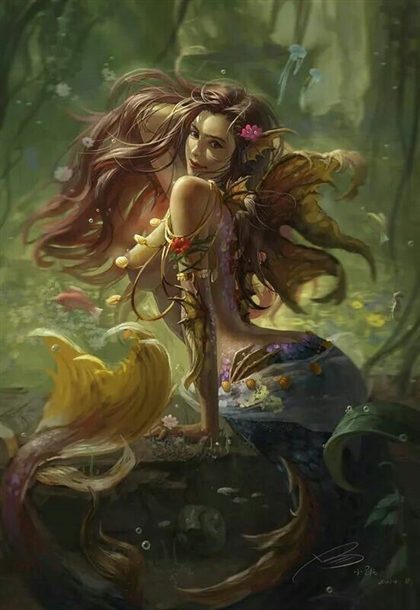
Temptresses have historically been creatures who use their bodies and wile to lure others to ruin. Common examples are creatures like sirens and mermaids, who seduce by their looks and voice. A temptress has all the means to beholden another to their desires. They can easily charm with a gesture or a glance tossed. Advanced temptresses develop many tactics to seduce those who are typically immune or on guard.
THE UNENDING ALLURE
A beautiful elf walks through a town, her sultry gait gliding gracefully through the main venue. Males of all races drool as their eyes lay on her walking past with a smug smile on her face.
A gorgeous human in the middle of combat looks at one of her enemies and cheekily winks. As if struck in a daze, he drops his weapon. Now defenseless and utterly entranced, he moves to seemingly embrace her gently. She wears a hollow smile as she coldly stabs him and ends his life on the material plane. He falls, eyes still holding onto the gorgeous sight in his last moments
CREATING A TEMPTRESS
When creating a temptress you should wonder how you got your powers and what you do with them. Do you inspire good or evil? Temptresses tend to always have chaotic alignments. They tend to wear quite revealing clothes as they are not ashamed but proud of their bodies using it to their full advantage. Some can be more conservative in dress and rely on the magic of their face and eyes instead.
Woman of the Night
Starting at 3rd level, people have heard of your services across the lands and will offer you money depending on how well you seduce them (up to the DM how much). As well as this, tavern owners will allow you to stay in a room for free if you manage to get a patron to stay with you for the night, as he gets more money from it.
Poisonmunity
Through your constant training with poisons you are now immune against most of poisons. You still suffer from King slayer poison and rare poisons your devilish DM thinks about.
Poison's Kiss
You may coat your lips, claws and weapons with poison. Enemies who come in contact with your lips have to make saving throws as described in "the art of poison".
Porphyria's Lover
By 6th level, you've learned how to manipulate those who you seduce. For an hour after seducing them, until you harm them, or until you sleep with them, you can tell them to do anything which doesn't harm them. They will do it with no questions asked.
Thousand Forms
Through your time as a temptress, you can now change what you look like, cast the alter self at will and hide yourself in plain sight by changing how you look. Anyone within earshot, (30 ft) will not see you for who you are unless they pass a wisdom check.
Wanderer
When you choose this circle at 2nd level, you learn one additional druid cantrip of your choice.
In addition, because of the nomadic tendencies Temptress life brings on, you can speak read and write 2 additional languages of your choice.
Natural Recovery and Proficiency Bonus
Starting at 2nd level, you can regain some of your magical energy by sitting in meditation and communing with nature. During a short rest, you choose expended spell slots to recover. The spell slots can have a combined level that is equal to or less than half your druid level (rounded up), and none of the slots can be 6th level or higher. You can’t use this feature again until you finish a long rest
For example, when you are a 4th-level druid, you can recover up to two levels worth of spell slots. You can recover either a 2nd-level slot or two 1st-level slots.
A temptress must never be caught, if that means a little death by poison then so be it.
You gain proficiency with poisoner's kit.
Seduction
At 3rd level, you gain expertise in either persuasion, performance or deception (your choice), and again at 13th level. As well as this, you gain an advantage on any roll against a character you have managed to seduce. This effect ends once the character has taken damage from you.
Circle Spells
Your mystical connection to the land infuses you with the ability to cast certain spells. At 3rd, 5th, 7th, and 9th level you gain access to circle spells connected to the land where you became a druid. Choose that land — arctic, coast, desert, forest, grassland, mountain, swamp, or Underdark — and consult the associated list of spells.
Once you gain access to a circle spell, you always have it prepared, and it doesn’t count against the number of spells you can prepare each day. If you gain access to a spell that doesn’t appear on the druid spell list, the spell is nonetheless a druid spell for you.
Oceanic
| Druid Level | Spells |
|---|---|
|
3rd |
|
|
5th |
|
|
7th |
|
|
9th |
Improved Seduction
At 3rd level, you gain expertise in either persuasion, performance or deception (your choice), and again at 13th level. As well as this, you gain an advantage on any roll against a character you have managed to seduce. This effect ends once the character has taken damage from you.
Land’s Stride
Starting at 6th level, moving through nonmagical difficult terrain costs you no extra movement. You can also pass through nonmagical plants without being slowed by them and without taking damage from them if they have thorns, spines, or a similar hazard.
In addition, you have advantage on saving throws against plants that are magically created or manipulated to impede movement, such those created by the entangle spell.
Advanced Seduction
At 6th level, you gain expertise in either persuasion, performance or deception. As well as this, you gain an advantage on any roll against a character you have managed to seduce. This effect ends once the character has taken damage from you.
In addition you can now defend yourself while unarmed by channelling your inner energies in your fingertips and coat them in a layer of claw-like magic. You get proficiency in unarmed attacks. If you use this talent out of combat you will automatically critically hit the person you use it against if it fails an dexterity saving throw.
Nature’s Ward
When you reach 10th level, you can’t be charmed or frightened by elementals or fey, and you are immune to poison and disease.
Nature’s Sanctuary
When you reach 14th level, creatures of the natural world sense your connection to nature and become hesitant to attack you. When a beast or plant creature attacks you, that creature must make a Wisdom saving throw against your druid spell save DC. On a failed save, the creature must choose a different target, or the attack automatically misses. On a successful save, the creature is immune to this effect for 24 hours.
The creature is aware of this effect before it makes its attack against you.
Comments