



 Base Class: Monk
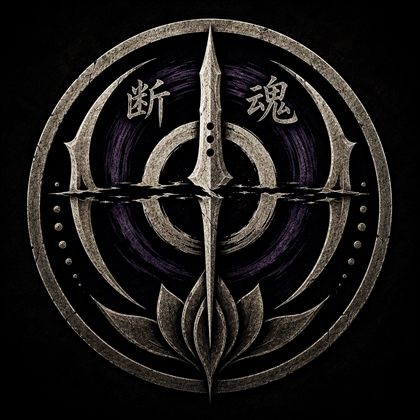
Monks of the Way of the Severed Soul are masters of suppression. They do not seek the flourish of combat, the joy of movement, or the glory of the finishing blow. Their art is removal. They remove breath from speech, strength from the hand, motion from the limbs, clarity from the mind, and, at the highest levels, the soul’s ability to cling fully to the world.
This tradition is associated with the Hollow Fang Monastery, a severe and secretive order hidden in the Underdark. There, initiates train in total darkness, learn to fight without sight, and are taught that emotion is noise. Every wasted motion is weakness. Every unnecessary word is exposure. Every uncontrolled desire is a handle by which hostile forces may seize the self.
The Way of the Severed Soul developed as a response to psionic predators, planar corruption, aberrant influence, spiritual possession, and the strange psychic ecosystems of the deep world. Its practitioners are not merely assassins or mystics. They are living countermeasures: antipsionic warriors, silent judges, thought-shielded enforcers, and surgical combatants who can disable a threat without needing to destroy the body outright.
In Aetheris, this subclass is especially suited to Underdark campaigns, Hollowdeep monasteries, anti-psionic orders, Ozythralic corruption-hunters, Arganthyr tunnel wardens, secret judges, and characters who believe that the cleanest victory is not to kill, but to sever the enemy from the thing that makes them dangerous.
Origins in Aetheris
The Way of the Severed Soul is most strongly tied to the Hollow Fang Monastery, an Underdark monastic enclave built into lightless stone, echoing caverns, and sealed meditation vaults. The monastery’s founders believed that the deep world changed the mind long before it changed the body. To survive below, a warrior needed more than strength, speed, and discipline. They needed the ability to become unreadable.
Early Hollow Fang techniques were created to resist psychic domination, aberrant influence, dream intrusion, subterranean fear, and planar contamination. The monks learned to slow their breath until thought itself seemed still. They trained blindfolded against enemies that emitted no heat, made no sound, or attacked through emotion rather than flesh. They studied how speech shapes spellcasting, how grip reveals intent, how movement reveals fear, and how the soul clings to its own identity under pressure.
In Arganthyr, Severed Soul Monks may serve as tunnel wardens, Underdark scouts, prison-keepers, psychic contamination specialists, or agents sent to silence threats that cannot be safely confronted in open war.
In Ozythralis, the discipline may be valued by orders fighting Shadowfell influence, possession, despair cults, and entities that erode identity. These branches often emphasize spiritual severance and the protection of the self against corruption.
In other regions, Severed Soul techniques may be practiced by secret tribunals, anti-mage assassins, monastic executioners, royal null-agents, or ascetic philosophers who believe that the self is a prison to be studied, emptied, and weaponized.
Philosophy and Doctrine
The Way of the Severed Soul teaches that most suffering begins in attachment: to fear, speech, identity, rage, power, memory, or the illusion of control. The Monk does not overcome an enemy by overpowering every part of them. The Monk identifies the single thread holding the enemy’s danger together and cuts it.
Its central doctrines include:
Silence is not absence. Silence is the place where the true shape of intention appears.
The self can be hidden. If thought, emotion, breath, and presence can be disciplined, they can be protected.
The cleanest strike removes only what must be removed. A severed grip may prevent a murder. A severed voice may end a spell. A severed motion may stop a warlord long enough for mercy.
Power depends on connection. Cut the connection, and the power collapses.
Emotion is information, but it must not become command. The Monk may feel anger, grief, or pity, but must not be moved by them without consent.
This tradition can become morally dangerous. Some Severed Soul Monks grow detached from compassion, treating people as systems to be disabled rather than lives to be understood. The wisest remember that suppression is a tool, not a virtue. The cruelest become perfect instruments of quiet tyranny.
Visual Identity
Severed Soul Monks are austere, quiet, and unsettlingly controlled. Their clothing is usually simple and close-fitting: dark wraps, sleeveless training robes, reinforced sashes, soft boots, blindfolds, fingerless gloves, throat bands, and layered cloth designed to move without sound. Common colors include black, bone-white, deep gray, cave-blue, muted violet, and mineral green.
Many wear a narrow blindfold or half-veil during training, even when they can see. Some shave their heads, file their nails short, bind their wrists tightly, or wear small stone beads that make no sound. Hollow Fang initiates may bear small tattoos or scars near pressure points: behind the ear, along the throat, at the wrist, beneath the ribs, or at the base of the spine.
Their fighting style is spare and exact. No wasted kicks. No dramatic spins. No shouted exertion. They step once, strike once, and something stops working. A hand opens. A spell dies in the mouth. A charging body freezes mid-motion. A mind suddenly finds no purchase on fear.
Their magic and ki effects are subtle: a brief dimming around the target’s throat, a ripple of pale pressure beneath the skin, a cold hush in the air, or a shadow passing across the eyes like a thought being erased.
Role in Aetheris
On the battlefield, Severed Soul Monks are controllers, mage-disruptors, and precision lockdown specialists. They excel at shutting down dangerous enemies without relying on raw damage. Their strikes can silence casters, disarm weapon users, halt movement, interfere with concentration, suppress magical tracking, and protect against psychic threats.
Socially, they may serve as judges, enforcers, interrogators, anti-psionic guardians, prison wardens, spiritual surgeons, executioners, or protectors of communities threatened by mental domination. Their calm demeanor often makes others uneasy. They are the sort of people called only when ordinary mercy, ordinary law, and ordinary violence have failed.
Adventuring Severed Soul Monks are excellent in campaigns involving Underdark horrors, psionic enemies, cults, possession, mage-hunting, planar corruption, stealth missions, assassinations, prison breaks, moral dilemmas, and enemies who must be captured rather than killed.
Subclass Integration
Major Polities
In Arganthyr, the Way of the Severed Soul is most naturally tied to Underdark watch-posts, tunnel monasteries, psychic wardens, and fortress orders guarding deep passages.
In Ozythralis, Severed Soul Monks may be used against possession, despair cults, Shadowfell corruption, and entities that manipulate identity, memory, or fear.
In the Helbrann League, they may appear as rare specialists attached to covert security orders or canton intelligence networks, especially where silence and nonlethal suppression are more useful than open battle.
In the Shorin Dominion, the tradition may exist as a grim counterpart to elegant pressure-point schools, practiced by hidden judges, interrogation monks, or clans that specialize in disabling rather than killing.
In the Republic of Aurimundus, they may be viewed with suspicion but valued as anti-mage bodyguards, prison specialists, and battlefield neutralizers.
Organizations, Guilds, and Orders
Severed Soul Monks may belong to Hollow Fang cells, Underdark monasteries, anti-psionic orders, secret tribunals, mage-hunter circles, prison-warden sects, assassination schools, or temple orders that specialize in possession and spiritual severance.
Religious and Philosophical Movements
Some are attached to philosophies of emptiness, silence, judgment, death, discipline, or liberation from fear. Others serve deities of law, death, knowledge, protection, or the grave. A few reject religious language entirely, seeing the soul as a structure to be studied rather than worshiped.
Rival Factions and Enemies
Their enemies include psionic tyrants, aberrant manipulators, mind flayers, cult leaders, possessors, enchantment specialists, slavers who use magical control, corrupt interrogators, necromancers, and any power that claims ownership over another creature’s will.
Severance Technique
Action Type: No action required; triggered when you hit with an Unarmed Strike
Uses: 1 Focus Point; once per turn
Duration: Until the start or end of the target’s next turn, depending on the effect
Scaling: Additional severance options appear through later subclass features
You learn how to strike with uncanny precision, interrupting the body’s channels of motion, speech, grip, and intention.
Once per turn when you hit a creature with an Unarmed Strike, you can expend 1 Focus Point to attempt a severance strike. The target must make a Constitution saving throw against your Monk save DC. On a failed save, choose one of the following effects:
Sever Breath. Until the start of your next turn, the target cannot speak, shout warnings, issue spoken commands, or cast spells with Verbal components.
Sever Grip. The target drops one item of your choice that it is holding. The object lands at its feet unless the DM determines the environment would cause it to fall elsewhere.
Sever Motion. The target’s Speed becomes 0 until the end of its next turn, and it cannot take the Dash action during that time.
On a successful save, the target suffers a lesser disruption of your choice:
- Its Speed is reduced by 10 feet until the end of its next turn.
- It cannot take Reactions until the start of your next turn.
- It has Disadvantage on the next Concentration saving throw it makes before the start of your next turn.
Unseeing Form
Action Type: Passive
Uses: At-will
Duration: Permanent
Scaling: Blindsight increases through later subclass features
You have trained to fight without sight, relying on breath, vibration, intent, pressure, and the minute disturbances left by living presence.
While you are not wearing armor or wielding a Shield, you gain the following benefits:
Hollow Fang Sight. You have Blindsight out to 10 feet.
Sightless Discipline. You have Advantage on saving throws you make to avoid or end the Blinded condition on yourself. You also have Advantage on saving throws and ability checks made to disbelieve, resist, or see through visual illusions.
Darkness Familiarity. You can fight without penalty in darkness, total darkness, and magical darkness against creatures within your Blindsight range.
First Strike from the Hollow. If you begin your turn in darkness or magical darkness, the first Unarmed Strike you hit with before the end of that turn deals extra Psychic or Necrotic damage equal to your Wisdom modifier, minimum of 1.
Discipline of the Hollow Core
Action Type: Passive and Bonus Action
Uses: Passive benefits are at-will; Hollow Presence uses Proficiency Bonus per Long Rest or Focus Points
Duration: Hollow Presence lasts 1 minute
Scaling: Defensive utility remains relevant at higher levels
You learn to suppress your life essence, emotional signature, and psychic surface, making yourself difficult to read, influence, or locate.
While you are not wearing armor or wielding a Shield, you gain the following benefits:
Hollow Core. You have Resistance to Psychic damage.
Unclaimed Mind. You have Advantage on saving throws you make to avoid or end the Charmed or Frightened condition on yourself. You also have Advantage on saving throws against effects that would read your thoughts, detect your emotions, reveal your alignment, compel truth, or magically determine whether you are lying.
Hollow Presence. As a Bonus Action, you suppress your spiritual and psychic presence for 1 minute. For the duration, you gain the following benefits:
- You cannot be targeted by effects that would read your thoughts or emotions unless you choose to allow them.
- You are hidden from Divination magic that would directly locate, observe, or identify you, though this does not make you Invisible.
- You cannot be tracked by magical means unless the tracker is an Artifact, deity, or similarly overwhelming force at the DM’s discretion.
- You have Advantage on Dexterity (Stealth) checks and Wisdom saving throws.
You can use Hollow Presence a number of times equal to your Proficiency Bonus, and you regain all expended uses when you finish a Long Rest. If you have no uses remaining, you can expend 1 Focus Point to use it again.
Deeper Unseeing. Your Blindsight from Unseeing Form increases to 15 feet.
Echo of the Last Thought
Action Type: No action required; triggered when you reduce a creature to 0 Hit Points
Uses: Proficiency Bonus per Long Rest, or by expending Focus Points
Duration: Stored echoes last until forgotten or replaced
Scaling: Number of echoes stored scales with Wisdom modifier
You learn to perceive the psychic residue left behind when a mind loses its final grip on the world. To most, death is silence. To you, it is a door closing slowly enough to hear the last word.
When you reduce a creature to 0 Hit Points with an Unarmed Strike, you can capture an echo of its final thought. The creature must have had a mind, language, memory, or instinctive consciousness at the moment it fell. Mindless creatures usually leave no usable echo, at the DM’s discretion.
When you capture an echo, choose one of the following revelations, or allow the DM to choose based on the creature’s final mental state:
Final Name. You learn one name that was important to the creature in its final moments.
Last Location. You glimpse a location the creature was thinking of, such as a lair, meeting place, home, prison, shrine, or battlefield.
Dying Fear. You learn what the creature feared most in the moment it fell.
Unfinished Command. You learn one command, order, task, or goal the creature was attempting to fulfill.
Held Secret. You receive a brief sensory image, phrase, symbol, password, or emotional impression tied to a secret the creature carried.
Killer’s Thread. If the creature was acting under magical domination, possession, psychic coercion, or a supernatural command, you glimpse a symbolic impression of the controlling influence.
You can store a number of echoes equal to your Wisdom modifier, minimum of one. During a Short or Long Rest, you can meditate on a stored echo, gaining Advantage on one Intelligence (Arcana), Intelligence (History), Intelligence (Investigation), Intelligence (Religion), Wisdom (Insight), or Wisdom (Survival) check related to that echo before your next Long Rest.
You can forget any number of stored echoes when you finish a Short or Long Rest.
You can capture an echo a number of times equal to your Proficiency Bonus, and you regain all expended uses when you finish a Long Rest. If you have no uses remaining, you can expend 1 Focus Point to capture another echo.
Improved Severance
Your Severance Technique gains the following additional options:
Sever Focus. On a failed save, the target has Disadvantage on Constitution saving throws it makes to maintain Concentration until the start of your next turn.
Sever Instinct. On a failed save, the target cannot take Reactions until the start of your next turn, and the next attack roll made against it before the start of your next turn has Advantage.
Sever Voice of Command. On a failed save, the target cannot use features that require another creature to hear or understand its commands until the start of your next turn.
Sever the Soul
Action Type: Action
Uses: Once per Long Rest, or by expending Focus Points
Duration: Up to 1 minute
Scaling: Capstone feature
You learn to strike the core of a being’s essence, temporarily severing its connection to healing, concentration, command, and supernatural force. This is not merely a blow to the body. It is a precise interruption of the self’s grip on the world.
As an Action, choose one creature within your reach and make an Unarmed Strike against it. On a hit, the target takes the attack’s normal damage and must make a Constitution saving throw against your Monk save DC.
On a failed save, the target is Soul-Severed for 1 minute. While Soul-Severed, the target suffers the following effects:
No Restoration. The target cannot regain Hit Points.
Broken Focus. The target’s Concentration ends, and it cannot concentrate on spells or magical effects.
Severed Command. The target cannot take Reactions. If it has Legendary Actions, it can take one fewer Legendary Action each round, minimum of 0.
Fractured Resistance. If the target uses Legendary Resistance to succeed on a saving throw while Soul-Severed, it must expend two uses of Legendary Resistance instead of one. If it has only one use remaining, it can still expend that use normally.
World-Distant. The target cannot teleport, become Ethereal, or willingly move to another plane unless it first succeeds on a Charisma saving throw against your Monk save DC as part of the same effect.
At the end of each of the target’s turns, it repeats the Constitution saving throw, ending the Soul-Severed effect on itself on a success.
On a successful initial save, the target is not Soul-Severed, but until the end of its next turn it cannot regain Hit Points, cannot take Reactions, and has Disadvantage on Concentration saving throws.
Once you use Sever the Soul, you cannot use it again until you finish a Long Rest unless you expend 5 Focus Points to use it again.
Perfect Unseeing
Your Blindsight from Unseeing Form increases to 30 feet.
In addition, while Hollow Presence is active, you can perceive Invisible creatures within your Blindsight range, and you have Advantage on saving throws against possession, magical domination, and effects that would move your soul, consciousness, or spirit from your body.
Comments