




In a world of dragons and genies, of liches and aberrations, magic is everywhere. Releasing September 15, Arcana Unleashed introduces 8 arcane subclasses that let you channel spellcasting power in various ways.
Read on to learn how you can draw power from a dying god as a Vestige Patron Warlock, bend minds as an Enchanter, command life and death as a Necromancer, weave magic into every arrow as an Arcane Archer, and more!
Jump to a Subclass
Arcana Domain (Cleric)
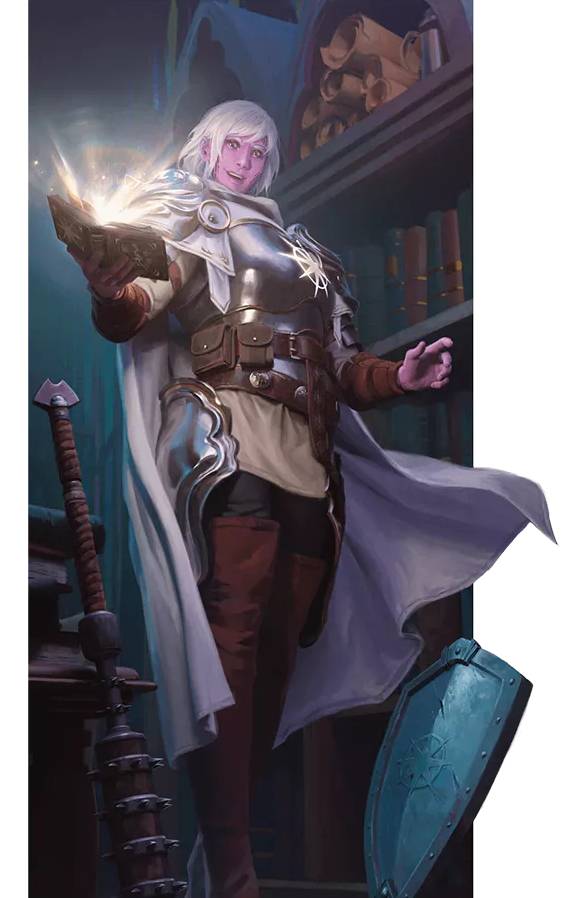
Channel the Weave straight from the source
The Arcana Domain Cleric knows that the shortest route to mastery of the Weave is through its god. Why study the secrets of the universe the long way like a Wizard or hope it randomly bestows its power like a Sorcerer when a little bit of worship can go a long way?
As a Student of Arcana, the Arcana Domain Cleric gains proficiency in the Arcana skill and learns two Wizard cantrips. With Arcana Domain Spells, they are prepared to detect, counter, or dispel the enemy’s magic. When it’s time to call upon their deity for help, Channel Divinity can be used to Modify Magic, granting a spell target Temporary Hit Points or imposing a 1d6 penalty to a target’s saving throw against their spell.
Once their connection to the divine develops further, an Arcana Domain Cleric can dismantle an enemy’s spells with expert efficiency. Whenever they cast a spell with a spell slot that restores Hit Points or ends a condition, Dispelling Recovery allows them to cast Dispel Magic as part of that same action without expending an additional spell slot.
Finally, at the pinnacle of their power, an Arcana Domain Cleric learns four Wizard spells—one each of level 6, 7, 8, and 9—and always has them prepared. Not many spellcasters can roll Initiative with both Meteor Swarm and Mass Heal prepared, but Mystra’s favorites have found a way.
Arcane Archer (Fighter)
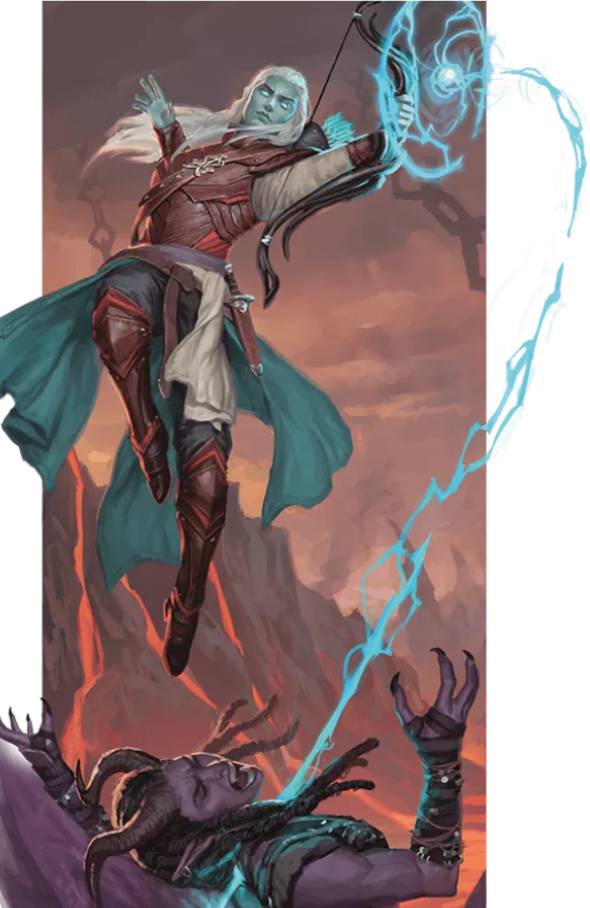
Snipe the enemy from afar with enchanted arrows
Many cultures and schools have mastered the practice of enhancing swordwork with magic. Arcane Archers have studied a more niche art, one that allows them to control the battlefield and bring down massive monsters while staying safely out of range.
The Arcane Archer has honed the rare skill of incorporating magic into their ranged attacks, using Arcane Shot to loose special magical effects when they hit with a ranged weapon. As their studies develop, the Arcane Archer can fire more Arcane Shots before they need to take a Short or Long Rest, and as they level up, their Arcane Shots pack a bigger punch. This connection to magic also carries over into their day-to-day life: early in their journey, the Arcane Archer learns Druidcraft or Prestidigitation, and they gain proficiency in Arcana and Nature.
As their adventures continue and they fire a few hundred (thousand?) more arrows, the Arcane Archer masters the Curving Shot, redirecting their own missed shots towards a new target. They can also infuse their ammunition with magic that can help facilitate an escape, unlock a nonmagical lock, or climb an obstacle. With some additional practice, the Arcane Archer can then use Ever-Ready Shot to regain an expended use of Arcane Shot whenever they roll Initiative.
An Arcane Archer nearing their peak can teleport up to 60 feet whenever they use the Indomitable feature and succeed. (Good luck to any villain who finally gets close enough to Grapple them, only to watch them teleport out of reach.) At the height of their power, the Arcane Archer can reposition in the blink of an eye and fire off an arrow in response to an enemy’s miss.
Warrior of the Mystic Arts (Monk)
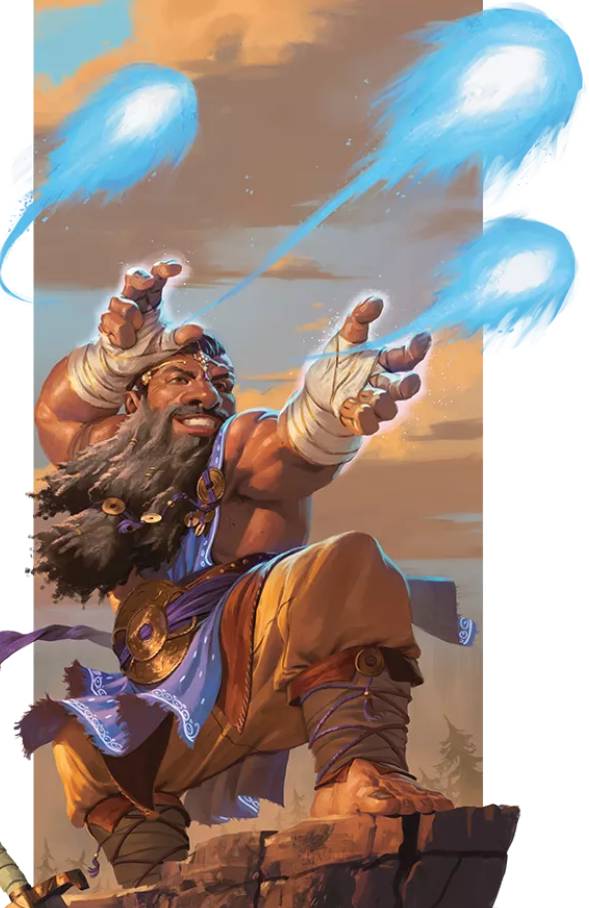
If the spell doesn’t work the first time, give it a good kick and try again
Some Monks use martial prowess to strike fear into the hearts of their opponents—the spell Fear, that is. Warriors of the Mystic Arts integrate spellcasting into their fighting style, keeping enemies unsure whether they’ll have to parry a roundhouse kick or dodge a Burning Hands.
As the Warrior of the Mystic Arts begins their training, they’ll learn two Sorcerer cantrips and a limited number of spells. Many will take this opportunity to enhance their fighting skills with spellcraft, augmenting leg day with the Jump spell, for example.
With their skills developing, a Warrior of the Mystic Arts Monk begins casting cantrips alongside their attacks and converting their Focus Points into spell slots (or vice versa). At even higher levels, targets of the Monk’s Stunning Strike have Disadvantage on saving throws against their spells for a limited time.
Ultimately, as they master their craft, the Warrior of the Mystic Arts can also replace two of the Unarmed Strikes from Flurry of Blows with a casting of a level 1 or 2 spell. By then, the Warrior is slinging spells in between punches left and right, going from attack to cantrip to attack to spell.
Vestige Patron (Warlock)
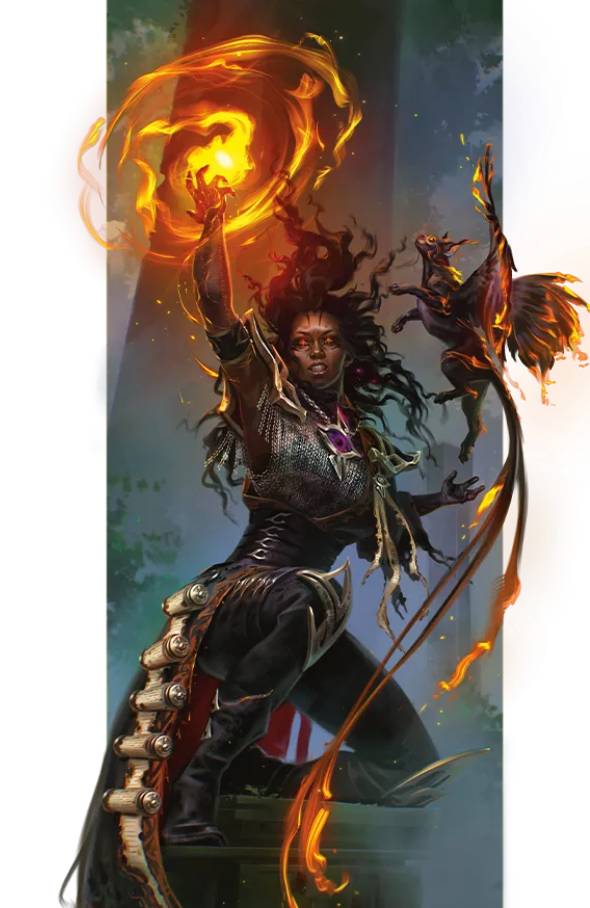
A god is dying. Its power has to go somewhere—why not you?
Even a dying god holds power similar to most of the cosmic entities a budding Warlock might make a pact with. A vestige—a forgotten, old god who hasn’t seen a sacrifice to their name in generations—is ready to make a comeback, and they’re willing to share their power with mortal Warlocks to bring it to fruition. Whether the Vestige Patron Warlock is in it for the power or is a true believer may determine the vestige’s ultimate fate.
The Vestige Patron Warlock’s journey will prominently feature their Vestige Companion: a physical manifestation of their vestige patron that will aid them in and out of battle. The type of companion these Warlocks adventure with (Fiend, Celestial, or Undead) is malleable and has a unique damage Resistance and Divine Power that they can use once per Long Rest, and the Warlock can use a Bonus action to command the Vestige Companion to attack on its turn.
To reflect the vestige’s former status as an active god, they grant their Warlock the Vestige Spells feature, which allows them to pick a domain (Life, Light, Trickery, or War) and gain those Domain Spells.
At higher levels, the Vestige Power feature strengthens both partners: the vestige companion can regain a use of its Divine Power on a Short Rest, while the Warlock gains the same damage Resistance as their vestige companion. As their power grows, the Vestige Patron Warlock can expend their Pact Slots to restore Hit Points to their vestige companion in a pinch and teleport it out of danger.
Once the vestige has given all the power it can, the Vestige Patron Warlock reaches their full potential. With the Semblance of Life feature, the Warlock transforms their vestige companion into a much more powerful shape, one that will increase in power as the Warlock continues to level up.
Conjurer (Wizard)
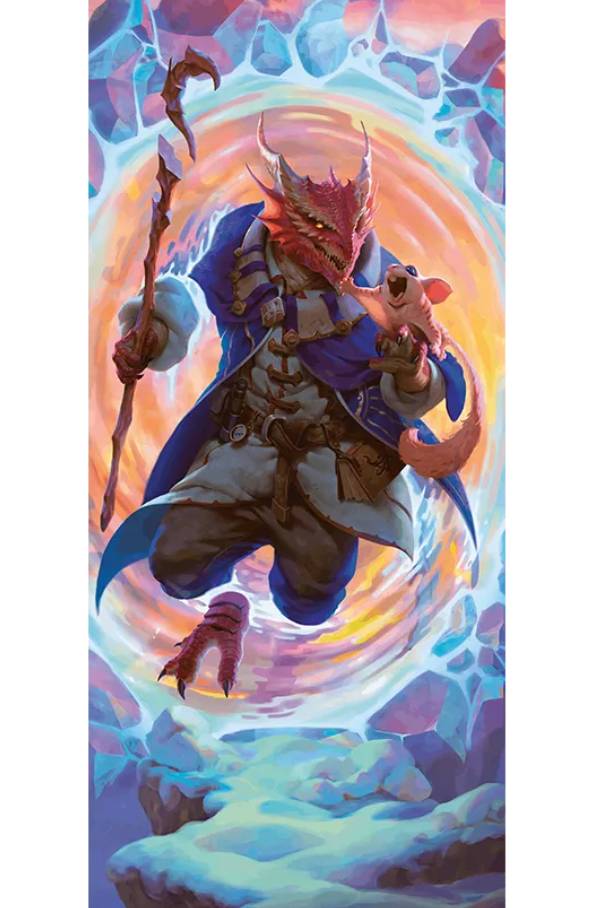
Here, there, anywhere; all suggestions to the Conjurer
Conjuration is often regarded as a split school of magic, a type of spellcrafting that can either teleport creatures from one place to another or summon creatures to the caster’s aid. But while a Misty Step and a Summon Fiend may feel like quite different contributions to a battlefield, they share a total disregard for the laws of space and the movement of matter. To a Conjurer, a summoning is merely another type of teleportation, the relocation of an angel or devil from one plane of existence to another.
With Benign Transposition, a Conjurer can blip about the battlefield, teleporting themselves up to 30 feet or swapping places with a willing creature within that same range. As their power grows, they learn Distant Transposition, which increases the range of Benign Transposition to 60 feet and allows Conjurers to restore uses of the feature by expending level 3+ spell slots.
At higher levels, the Conjurer can magically reinforce their summoned allies, granting Temporary Hit Points and damage Resistances to any creatures summoned or created by their Conjuration spells. Eventually, the Conjurer can also forge an iron grip on their summons, as damage will no longer break their Concentration on Conjuration spells.
At their apex, the Conjuration Wizard can use Splintered Summons to call even more creatures to the battlefield. Once per day (unless they expend a level 5+ spell slot to restore a use of this feature), when a Conjuration Wizard summons a creature using a spell like Summon Celestial, they can modify the spell to summon two of that creature instead, each with half HP.
Masters of Their Craft
Each Wizard subclass in Arcana Unleashed has a "Savant" feature that grants them 2 free spells in their spellbook from their specialized school when they initially gain the feature, plus 1 additional spell from that school of magic whenever they gain access to a new level of spell slots in this class.
Enchanter (Wizard)
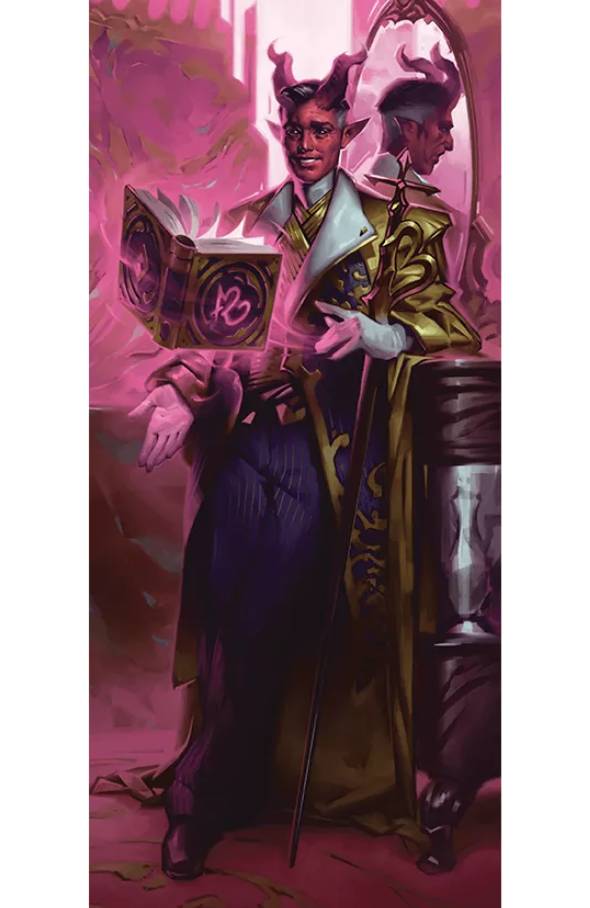
Every mind has string. The Enchanter simply knows where to pull.
Enchanters bend and twist the mind, tying it in knots or wiping it into a clean slate with equal ease. While many Enchanters use their skills for selfless and noble causes, others use them to further their personal ambition, dominating those who wield the levers of power until they can control them like puppets. Heroic Enchanters may have to resist the temptation to Charm their way through every social interaction, lest they start thinking of people and their dearly-held convictions as pesky obstacles to skip over.
As this Wizard finds their footing, Enchanting Conversationalist allows them to excel in a social skill of their choice, granting proficiency as well as a bonus equal to their Intelligence modifier. Additionally, an Enchanter can Charm and Incapacitate any creature within 10 feet for a limited time, effectively removing them from a combat encounter.
As they continue their studies, the Enchanter can flex their command of the craft with Split Enchantment, increasing the effective level of certain Enchantment spells (such as Charm Person) by 1—gaining the effects of the upcast without expending the higher-level spell slot. Later on, the Enchanter can use Instinctive Charm to redirect enemy attacks, restoring use of this feature whenever they expend a spell slot to cast an Enchantment spell.
At their peak, the Enchanter can erase the memories of creatures Charmed by their Enchantment spells, allowing them to walk away from nearly any scheme confident that the part they played in it will be forgotten.
Necromancer (Wizard)
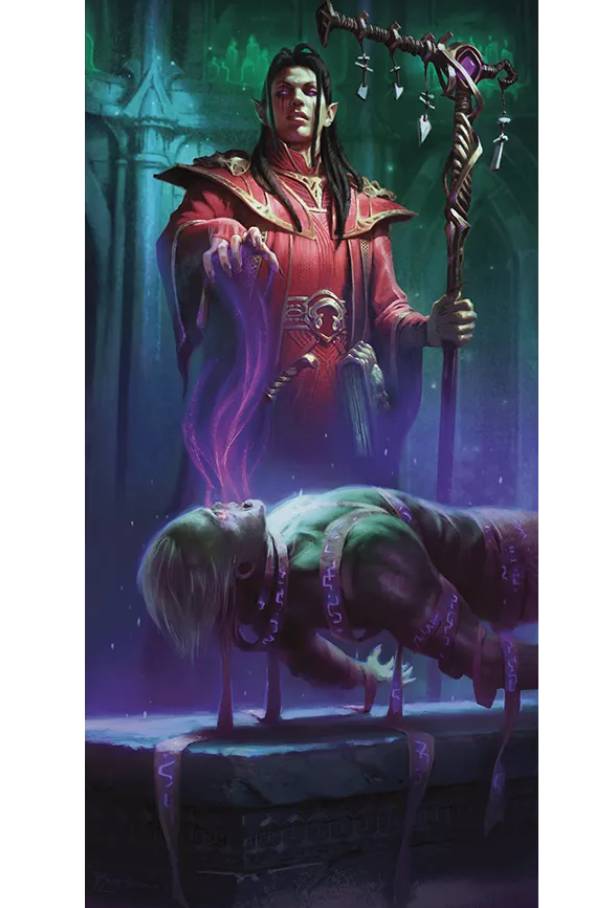
What, it’s not like anybody’s using it?
Necromancers have the most facially villainous reputation among Wizards—impressive PR work from the Enchanters on that front—but many Necromancers don’t deserve or live up to this image. People of any moral conviction can innately possess an aptitude for manipulating the forces of undeath. Whether that talent unsettles the Necromancer’s fellow party members is another question entirely.
The Necromancer begins their studies by creating a Necromancy Spellbook, which grants them a number of benefits. They learn how to summon an Undead Familiar: the Skeleton or Zombie, which can attack in place of the Necromancer’s attack. The Necromancer also gains Resistance to Necrotic damage, and whenever they cast a Necromancy spell using a spell slot, they can heal nearby Undead, ensuring that the familiar stays in the fight.
As the Necromancer continues to learn the secrets of undeath, they can use Grave Power to ignore Resistance to Necrotic damage and to reduce Exhaustion when using Arcane Recovery. The Undead Thralls feature allows them to cast an effectively upcast Animate Dead for free once per day, while also imbuing every Undead they summon with additional Hit Points and the ability to deal extra Necrotic damage.
Later, the Necromancer gains the power to Harvest Undead, draining life force from their Undead summons to restore their own vitality. At the height of their discipline, the Necromancer becomes Death’s Master, granting Temporary Hit Points to Undead in droves and forcing Undead to explode with necrotic energy when they reach 0 Hit Points.
Transmuter (Wizard)
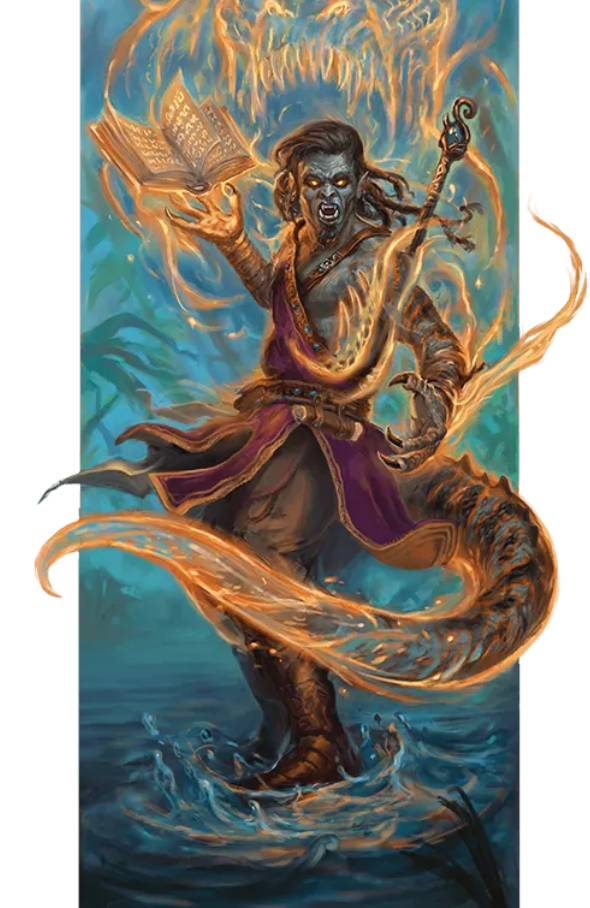
Break from the limitations of your physical form
Transmuter Wizards experience the world through a lens few others can quite comprehend. The entire world is malleable to them, fungible. How the world must look when you can just as easily exchange nearly any one thing for nearly any other.
A Transmuter Wizard can create a Transmuter’s Stone, an arcane focus imbued with transmutation magic. A creature holding the stone gains proficiency in Constitution saving throws and an additional benefit chosen by the Wizard: Darkvision, Resistance to a damage type (Acid, Cold, Fire, Lightning, Poison, or Thunder), or a Speed boost of 10 feet. The Transmuter Wizard can also cast Alter Self without expending a spell slot once per day, and can heighten it to grant their bodies unique enhancements.
Later, Transmuters can increase the effective level of certain Transmutation spells, stretching how much value they can get out of a single spell slot. Then, their mastery over self-transmutation grows, and they can cast a heightened version of Polymorph that allows them to retain their personality and cast transmutation spells even in beast form. In addition, they heighten the magical potency of their Transmuter’s Stone, allowing the Wizard to swap benefits whenever they cast a Transmutation spell using a spell slot. They can also imbue the stone with new powers: Mighty Build and Tremorsense.
In time, the Transmuter Wizard becomes a paragon of their craft with the Master Transmuter feature. With this, the Transmuter can drain their Transmuter’s Stone of magic to perform a working of Major Transformation on a nonmagical object, to cure a magical disease or remove a curse, bring back fallen allies, or even reverse the course of aging.
Change Your Fate with Arcana Unleashed
Magic is a force woven into the very fabric of reality—one that many have sought to command, and those who have mastered such powers experience unlimited potential.
Whether you channel the Weave through your combat training or your scholarly study, through a connection to a forgotten god or the god of magic, Arcana Unleashed is ready to guide you through your new options.
-
View User Profile
-
Send Message
Posted Jul 25, 2026Advertised as 8 new subclasses... lists the 8 new subclasses.
I'm going to say no.
-
View User Profile
-
Send Message
Posted Jul 25, 2026You shouldn't be posting comments with your hot takes bub.
:D
-
View User Profile
-
Send Message
Posted Jul 25, 2026I love it ❤️
-
View User Profile
-
Send Message
Posted Jul 26, 2026Vestige Patron Warlock's gonna be my next character 😍 sooo much potential
-
View User Profile
-
Send Message
Posted Jul 26, 2026Interesting ! A lot of those are obviously revisions from their 2014 versions, but I will definitively try some of them ! Keep the info coming !
-
View User Profile
-
Send Message
Posted Jul 26, 2026Love the Necromancer because army building, while it slows down the game, is objectively hilarious and overpowered. Still very mad that the Arcane Archer's powers rely on Intelligence, because think about all the players who just prefer to use standard array and want to play an Arcane Archer. They have to feel useless until they can get ASIs.
-
View User Profile
-
Send Message
Posted Jul 27, 2026Found Karsus secondary account
-
View User Profile
-
Send Message
Posted Jul 28, 2026i think its because those are the core phb subclasses. i wish they could too because twilight domain vestige warlock would go so hard
-
View User Profile
-
Send Message
Posted Jul 28, 2026Very much on point. Restricting the domains to the PHB ones prevents the Vestige Warlock from suddenly becoming an infinitely flexible spell list for the class, closing a potential loophole. It's entirely possible that the book has a note that suggests the DM to consider whether to provide the spell list of a different domain while leaving these as the default, but until the book releases, it's merely a suggestion.
-
View User Profile
-
Send Message
Posted Jul 29, 2026arcana domain vestige warlock would also go crazy. also imagine a vestige warlock who chose tempest domain spell list and multiclass with storm sorcerer
-
View User Profile
-
Send Message
Posted Jul 29, 2026Burning pact magic slot for that seems bad, warlocks have very limited slots and the warlock familiar isn't exactly OP even if it gets buffed.
-
View User Profile
-
Send Message
Posted Jul 29, 2026the idea is that the warlock is more of a commander of multiple familiars rather than one strong familiar.
-
View User Profile
-
Send Message
Posted Jul 29, 2026burning just one slot for that seems worth it, especially since warlocks get a lot of their combat power from cantrips (best damage cantrip in the game, hello?) and invocations. its a fair trade off in my opinion.
-
View User Profile
-
Send Message
Posted Jul 30, 2026I would like this but the vestige warlock doesn't support this :/
It is still a shame that the invocation that allows you to attack with familiar, forces you to use bonus action which conflicts with the vestige warlock. I agree mostly with what your saying, but it's still a spell caster if you just casting battle familar all the time just so you can use your familar with your vestige. you don't get to use some of the other good warlock spells that scale better, and it doesn't help the feeling that you are barely a spell caster.
I wish we had a choose between the 1/2 caster warlock and the pact magic warlock, but that is another discussion.
-
View User Profile
-
Send Message
Posted Aug 2, 2026Yeah, I get what you mean. Warlocks are definitely in a weird spot because Pact Magic makes them play differently from other full casters. I guess I was thinking more about the flavor of a warlock as a commander making pacts with multiple entities rather than the resource economy side. I do agree that having your familiar compete with your bonus action and spell slots can make it feel like you're giving up a lot just to use the subclass. Personally, I like Pact Magic because it makes warlocks feel unique instead of just being another wizard-style caster, but I can see why some people would prefer a half-caster version. A half-caster warlock could actually be pretty cool, especially for subclasses focused around weapons or companions.
-
View User Profile
-
Send Message
Posted Aug 2, 2026There is literally no point to playing the Necromancer when any other Wizard can use Find Familiar and cast touch spells through their familiar using the familiar reaction after your familiar has already attacked. This subclass honestly feels useless beyond flavor.
-
View User Profile
-
Send Message
Posted Aug 5, 2026How come the Hexblade was pulled? Was really looking forward to that one.
-
View User Profile
-
Send Message
Posted Aug 6, 2026who in the world are you talking to
-
View User Profile
-
Send Message
Posted Aug 6, 2026I think this has to be ragebait, so please, reading comprehension, get some! There is a vastly large difference between casting spells through a famliar and more easily summoning groups of empowered undead lol.
-
View User Profile
-
Send Message
Posted Aug 7, 2026But you aren't summoning multiple undead. Your base level ability as a necromancer is to summon one. You then have to use your action to let it attack. So it can't act as a blocker because it has no ability to take an opportunity attack. And it's attack barely keeps up with cantrips at low levels. Passed level 5 it doesn't even do that.