




From the Game Design Team
The material in this Unearthed Arcana is rooted in the Underdark, one of D&D’s most storied locations. The Underdark was first explored almost fifty years ago in the D series of adventures (Descent into the Depths, Shrine of the Kuo-Toa, and Vault of the Drow), but many players today know the Underdark from a memorable sequence in Baldur’s Gate 3 or the Legend of Drizzt novel series.
You will doubtless have many questions about the Underdark and Unlight—a strange and dangerous form of magic important to two of the subclasses you’ll see here. And we will answer those questions... in time! Right now, however, we need your help. Try these new subclasses and feats out for yourself, fill out the survey that will follow, and help us make these character options fun at your table.
—Jason Tondro, Senior Game Designer
Underdark Option Highlights
This UA contains subclasses and feats that might be included in a future product. These subclasses and feats are entirely new and have not appeared in UA before.Subclasses
This Unearthed Arcana features three new subclasses:
- Path of Unlight
- House Agent
- Imaskarcanist
The following sections summarize each subclass and discuss some of their underlying mechanics.
Path of Unlight
Unlight is a mysterious and powerful form of magic originating in the lowest depths of the Underdark, among the people of Deep Imaskar. Unlight does not merely banish darkness from the Underdark; it infects those exposed to it, transforming them and making them both physically strong and supernaturally aggressive. In other words, Unlight exposure is a perfect match for the Barbarian class.
A Barbarian on this path has been infected by Unlight, which is associated with Radiant damage. When the Barbarian rages, Unlight bursts from their body, burning enemies and illuminating the darkness. More importantly, the Barbarian can infect enemies with Unlight, causing them to continuously burn. In D&D 5.5e, a Barbarian’s Rage can also have uses outside of combat, and the Path of Unlight reflects that by granting a raging Barbarian Blindsight and Expertise in Perception, as they become supernaturally aware of everything illuminated by the Unlight emitted by the Barbarian’s own body.
House Agent (Rogue)
House Agents work as spies for one of the powerful drow houses of Menzoberranzan, where deception and intrigue are so commonplace as to be expected. These Rogues excel at social infiltration by charming their way into a place, extracting information from a fool with a loose tongue, and backstabbing enemies on the way out. Their house sponsor also gives them a bit of magic to assist them on these missions.
Rogues are known for leveraging their reliable skillsets. This Rogue’s skillset is primarily social. Its subclass features incentivize building relationships with NPCs and either manipulating or backstabbing them.
Many of the subclass’s abilities loop through the Attitude and Influence systems: you gain Advantage (and therefore Sneak Attack!) on Friendly creatures. You don’t suffer penalties when you try to use the Influence action on Hostile creatures. You can use the Influence action as a Bonus action. This makes the House Agent’s silver tongue an asset both during and outside of combat!
Imaskarcanist
The Imaskarcanist subclass describes Wizards following in the traditions of Deep Imaskar, located in the lowest levels of the Underdark and first described in 2003’s Underdark, a book for D&D’s 3rd edition. In that book, Deep Imaskar is protected by the Great Seal, an enormous magical ward which also illuminates the city and sheds light strong enough to grow food. In the years since, the magic of the Great Seal—now known as Unlight—has split into two competing strands, each taught by one of the Imaskarcana, intelligent artifacts sacred to the people of Deep Imaskar.
The Imaskarcanist is a master of both these strands of magic, using Unlight both to heal and to harm. On one hand, they can bolster allies with the invigorating magic of Unlight, but they can also infect enemies with Unlight’s burning radiance, causing them to explode when killed! But Unlight burns the Wizard’s inner life force, represented in the game by the Wizard expending their own Hit Point Dice to fuel their abilities. Imaskarcanists also retain other secrets of Deep Imaskar, such as a facility with magic items and knowledge they use to create powerful wards like the Great Seal.
Feats
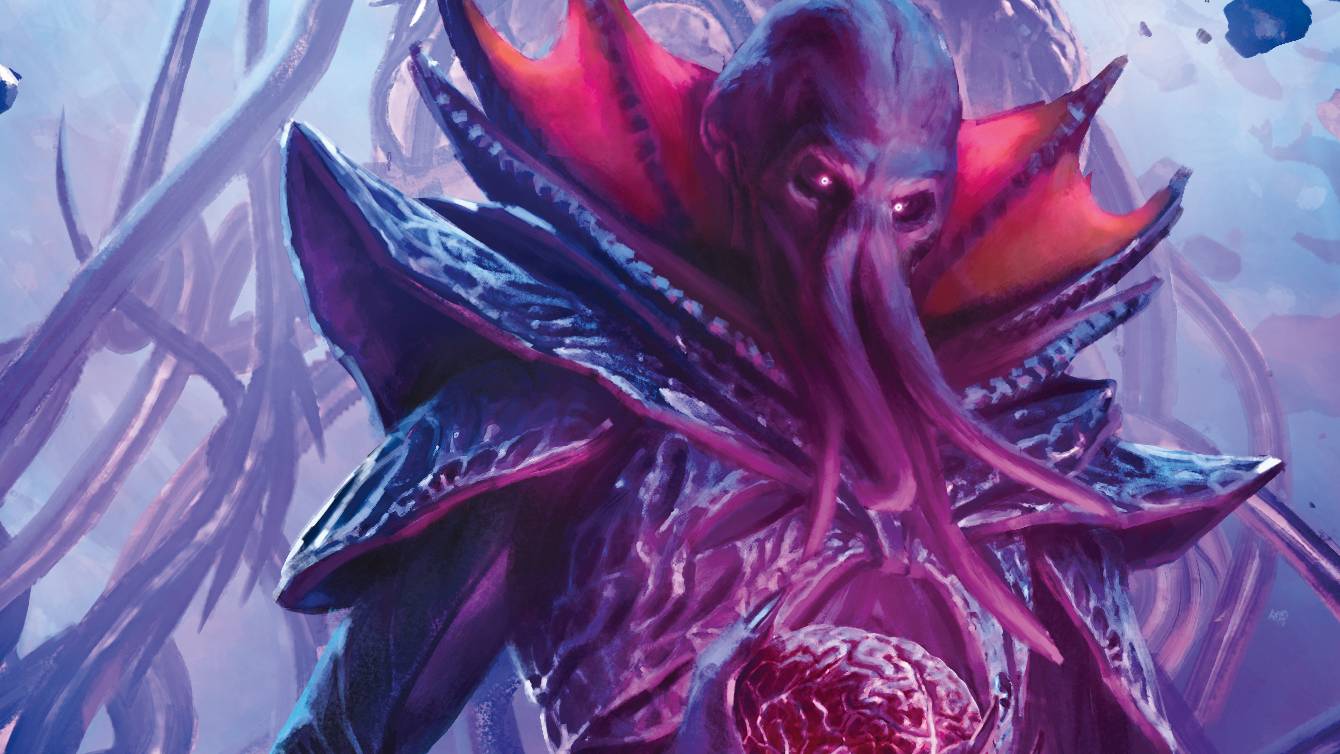
This UA also contains new feats that allow a character to transform into a mind flayer.
Path of Ceremorphosis
Since the Paths of Villainy from our Villainous Options UA were well received, we wanted to explore this type of player option further. Not all paths are necessarily villainous, however; some are simply transformative. The Path of Ceremorphosis explores how a player character might gradually become a Mind Flayer. This path and its features are in part influenced by Tav’s potential journey to Mind Flayerdom throughout Baldur’s Gate 3.
One design challenge with feat paths lies in delivering balanced mechanics that satisfy the narrative expectation of the monster. And the Mind Flayer typically does a lot. We put plenty of iconic abilities into this path—including psionics, Telepathy, the Mind Blast spell (also printed in this UA), and the ability to flay minds. We’ve gated these abilities behind decision points along the path to ceremorphosis. The first decision is at level 8, like the previous paths of villainy. We’ve added a second decision point at the “Full Ceremorphosis” feat that completes your transformation: is your Mind Flayer more adept at casting psionic spells or eating and metabolizing brains?
Becoming an Aberration might not be pleasant, and we want to create space for players interested in exploring that. The “Ceremorphosis Variables” table and “Elder Brain Control” sidebar both offer tools for players and Dungeon Masters who wish to explore telling the story of the transformation itself, as well as role playing the relationship between the character and the Elder Brain that seeks to control them.
Your Feedback Matters
We’re really looking forward to your thoughts and comments on the subclasses and feats in this UA. Once you’ve read or played with these playtest materials, be sure to fill out the survey on D&D Beyond, coming on August 27, and let us know what you think.
-
View User Profile
-
Send Message
Posted Aug 21, 2026Just a clarification question, but would the Bright Light from a Path of Unlight Barbarian's Rage override the Darkness spell, or would the Darkness spell (or similar spells) override the Unlight area?
-
View User Profile
-
Send Message
Posted Aug 22, 2026You've lost the plot. Villainous options and now this crud.
-
View User Profile
-
Send Message
Posted Aug 22, 2026Seems interesting & I love the ideas. I hope we will receive some some more lore about the underdark, some new monsters, new magic items & the unlight. Maybe even an adventure???
Either way as this is UA, I think with the feedback all of these could turn out pretty incredible
-
View User Profile
-
Send Message
Posted Aug 22, 2026The Barbarian... needs a full overhaul, every feature does too little and I don't even know what numbers you would need to make it work. Maybe if the level 3 feature also generated temp hp somehow? Twilight Cleric style?
The Rogue is completely dependant on your DM allowing you to influence your foe into being friendly during combat, which im aware is a game mechanic, but come on if theyre the bbeg this isnt happening, it also relies on the charmed condition, something pretty much every monster is immune to past level 8
The wizard is fine, the hit dice to heal and remove conditions adds some nice utility to Wizard without overshadowing the healing from other classes, the level 14 feature giving advantage on melee attacks and a repeat save on a hit feels a little odd though, it means you have to select targets for a capstone and it could turn into multiple saves per round which slows down combat, a simple end of turn would be fine. Likewise, the radiant explosion at the end, feeds well into the dont be in melee, but its absolutely punishing for any melee characters in your own party
The path of ceremorphosis is interesting and largely great, I do wonder if the psionic energy die should go up with each feat taken, rather than just d6 to d8, at the moment for a d12 you need to take the final feat twice with no other benefits. I also think the Ullitharid feat is lacking something, the others each have utilies for the psionic energy die, or some chunky mechanic, whilst that feat just gives unarmed strikes 5ft more reach - an extremely niche ability
A small note is on the frequency of "roll the dice halved rounded up", I know at its core d&d requires some maths but for recent editions it seems the aim is to keep it simpler. It would make more sense to just use a smaller dice than to slow down the game with equations no?
-
View User Profile
-
Send Message
Posted Aug 22, 2026Actually, a thought for the Barbarian, it could have subclass spells that it can cast while raging, some resource given to do so (hit dice? A new resource?) And maybe a feature later to let you cast them as a bonus action?
-
View User Profile
-
Send Message
Posted Aug 22, 2026Absolutely LOVE the Barbarian subclass. One of the coolest concepts they've done in my opinion. However, the level 10 feature feels very weak when you look at the Wizard's level 10 feature from this UA. Barbarian only gets resistance to Radiant damage.
The Wizard at the same level gets:
- Resistance to Radiant damage
- They can ignore radiant resistance on damage they deal
- A free spell cast that ignores material components
- Can instantly attune to a magic item
I understand that Wizards and Barbarians have very different power levels, especially at different level breakpoints, but I feel like the Barbarian at the very least could've also gotten the ability to ignore resistance to their own Radiant damage.
This is the kind of thing that perpetuates the Caster/Martial gap.
-
View User Profile
-
Send Message
Posted Aug 22, 2026I'm sorry but Unlight is the worst name you could have given this. I get the concept, but surely there is a less confusing, more evocative name that brings to mind what you're actually trying to get across. I didn't find anything about Unlight from any other editions or novels or anything so this is something you guys made so there's still time to change it.
-
View User Profile
-
Send Message
Posted Aug 22, 2026DM and Homebrewer's take on the Mind Flayer Feats
A rebalance, revision, and analysis
First, I find the Mind Flayer feat path in this UA extremely cool and inspiring, both from roleplay and gameplay perspective. So much I haven't been able to get this tadpole out of my brain for the past few days. However, I do have a few personal hiccups with the Feat Path and how Psionic Energy Dice are currently structured, and thought it best explained by revising the feats and providing commentary alongside my adjustments.
Psionic Energy Dice Overload
In released content, there are currently two ways to get Psionic Energy Dice, the subclasses Soulknife Rogue and Psi Warrior Fighter from the 2024 Player's Handbook. In recent UAs we've seen the mechanic return; most prominently in the new Psion class and various feats like these Mind Flayer ones. The Psionic Energy Dice work mostly the same across all sources, but the pools are kept separate, and the size of the dice can vary wildly depending on where it is from. I fear that it will cause confusion at the table as more character options using dice get introduced to the game, especially for characters with multiple different Psionic Energy Dice to keep track of.
My suggestion would be to rework the mechanic into a single shared pool of dice, all the same size. A feature asking you to expend a die needn't ask where you got it from. Here is a rework of Tadpole Host as an Origin Feat, the Psionic Power feature is how I'd imagine it working for all sources that use it. The dice scaling on total character level at the same time proficiency bonus increases, and each source using them adds more dice to the pool.
TADPOLE HOST
Origin Feat (Prerequisite: Mind Flayed Background)
You begin a symbiotic relationship with the mind flayer tadpole in your body. You gain the following benefits:
Mind Sliver. You learn the Mind Sliver cantrip. Intelligence is your spellcasting ability for this spell.
Psionic Power. The wellspring of psionic energy provided to you by your tadpole is represented by Psionic Energy Dice, which fuel the powers it grants you. You have two Psionic Energy Dice. The size of your Psionic Energy Dice changes depending on your level. Starting as a d4, increasing to a d6 at level 5, a d8 at level 9, a d10 at level 13, and a 1d12 at level 17. Some of your features expend Psionic Energy Dice, as specified in a feature’s description, and you can’t use a feature if it requires you to use a die when all your Psionic Energy Dice are expended. You regain one expended Psionic Energy Die when you finish a Short Rest, and you regain all of them when you finish a Long Rest.
Psionic Overload. Whenever you deal Psychic damage, you can expend a Psionic Energy Die to roll the die and deal extra Psychic damage equal to the number rolled.
Level 1 Backstory Inclusive
As you might have noticed, I changed Tadpole Host to be an Origin Feat instead of a General Feat. My reasoning for that is simple, new players love mind flayers, so an option involving them should be present right at the earliest steps of character creation. Backgrounds are a great way to tie into a character's concept and backstory. I think the same would apply to any potential feat paths, be it becoming a Lich, Werewolf, Vampire or Dragon.
Fun personal trivia: My first-ever D&D character was a Mind Flayer, Chue the Bard, who had his misadventures over a decade ago using some questionably balanced homebrew for his species. So anyway, here is a cobbled-together Mind Flayed Background to accompany the origin feat.
Mind Flayed Background
You were once a captive of Mind Flayers, subjected to their horrific psionic experiments. Somehow you managed to escape, or maybe they just let you go. The sensation of their probing intellects hasn’t faded, pulsating within your head. You survived the aberrant horrors, but will your mind ever belong entirely to you again?
Ability Scores: Constitution, Intelligence, Wisdom
Feat: Survivor or Tadpole Host
Skill Proficiencies: Medicine, Arcana
Tool Proficiency: Navigator's Tools
Equipment: Choose A or B: (A) Healer’s Kit, Navigator's Tools, Tent, Traveler's Clothes, Explorer’s Pack, and 1 GP; or (B) 50 GP
The Generalist Feat
The bulk of the Path of Ceremorphosis feats share a lot of their wording, Illithid Thrall Maker and Tadpole's Safeguard especially so. Both feats grant telepathy, a Psionic Dice improvement, and a modified spell. I think merging them into a single repeatable general feat would be more elegant, saving on page space. I used some of the wording from Full Ceremorphosis. Not only that, but I also moved Detect Thoughts and Levitate from there to this feat to give more options on a repeat. The nature of using dice as a resource does tempt me to always include a reason to roll them when they are expended. So anyway, here is the new condensed Path to Ceremorphosis Feat.
PATH TO CEREMORPHOSIS
General Feat (Prerequisite: Level 4+, Tadpole Host Feat)
Your tadpole has a vested interest in protecting its shell while it incubates, honing your psionic abilities. You gain the following benefits:
Ability Score Increase. Increase one ability score of your choice by 1, to a maximum of 20.
Psionic Energy Die. You gain one additional Psionic Energy Die.
Telepathy. You have Telepathy with a range of 10 feet. If you already have Telepathy, your range increases by 10 feet.
Illithid Specialization. You excel at a particular illithid talent. Choose one of the following spells: Charm Person, Detect Thoughts, Levitate, or Shield. You always have the chosen spell prepared. Intelligence is your spellcasting ability for this spell. You can cast it without expending a spell slot by expending a Psionic Energy Die. You can also cast the spell using any spell slots you have of the appropriate level. When you expend a Psionic Energy Die to cast the spell you choose, it gains the following additional effect:
Charm Person. One target of the spell subtracts half the number rolled on the expended die (round up) from its saving throw against the Spell.
Detect Thoughts. You increase the spell's duration by a number of minutes equal to the roll on the expended die.
Levitate. If the target fails its saving throw against the spell, you can move it straight toward you or straight away from you. The distance moved equals 5 ft. times the number rolled on the expended die.
Shield. If the spell causes the triggering attack to miss, roll the expended die. The attacker takes Psychic damage equal to the number rolled.
Repeatable. You can take this feat more than once, but you must choose a different spell option from Illithid Specialization each time.
Realizing the Fantasy
I really like seeing the option of fully becoming a mind flayer being available as early as level 12. Like with the Lich, hitting the core of the fantasy in Tier 3 rather than Tier 4 feels much better and more realistic to reach within the game. I do think the features of Full Ceremorphosis capture the fantasy very well, with both aberrant tentacles and psionic magic. My issue here is a balance concern with Mind Blast. Casting a powerful 6th-level spell at the cost of just one Psionic Energy Die risks making it by far the strongest option to spend the resource on. In my suggestion I increased the cost to three dice, but added a small damage incentive to use your tentacles before shattering their minds. I do love getting to roll Psionic Energy Dice when expending them. With that balance change and me having already moved Detect Thoughts and Levitate to the previous feat, I don't think there is a problem with handing out both halves of the feat at the same time. Actually, wouldn't getting only tentacles or mind flayer spells make the feat Partial Ceremorphosis? I changed the tentacles to restore Energy Dice, rather than refunding them, rewarding team play instead of incentivizing players to get greedy with who downs the enemies. Unfortunately, 'kill stealing' can cause friction between players, so I think it's best to mitigate it where one can.
FULL CEREMORPHOSIS
General Feat (Prerequisite: Level 12+, Path to Ceremorphosis Feat)
You grow four tentacles around your mouth, your head elongates, and your skin becomes purple and slick with mucus. Your transformation into a mind flayer is complete. You gain the following benefits:
Ability Score Increase. Increase your Intelligence score by 1, to a maximum of 20.
Psionic Energy Dice. You gain two additional Psionic Energy Dice.
Aberration. Your creature type is Aberration, and you learn Deep Speech.
Brain-Seeking Tentacles. When you hit a creature with an Unarmed Strike as part of the Attack action on your turn, you can use both the Damage and the Grapple option. You can expend a Psionic Energy Die when you use this benefit to roll the expended die. The target takes extra Psychic damage equal to the number rolled plus your Intelligence modifier, and it subtracts half the number rolled (round up) from its saving throw to avoid gaining the Grappled condition. You can use this benefit only once per turn.
When an enemy grappled by you is reduced to 0 Hit Points, you regain one expended Psionic Energy Dice.
Mind Blast. You always have the Mind Blast spell prepared. Intelligence is your spellcasting ability for this spell. You can cast it without expending a spell slot by expending three Psionic Energy Dice. You can also cast the spell using any spell slots you have of an appropriate level. When you expend Psionic Energy Dice to cast the spell, and you are currently grappling a creature, roll the expended dice. The creature takes Psychic damage equal to the number rolled.
Finish off strong with an Epic Boon!
A character reaching as high a level as 19 is pretty rare but should grant something amazing to look forward to. Finishing off with an Epic Boon to capture the fantasy of some of D&D's most iconic and powerful monsters feels appropriate, allowing the Mind Flayer character to also excel as one! The Ulitharid in lore are already exceptional and more powerful Mind Flayers, so I choose to reimagine Ulitharid's Might as an Epic Boon. Disclaimer: I am not sure if Supreme Psion or Extract Brain are in any way balanced, just that they sound powerful to me.
ULITHARID’S MIGHT
Epic Boon (Prerequisite: Level 19, Full Ceremorphosis Feat)
The tadpole you ingested is mutating you into an ulitharid, a rare type of illithid that boasts great physical strength and mental power, as well as two additional tentacles.
Ability Score Increase. Increase your Constitution or Intelligence score by 1, to a maximum of 30.
Psionic Energy Dice. You gain two additional Psionic Energy Dice.
Supreme Psion. Whenever you roll a Psionic Energy Die, you can expend another one and add it to the result. You can only use this benefit once on each turn.
Hover. You have a Fly Speed equal to half your Walking Speed and can hover.
Extended Tentacles. Two long tentacles sprout from around your mouth. You can use these tentacles to make an Unarmed Strike. When you’re using these tentacles, your reach increases by 5 feet.
Extract Brain. When an enemy grappled by you is reduced to 0 Hit Points, you can take a Reaction to extract and devour their brain. If they have a brain, you regain all your expended Psionic Energy Dice. Once you successfully use this benefit, you can't use it again until you finish a Long Rest.
Final Note
Thank you for reading all of this! Interested to see what others think about the feats, and I'm very excited to see what comes next for D&D 5e!
-
View User Profile
-
Send Message
Posted Aug 22, 2026As someone that grew up reading novels about Drizzt Do’Urden I am pretty happy to see this UA. I like that all three of these subclasses are inspired by specific places and elements of the Underdark and I am looking forward to seeing this product when it is released.
Mechanically I think all three of the subclasses have merit and with a few small tweaks could be fun to play. I also think people are sleeping on how often barbarians get hit in combat. That level 3 ability is probably overtuned, if a little boring.
-
View User Profile
-
Send Message
Posted Aug 22, 2026Wizards in D&D are historically not healers. Despite their massive default spell list, you don't see healing spells. This was true in previous editions as well. It usually requires a dip into cleric or druid or now in 5.5e there is Magic Initiate (Cleric).
-
View User Profile
-
Send Message
Posted Aug 22, 2026Not a single good subclass, damn
-
View User Profile
-
Send Message
Posted Aug 22, 2026Sorcerers in D&D weren't historically healers either, but now there's two Sorcerer subclasses (Spellfire Sorcery and Divine Soul) that can heal. I'm not opposed to a Wizard subclass possessing some limited healing abilities so long as it doesn't overshadow dedicated healers or break game balance.
-
View User Profile
-
Send Message
Posted Aug 23, 2026Oh boy, another set of subclasses and feats that are useful only in a very specific setting or circumstance.
-
View User Profile
-
Send Message
Posted Aug 23, 2026Its to stop Wizard from becoming the only viable caster. If they can heal and have access to the vast majority of spells then there becomes little reason to play the other dedicated healing classes, especially since their healing is on a bonus action. Just makes them way too versatile.
-
View User Profile
-
Send Message
Posted Aug 23, 2026Conceptually its pushing the target to avoid using its special powers and just melee brawling in order to keep rolling con saves and breaking the curse on itself. Its very flavorful, cursing someone and telling them to fight or die, HOWEVER it targets CON and risks giving an enemy a Crit
-
View User Profile
-
Send Message
Posted Aug 23, 2026That makes sense, but, again, I don't see anything wrong with giving a Wizard subclass some healing abilities so long as those abilities are more limited than those of actual dedicated healing classes. Also, the Imaskarcanist's Unlight Restoration (it's sole healing ability) is a level 6 feature and far more limited than the majority of the other healing options it's competing with since it caps at 2d6. In contrast, Healing Word is a level 1 Bard, Cleric, and Druid spell that costs a Bonus Action, restores a similar amount of HP, has far better scaling, and is available a full 5 levels sooner.
-
View User Profile
-
Send Message
Posted Aug 23, 2026I forgot that other subclasses have psionic energy dice, too. So now you could multiclass and take a couple of these mind flayer feats and find yourself with *multiple* pools of psionic energy dice. Plus what do these dice even do for Mind Blast? They don't add damage or reduce a saving throw, you just burn a die to cast the spell. AND I stand by my opinion that the d6-12 mistake is truly a mistake because reading each feat option carefully doesn't show a progression from d6 to d12 (or a point). Finally, Mind Blast specifically is tagged exclusively for Psion; the feats are available to anyone in theory but that spell is RAW for Psion only.
-
View User Profile
-
Send Message
Posted Aug 23, 2026PLEEEASE SOMEONE MAKE EITHER THESE OR A REVISED VERSION ON DNDBEYONDS HOMEBREW CREAATOR PLEEEEASE MY LAOPTOP ACTS WERID WHEN I TRY TO MAKE STUFF ITS SO LAGGY SOMETIMES
-
View User Profile
-
Send Message
Posted Aug 24, 2026LOVE the theme. a huge yes for underdark content.
-
View User Profile
-
Send Message
Posted Aug 24, 2026I'm confused as to why you think the feat's die size progression is a mistake. The feats do show a progression fairly clearly. Tadpole Host provides a small pool of d6s, Illithid Thrallmaker, Tadpole's Safeguard, and Ulitharid's Might turn those dice into d8s, and Full Ceremorphosis turns those dice into d10s and then d12s if you take it again.